Leukocyte Biology Section, National Heart & Lung Institute, Imperial College London, London, United Kingdom.
PLoS One. 2013 Jul 23;8(7):e69246. doi: 10.1371/journal.pone.0069246. Print 2013.
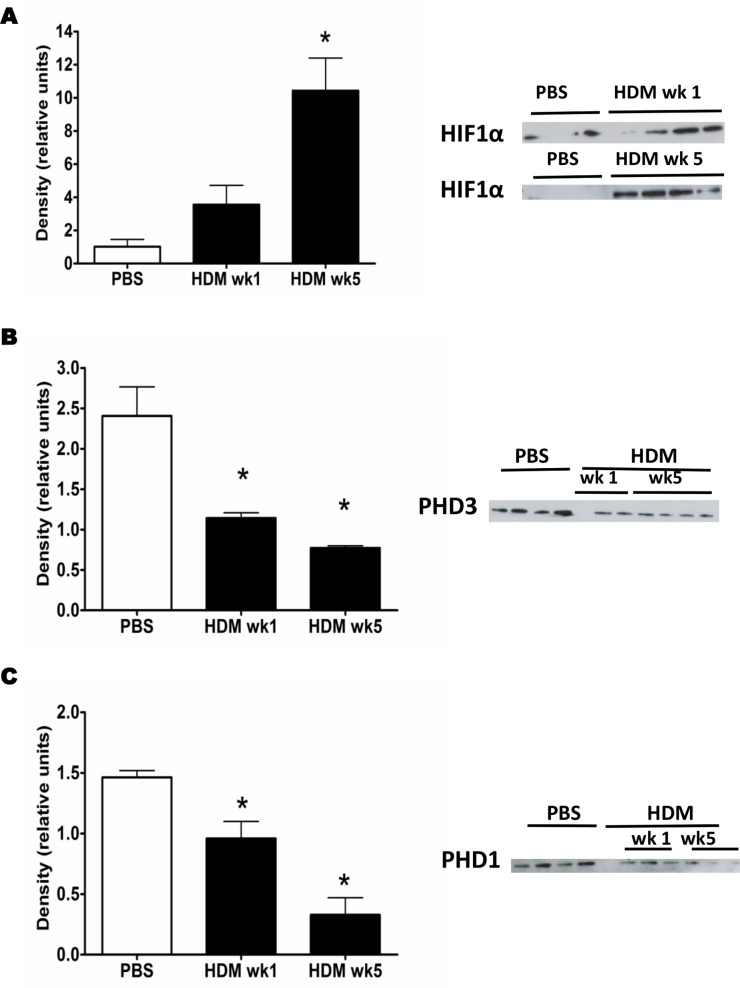
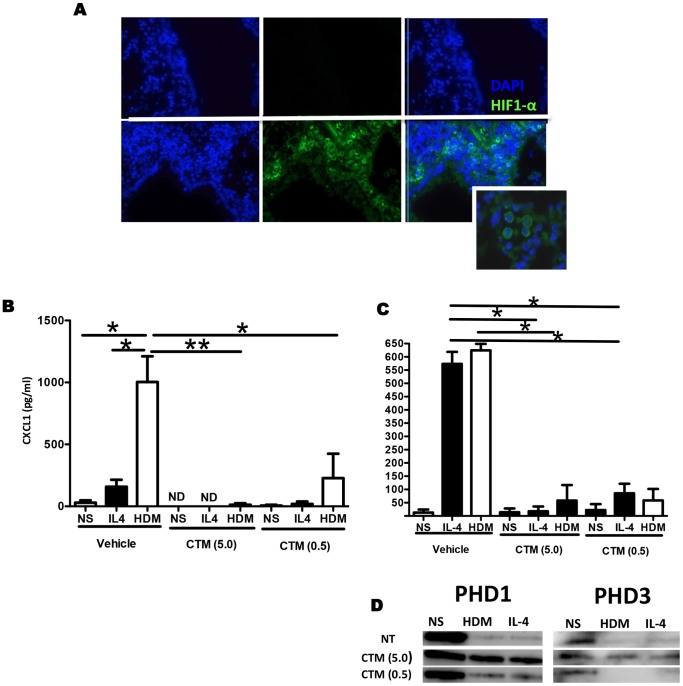
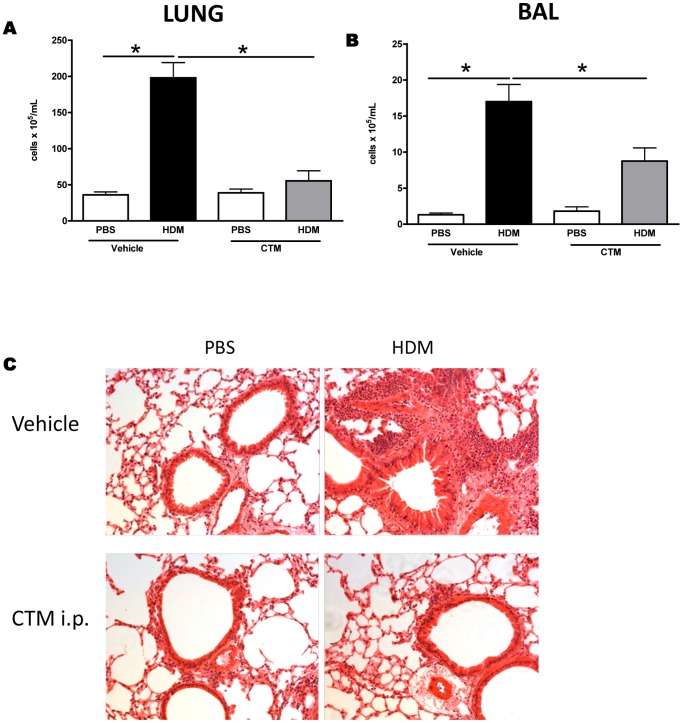
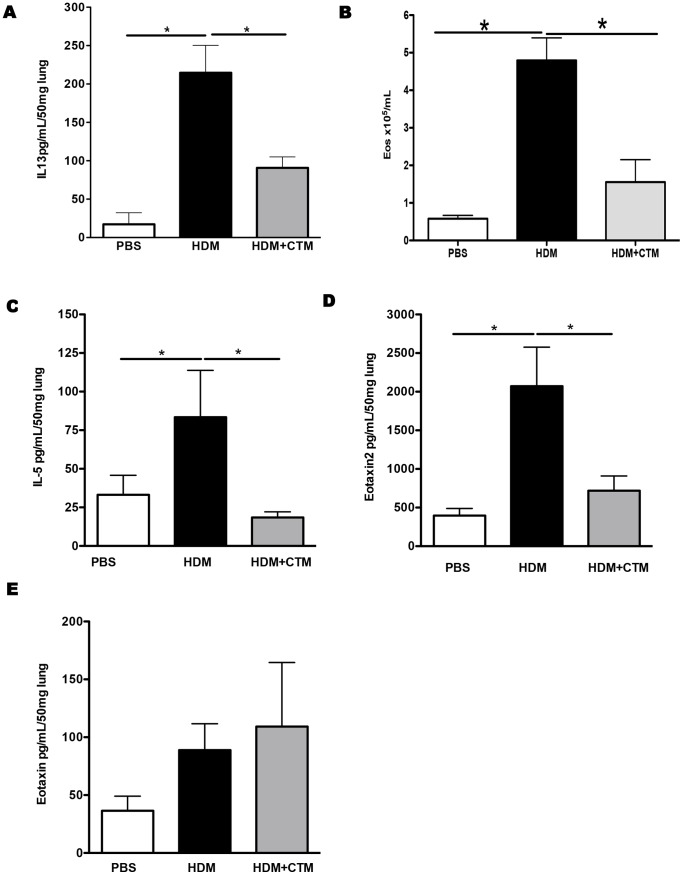
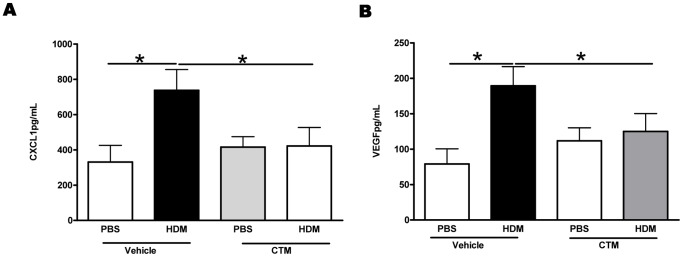
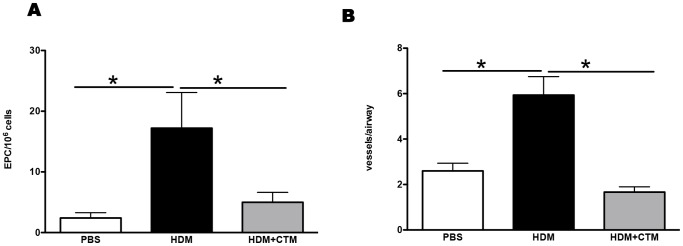
HIF-1α is a transcription factor that is activated during hypoxia and inflammation and is a key regulator of angiogenesis in vivo. During the development of asthma, peribronchial angiogenesis is induced in response to aeroallergens and is thought to be an important feature of sustained chronic allergic inflammation. Recently, elevated HIF-1α levels have been demonstrated in both the lung tissue and bronchoalveolar lavage of allergic patients, respectively. Therefore, we investigated the role of HIF-1α on the development of angiogenesis and inflammation following acute and chronic allergen exposure. Our data shows that intranasal exposure to house dust mite (HDM) increases the expression of HIF-1α in the lung, whilst reducing the expression of the HIF-1α negative regulators, PHD1 and PHD3. Blockade of HIF-1α in vivo, significantly decreased allergic inflammation and eosinophilia induced by allergen, due to a reduction in the levels of IL-5 and Eotaxin-2. Importantly, HIF-1α blockade significantly decreased levels of VEGF-A and CXCL1 in the lungs, which in turn led to a profound decrease in the recruitment of endothelial progenitor cells and a reduction of peribronchial angiogenesis. Furthermore, HDM or IL-4 treatment of primary lung macrophages resulted in significant production of both VEGF-A and CXCL1; inhibition of HIF-1α activity abrogated the production of these factors via an up-regulation of PHD1 and PHD3. These findings suggest that novel strategies to reduce the expression and activation of HIF-1α in lung macrophages may be used to attenuate allergen-induced airway inflammation and angiogenesis through the modulation of VEGF-A and CXCL1 expression.
This study provides new insights into the role of HIF-1α in the development of peribronchial angiogenesis and inflammation in a murine model of allergic airway disease. These findings indicate that strategies to reduce activation of macrophage derived HIF-1α may be used as a target to improve asthma pathology.
HIF-1α 是一种在缺氧和炎症期间被激活的转录因子,是体内血管生成的关键调节剂。在哮喘的发展过程中,气道周围血管生成是对空气过敏原的反应,被认为是持续慢性过敏炎症的一个重要特征。最近,在过敏性患者的肺组织和支气管肺泡灌洗液中分别证明了 HIF-1α 水平升高。因此,我们研究了 HIF-1α 在急性和慢性过敏原暴露后血管生成和炎症发展中的作用。我们的数据表明,鼻腔暴露于屋尘螨(HDM)增加了肺中的 HIF-1α 表达,同时降低了 HIF-1α 负调节剂 PHD1 和 PHD3 的表达。体内阻断 HIF-1α 显著降低了过敏原诱导的过敏炎症和嗜酸性粒细胞增多,这是由于 IL-5 和 Eotaxin-2 水平降低所致。重要的是,HIF-1α 阻断显著降低了肺部 VEGF-A 和 CXCL1 的水平,这反过来导致内皮祖细胞的募集显著减少和气道周围血管生成减少。此外,HDM 或 IL-4 处理原代肺巨噬细胞导致 VEGF-A 和 CXCL1 的大量产生;通过上调 PHD1 和 PHD3,抑制 HIF-1α 活性消除了这些因子的产生。这些发现表明,减少肺巨噬细胞中 HIF-1α 的表达和激活的新策略可用于通过调节 VEGF-A 和 CXCL1 的表达来减轻过敏原诱导的气道炎症和血管生成。
本研究提供了新的见解,即 HIF-1α 在过敏性气道疾病的小鼠模型中气道周围血管生成和炎症的发展中的作用。这些发现表明,减少巨噬细胞来源的 HIF-1α 激活的策略可作为改善哮喘病理的靶点。