Virology Unit, Institut Pasteur de Madagascar, Antananarivo, Madagascar.
PLoS Negl Trop Dis. 2013 Jul 25;7(7):e2339. doi: 10.1371/journal.pntd.0002339. Print 2013.
In 2005, there were outbreaks of febrile polyarthritis due to Chikungunya virus (CHIKV) in the Comoros Islands. CHIKV then spread to other islands in the Indian Ocean: La Réunion, Mauritius, Seychelles and Madagascar. These outbreaks revealed the lack of surveillance and preparedness of Madagascar and other countries. Thus, it was decided in 2007 to establish a syndrome-based surveillance network to monitor dengue-like illness.
This study aims to evaluate the use of capillary blood samples blotted on filter papers for molecular diagnosis of CHIKV infection. Venous blood samples can be difficult to obtain and the shipment of serum in appropriate temperature conditions is too costly for most developing countries.
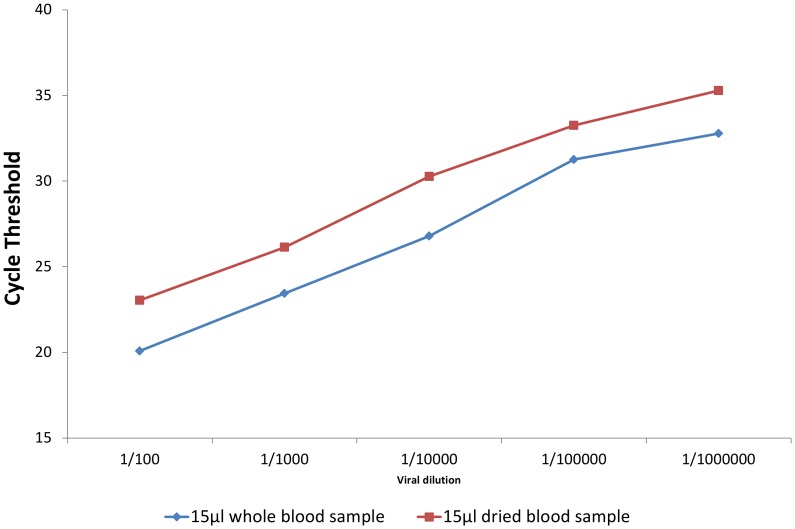
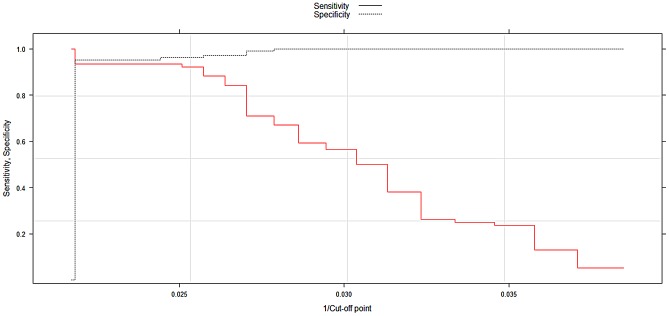
Venous blood and dried-blood blotted on filter paper (DBFP) were collected during the last CHIKV outbreak in Madagascar (2010) and as part of our routine surveillance of dengue-like illness. All samples were tested by real-time RT-PCR and results with serum and DBFP samples were compared for each patient. The sensitivity and specificity of tests performed with DBFP, relative to those with venous samples (defined as 100%) were 93.1% (95% CI:[84.7-97.7]) and 94.4% (95% CI:[88.3-97.7]), respectively. The Kappa coefficient 0.87 (95% CI:[0.80-0.94]) was excellent.
This study shows that DBFP specimens can be used as a cost-effective alternative sampling method for the surveillance and monitoring of CHIKV circulation and emergence in developing countries, and probably also for other arboviruses. The loss of sensitivity is insignificant and involved a very small number of patients, all with low viral loads. Whether viruses can be isolated from dried blood spots remains to be determined.
2005 年,科摩罗群岛爆发了基孔肯雅热病毒(CHIKV)引起的发热性多发性关节炎。CHIKV 随后传播到印度洋的其他岛屿:留尼汪岛、毛里求斯、塞舌尔和马达加斯加。这些疫情揭示了马达加斯加和其他国家缺乏监测和准备。因此,2007 年决定建立基于综合征的监测网络,以监测登革热样疾病。
本研究旨在评估使用滤纸上的毛细血斑样本进行 CHIKV 感染的分子诊断。静脉血样可能难以获得,而且对于大多数发展中国家来说,在适当温度条件下运输血清的成本太高。
在马达加斯加(2010 年)最后一次 CHIKV 疫情期间以及我们对登革热样疾病的常规监测中,采集了静脉血和滤纸上的干血斑(DBFP)。对所有样本进行实时 RT-PCR 检测,并比较每位患者的血清和 DBFP 样本的检测结果。与静脉样本(定义为 100%)相比,DBFP 检测的灵敏度和特异性分别为 93.1%(95%CI:[84.7-97.7])和 94.4%(95%CI:[88.3-97.7])。Kappa 系数为 0.87(95%CI:[0.80-0.94]),非常优秀。
本研究表明,DBFP 标本可作为发展中国家监测和监测 CHIKV 传播和出现的经济有效替代采样方法,可能也可用于其他虫媒病毒。灵敏度的损失微不足道,涉及的患者数量很少,且所有患者的病毒载量均较低。从干血斑中能否分离出病毒仍有待确定。