Department of Food and Nutrition, Sookmyung Women's University, Seoul 140-742, Republic of Korea.
Biomed Res Int. 2013;2013:274096. doi: 10.1155/2013/274096. Epub 2013 Jul 8.
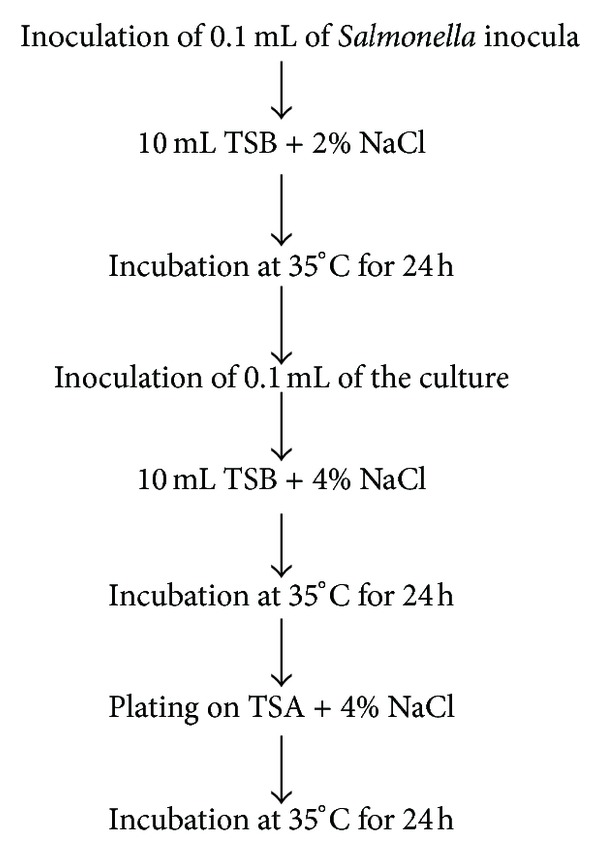
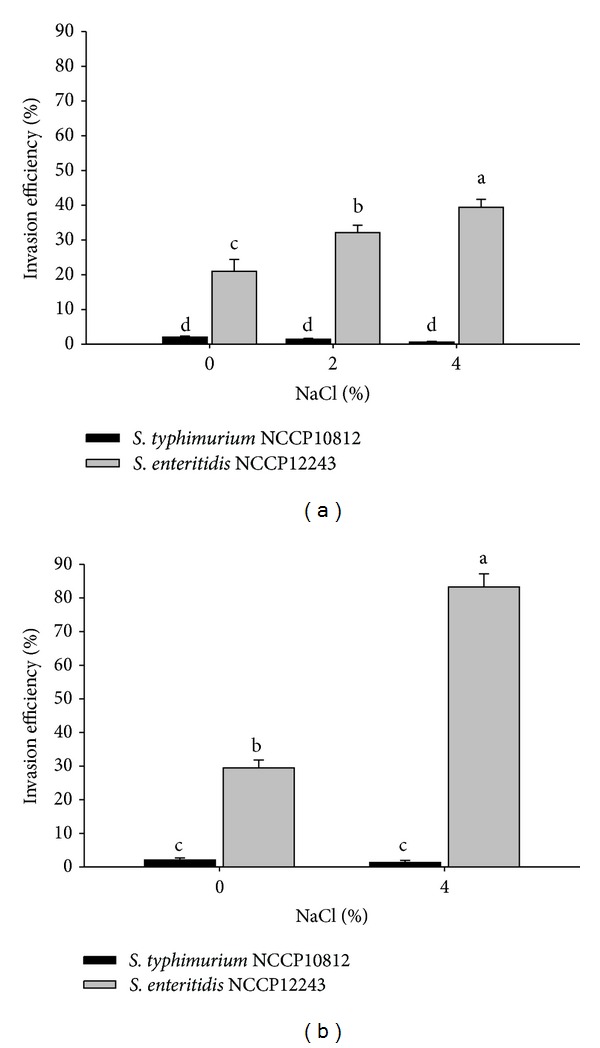
This study evaluated the effects of NaCl on heat resistance, antibiotic susceptibility, and Caco-2 cell invasion of Salmonella. Salmonella typhimurium NCCP10812 and Salmonella enteritidis NCCP12243 were exposed to 0, 2, and 4% NaCl and to sequential increase of NaCl concentrations from 0 to 4% NaCl for 24 h at 35°C. The strains were then investigated for heat resistance (60°C), antibiotic susceptibility to eight antibiotics, and Caco-2 cell invasion efficiency. S. typhimurium NCCP10812 showed increased thermal resistance (P < 0.05) after exposure to single NaCl concentrations. A sequential increase of NaCl concentration decreased (P < 0.05) the antibiotic sensitivities of S. typhimurium NCCP10812 to chloramphenicol, gentamicin, and oxytetracycline. NaCl exposure also increased (P < 0.05) Caco-2 cell invasion efficiency of S. enteritidis NCCP12243. These results indicate that NaCl in food may cause increased thermal resistance, cell invasion efficiency, and antibiotic resistance of Salmonella.
本研究评估了 NaCl 对沙门氏菌耐热性、抗生素敏感性和 Caco-2 细胞侵袭能力的影响。将鼠伤寒沙门氏菌 NCCP10812 和肠炎沙门氏菌 NCCP12243 暴露于 0、2 和 4%NaCl 中,并在 35°C 下 24 小时内将 NaCl 浓度从 0 逐步增加到 4%。然后研究了这些菌株的耐热性(60°C)、对八种抗生素的敏感性以及 Caco-2 细胞侵袭效率。NCCP10812 鼠伤寒沙门氏菌在暴露于单一 NaCl 浓度后表现出更高的耐热性(P<0.05)。NaCl 浓度的逐步增加降低了(P<0.05) NCCP10812 鼠伤寒沙门氏菌对氯霉素、庆大霉素和土霉素的抗生素敏感性。NaCl 暴露还增加了(P<0.05) NCCP12243 肠炎沙门氏菌的 Caco-2 细胞侵袭效率。这些结果表明,食品中的 NaCl 可能导致沙门氏菌的耐热性、细胞侵袭效率和抗生素耐药性增加。