Department of Mathematical Sciences, Montclair State University, Montclair, New Jerey, USA.
PLoS One. 2013 Aug 5;8(8):e70211. doi: 10.1371/journal.pone.0070211. Print 2013.
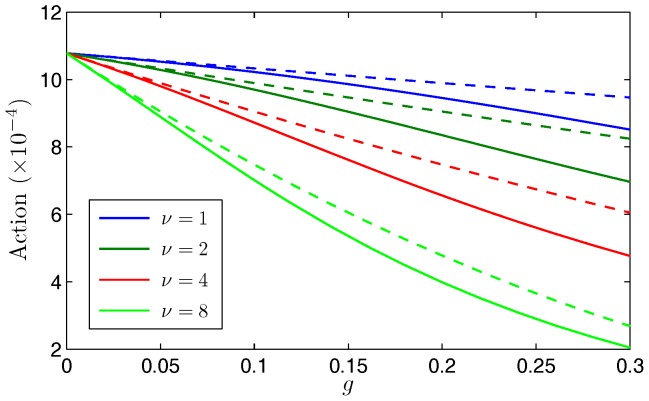
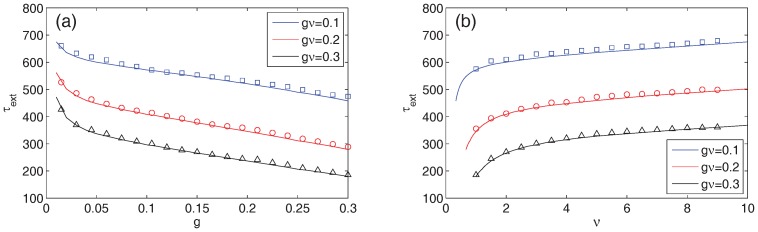
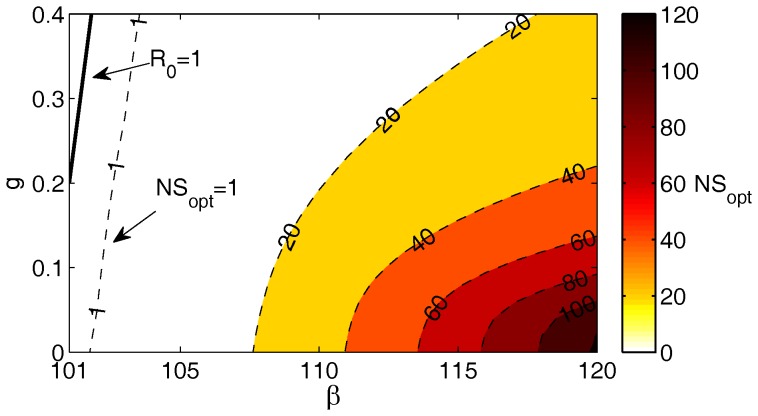
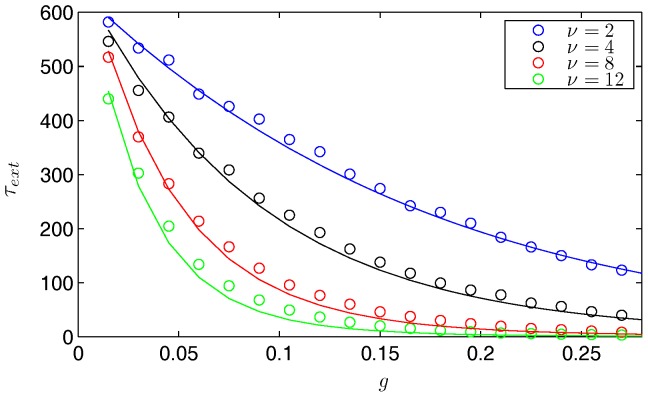
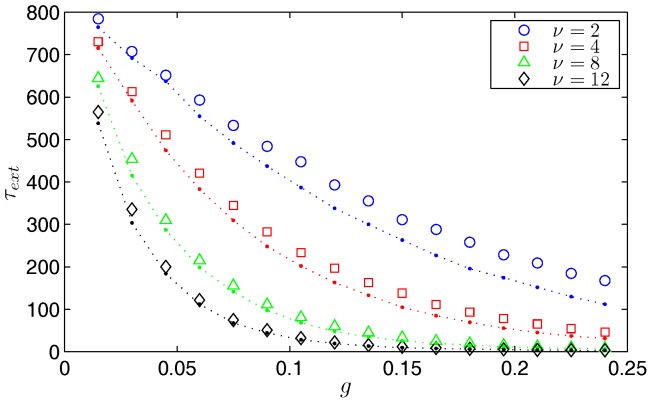
Disease control is of paramount importance in public health, with infectious disease extinction as the ultimate goal. Although diseases may go extinct due to random loss of effective contacts where the infection is transmitted to new susceptible individuals, the time to extinction in the absence of control may be prohibitively long. Intervention controls are typically defined on a deterministic schedule. In reality, however, such policies are administered as a random process, while still possessing a mean period. Here, we consider the effect of randomly distributed intervention as disease control on large finite populations. We show explicitly how intervention control, based on mean period and treatment fraction, modulates the average extinction times as a function of population size and rate of infection spread. In particular, our results show an exponential improvement in extinction times even though the controls are implemented using a random Poisson distribution. Finally, we discover those parameter regimes where random treatment yields an exponential improvement in extinction times over the application of strictly periodic intervention. The implication of our results is discussed in light of the availability of limited resources for control.
疾病控制在公共卫生中至关重要,以消灭传染病为最终目标。虽然由于感染传播给新易感个体的有效接触随机丧失,疾病可能会灭绝,但如果没有控制,灭绝的时间可能会非常长。干预控制通常按确定性时间表定义。然而,在现实中,这些政策是作为随机过程来管理的,同时仍然具有平均周期。在这里,我们考虑了随机分布的干预措施作为疾病控制对大型有限群体的影响。我们明确展示了基于平均周期和治疗分数的干预控制如何调制平均灭绝时间作为人口规模和感染传播速度的函数。特别是,我们的结果表明,即使使用随机泊松分布实施控制,灭绝时间也会呈指数级改善。最后,我们发现了那些参数范围,其中随机治疗在灭绝时间上比严格周期性干预有显著改善。根据控制可用资源的情况,我们讨论了研究结果的意义。