Department of Chemical Engineering, Waterloo Institute for Nanotechnology, Waterloo Institute for Sustainable Energy, University of Waterloo, 200 University Avenue West, Waterloo, Ontario, N2L 3G1, Canada.
Sci Rep. 2013;3:2431. doi: 10.1038/srep02431.
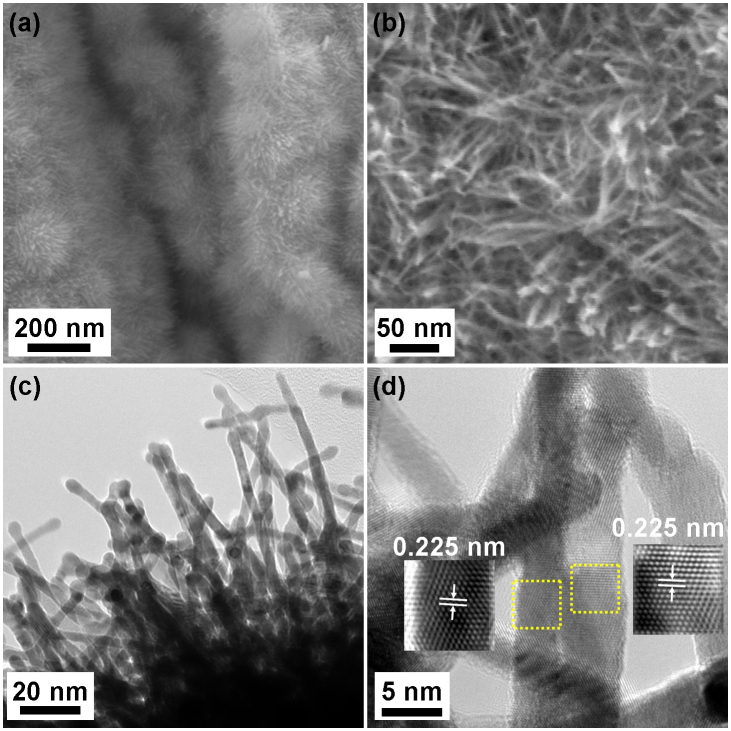
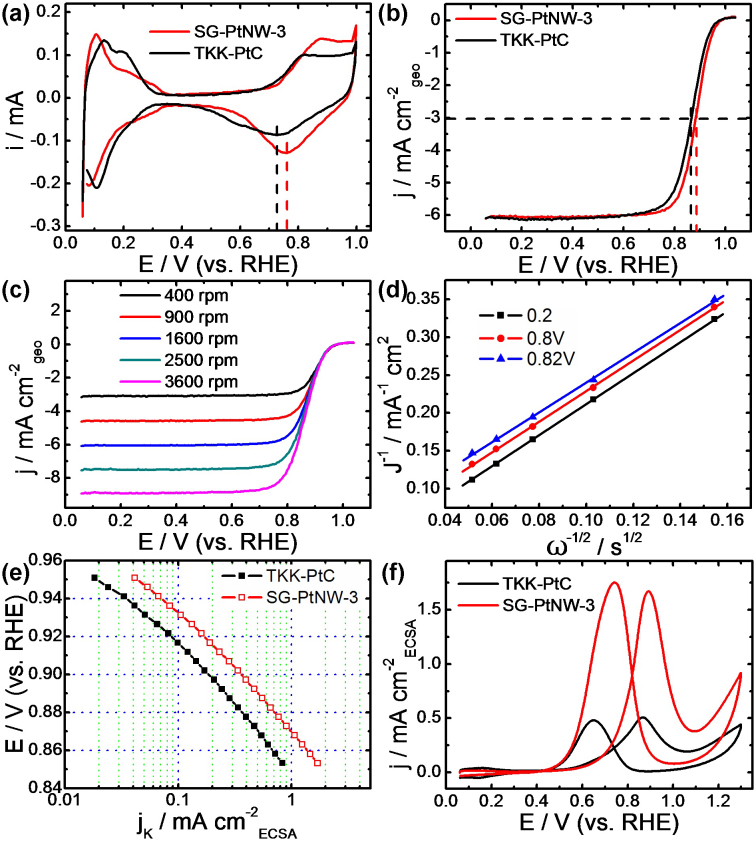
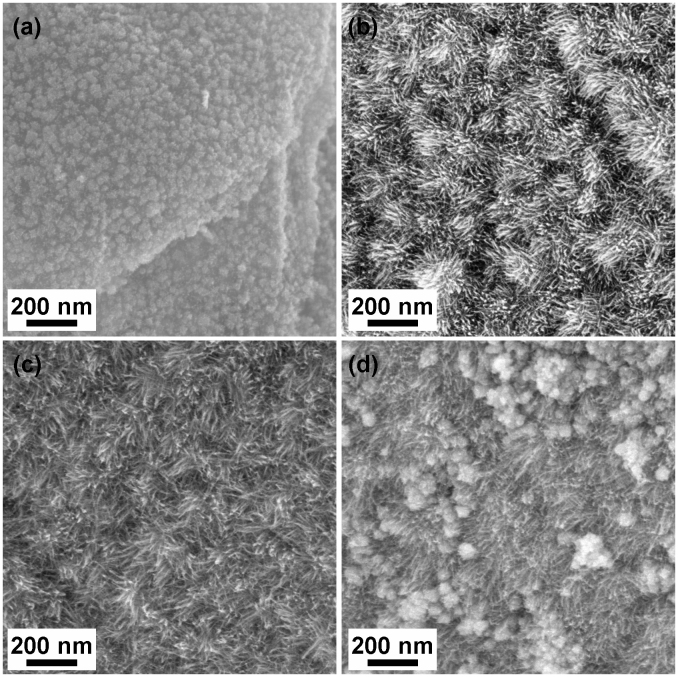
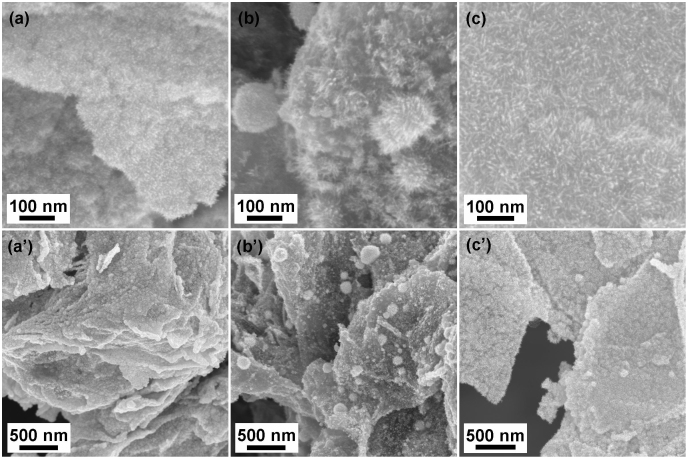
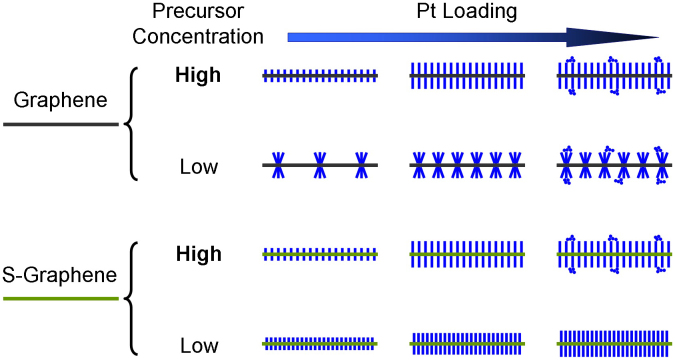
Graphene supported Pt nanostructures have great potential to be used as catalysts in electrochemical energy conversion and storage technologies; however the simultaneous control of Pt morphology and dispersion, along with ideally tailoring the physical properties of the catalyst support properties has proven very challenging. Using sulfur doped graphene (SG) as a support material, the heterogeneous dopant atoms could serve as nucleation sites allowing for the preparation of SG supported Pt nanowire arrays with ultra-thin diameters (2-5 nm) and dense surface coverage. Detailed investigation of the preparation technique reveals that the structure of the resulting composite could be readily controlled by fine tuning the Pt nanowire nucleation and growth reaction kinetics and the Pt-support interactions, whereby a mechanistic platinum nanowire array growth model is proposed. Electrochemical characterization demonstrates that the composite materials have 2-3 times higher catalytic activities toward the oxygen reduction and methanol oxidation reaction compared with commercial Pt/C catalyst.
担载在石墨烯上的 Pt 纳米结构在电化学能量转换和存储技术中具有作为催化剂应用的巨大潜力;然而,同时控制 Pt 的形态和分散性,并理想地调整催化剂担载体的物理性质,这被证明是极具挑战性的。使用掺杂硫的石墨烯(SG)作为担载材料,杂原子掺杂剂可以作为成核位点,从而能够制备具有超薄直径(2-5nm)和高密度表面覆盖度的 SG 担载 Pt 纳米线阵列。对制备技术的详细研究表明,通过精细调整 Pt 纳米线成核和生长反应动力学以及 Pt-担载体相互作用,很容易控制得到的复合材料的结构,由此提出了一个 Pt 纳米线阵列生长的机理模型。电化学特性研究表明,与商业 Pt/C 催化剂相比,该复合材料对氧还原和甲醇氧化反应的催化活性高 2-3 倍。