Department of Veterinary Disease Biology, Faculty of Health and Medical Sciences, University of Copenhagen, DK-1870 Frederiksberg, Denmark.
BMC Microbiol. 2013 Aug 14;13:192. doi: 10.1186/1471-2180-13-192.
The increase in antibiotic resistant bacteria has led to renewed interest in development of alternative antimicrobial compounds such as antimicrobial peptides (AMPs), either naturally-occurring or synthetically-derived. Knowledge of the mode of action (MOA) of synthetic compounds mimicking the function of AMPs is highly valuable both when developing new types of antimicrobials and when predicting resistance development. Despite many functional studies of AMPs, only a few of the synthetic peptides have been studied in detail.
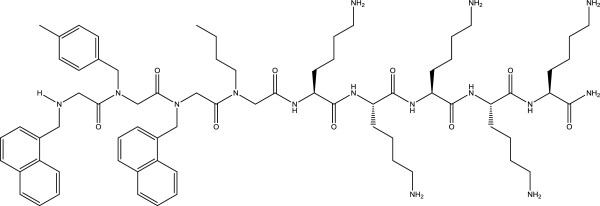
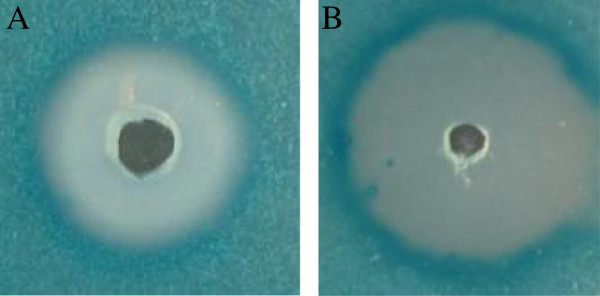
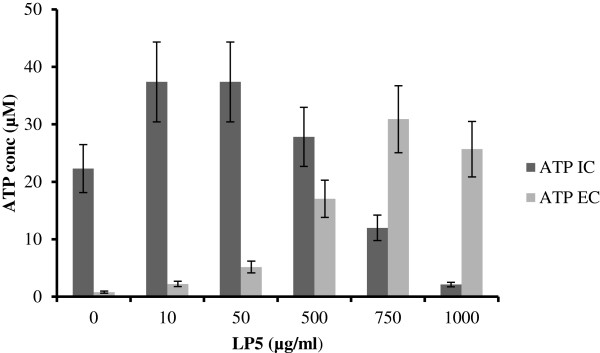
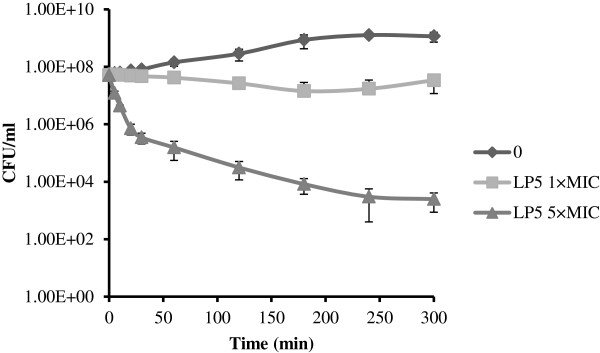
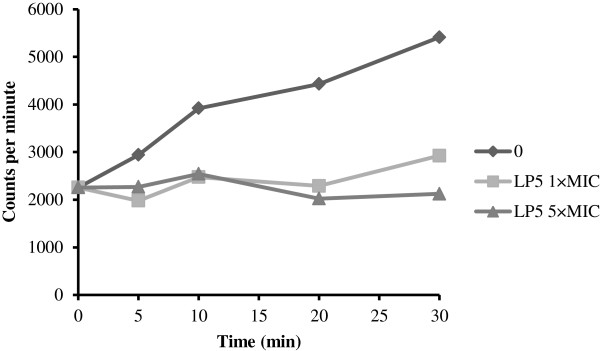
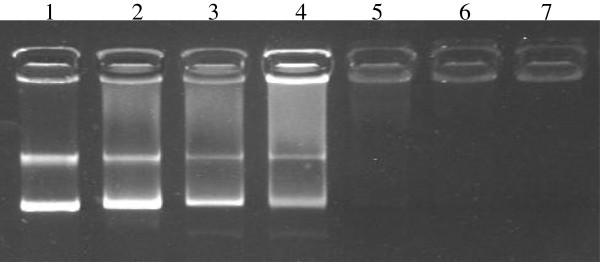
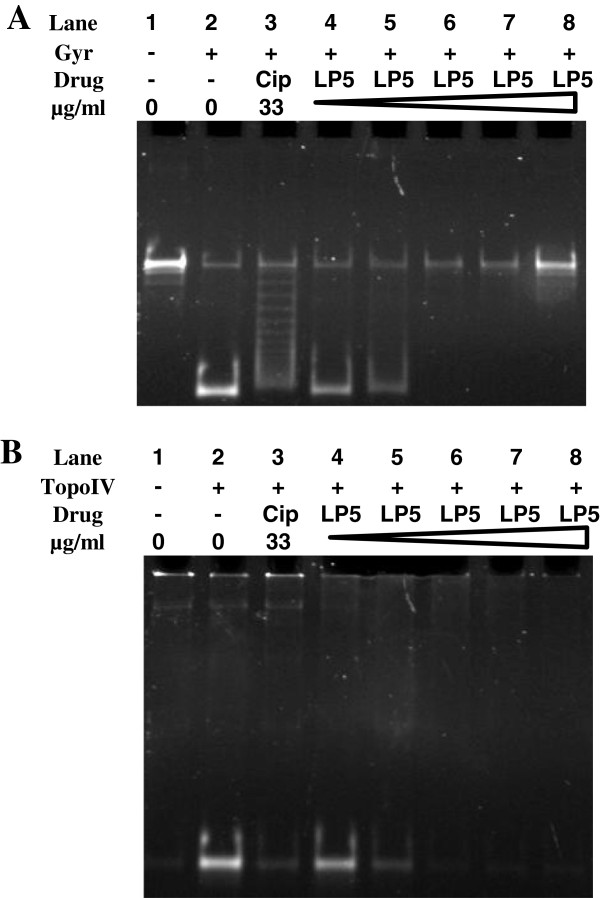
We investigated the MOA of the lysine-peptoid hybrid, LP5, which previously has been shown to display antimicrobial activity against Staphylococcus aureus. At concentrations of LP5 above the minimal inhibitory concentration (MIC), the peptoid caused ATP leakage from bacterial cells. However, at concentrations close to the MIC, LP5 inhibited the growth of S. aureus without ATP leakage. Instead, LP5 bound DNA and inhibited macromolecular synthesis. The binding to DNA also led to inhibition of DNA gyrase and topoisomerase IV and caused induction of the SOS response.
Our data demonstrate that LP5 may have a dual mode of action against S. aureus. At MIC concentrations, LP5 binds DNA and inhibits macromolecular synthesis and growth, whereas at concentrations above the MIC, LP5 targets the bacterial membrane leading to disruption of the membrane. These results add new information about the MOA of a new synthetic AMP and aid in the future design of synthetic peptides with increased therapeutic potential.
抗生素耐药菌的增加使得人们重新关注开发替代抗菌化合物,如抗菌肽(AMPs),包括天然存在的和合成衍生的。了解模仿 AMP 功能的合成化合物的作用机制(MOA),在开发新型抗菌药物和预测耐药性发展方面都具有很高的价值。尽管已经对 AMP 进行了许多功能研究,但只有少数合成肽得到了详细研究。
我们研究了赖氨酸-肽段混合体 LP5 的作用机制,该物质先前已显示出对金黄色葡萄球菌具有抗菌活性。在高于最小抑菌浓度(MIC)的 LP5 浓度下,肽段会导致细菌细胞内的 ATP 泄漏。然而,在接近 MIC 的浓度下,LP5 抑制金黄色葡萄球菌的生长而不会导致 ATP 泄漏。相反,LP5 结合 DNA 并抑制大分子合成。与 DNA 的结合也会抑制 DNA 回旋酶和拓扑异构酶 IV,并导致 SOS 反应的诱导。
我们的数据表明,LP5 可能对金黄色葡萄球菌具有双重作用机制。在 MIC 浓度下,LP5 结合 DNA 并抑制大分子合成和生长,而在高于 MIC 的浓度下,LP5 靶向细菌膜导致膜破裂。这些结果提供了有关新型合成 AMP 的作用机制的新信息,并有助于未来设计具有更高治疗潜力的合成肽。