Department of Chemistry and Biochemistry, University of North Carolina at Greensboro , P.O. Box 26170, Greensboro, North Carolina 27402, United States.
J Nat Prod. 2013 Sep 27;76(9):1709-16. doi: 10.1021/np4004307. Epub 2013 Aug 16.
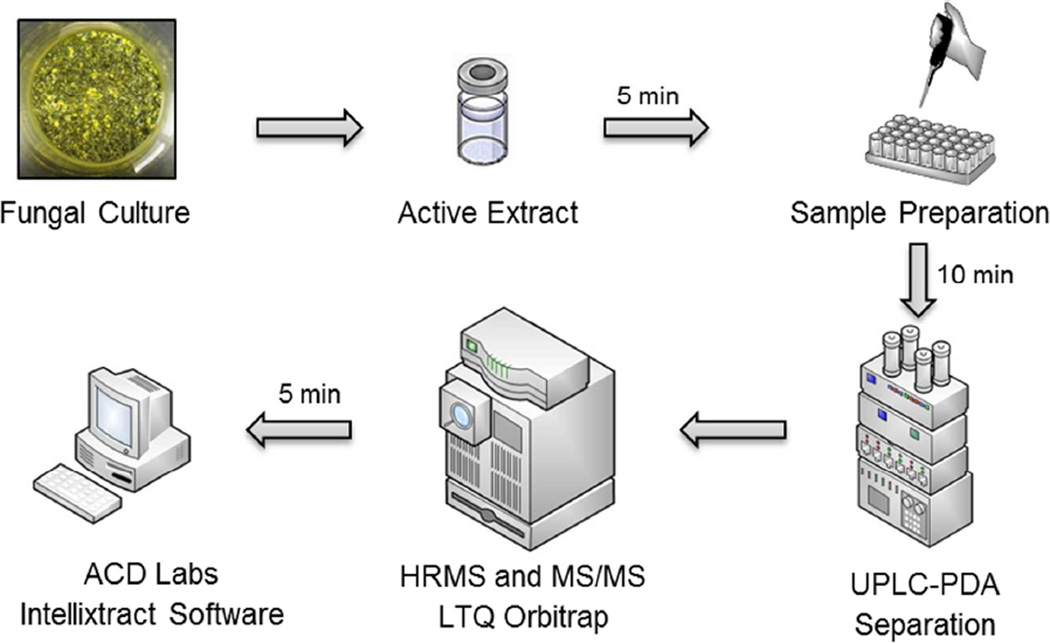
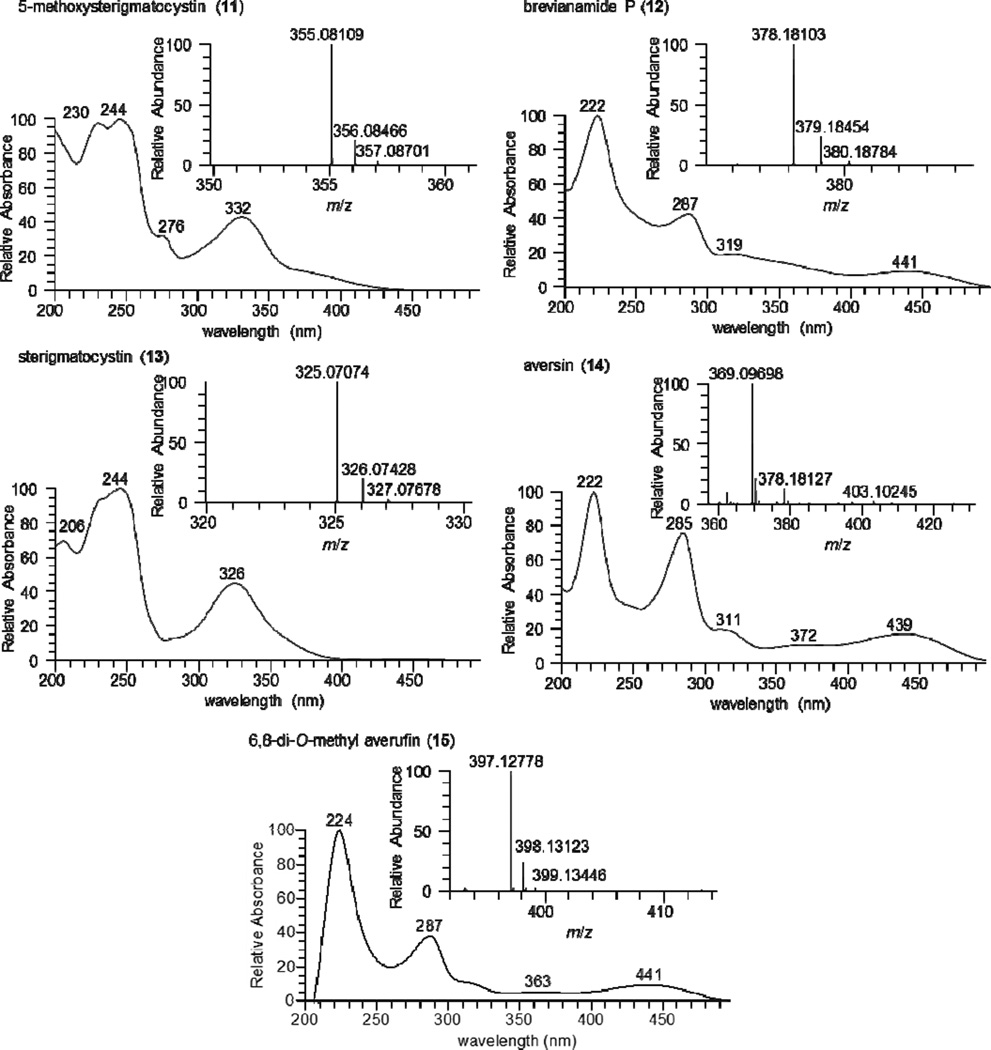
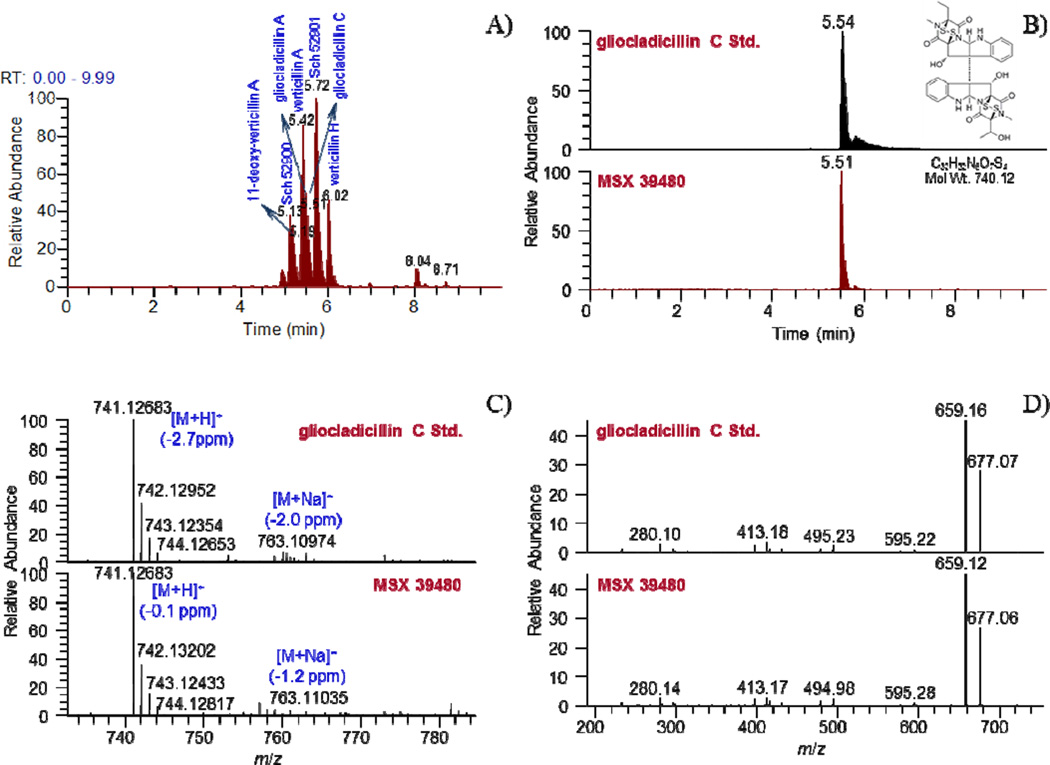
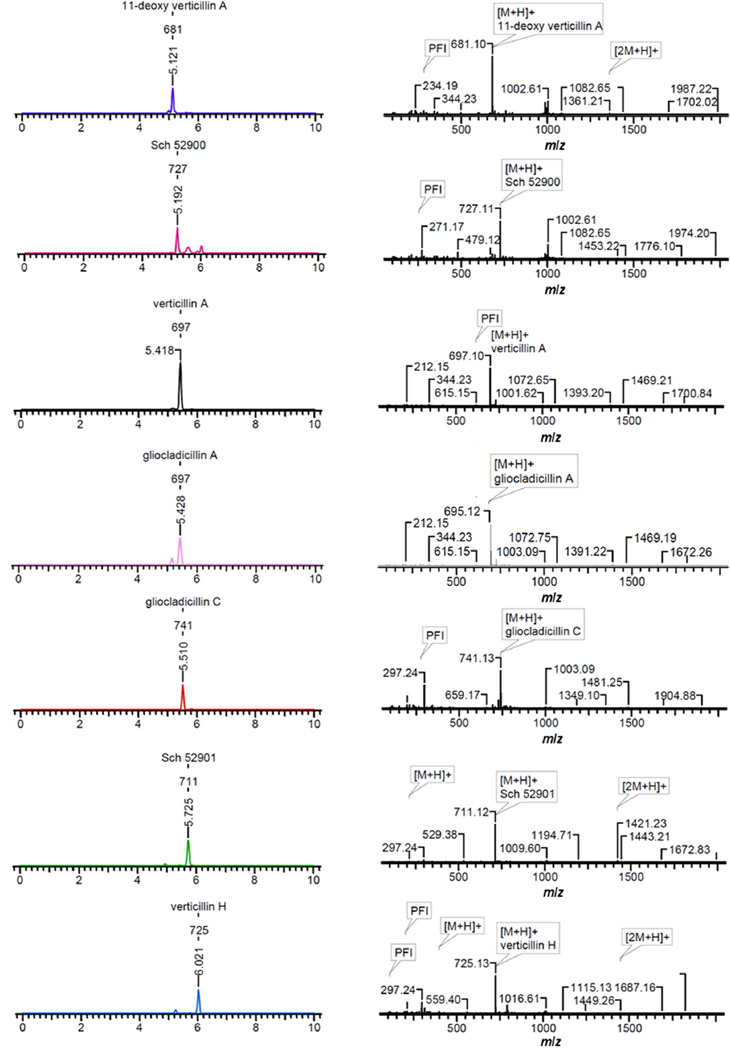
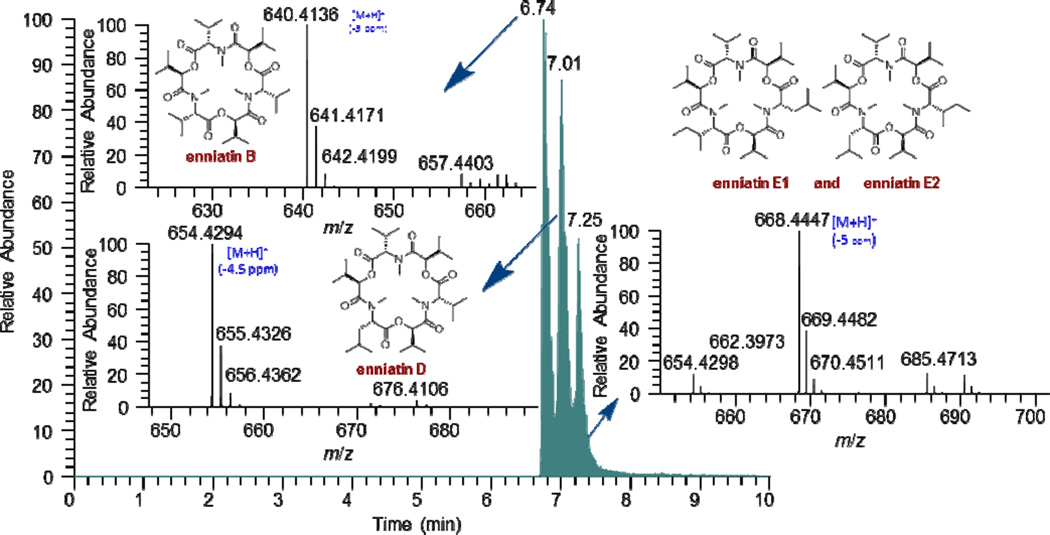
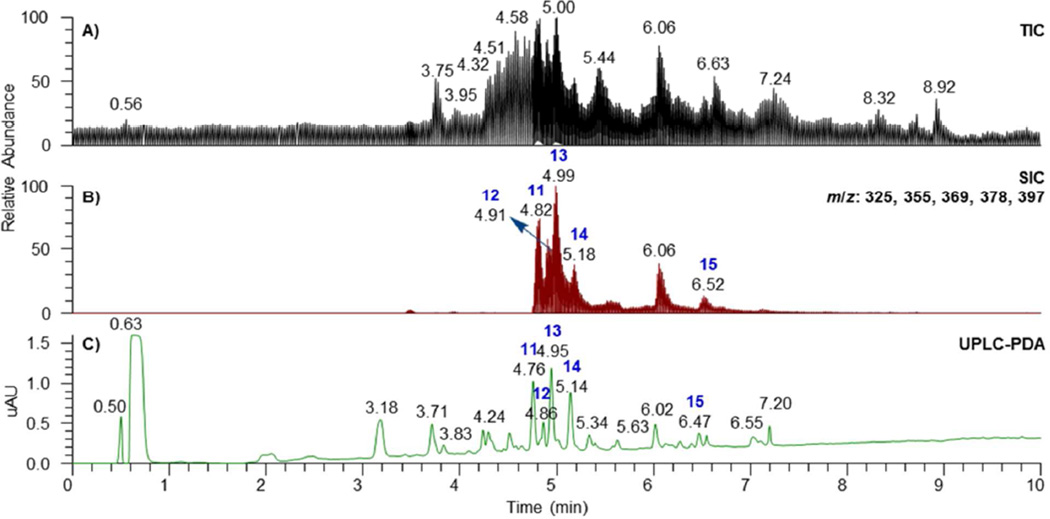
A major problem in the discovery of new biologically active compounds from natural products is the reisolation of known compounds. Such reisolations waste time and resources, distracting chemists from more promising leads. To address this problem, dereplication strategies are needed that enable crude extracts to be screened for the presence of known compounds before isolation efforts are initiated. In a project to identify anticancer drug leads from filamentous fungi, a significant dereplication challenge arises, as the taxonomy of the source materials is rarely known, and, thus, the literature cannot be probed to identify likely known compounds. An ultraperformance liquid chromatography-photodiode array-high-resolution tandem mass spectrometric (UPLC-PDA-HRMS-MS/MS) method was developed for dereplication of fungal secondary metabolites in crude culture extracts. A database was constructed by recording HRMS and MS/MS spectra of fungal metabolites, utilizing both positive- and negative-ionization modes. Additional details, such as UV-absorption maxima and retention times, were also recorded. Small-scale cultures that showed cytotoxic activities were dereplicated before engaging in the scale-up or purification processes. Using these methods, approximately 50% of the cytotoxic extracts could be eliminated from further study after the confident identification of known compounds. The specific attributes of this dereplication methodology include a focus on bioactive secondary metabolites from fungi, the use of a 10 min chromatographic method, and the inclusion of both HRMS and MS/MS data.
从天然产物中发现新的具有生物活性的化合物的一个主要问题是已知化合物的再分离。这种再分离浪费了时间和资源,使化学家无法关注更有前途的线索。为了解决这个问题,需要采用去重复策略,以便在开始分离工作之前,可以对粗提取物进行筛选,以确定是否存在已知化合物。在从丝状真菌中鉴定抗癌药物先导化合物的项目中,就会出现一个重大的去重复挑战,因为源材料的分类通常不为人知,因此无法在文献中探查可能的已知化合物。本文建立了一种超高效液相色谱-光电二极管阵列-高分辨串联质谱(UPLC-PDA-HRMS-MS/MS)方法,用于对粗培养物提取物中的真菌次级代谢产物进行去重复。通过记录真菌代谢物的 HRMS 和 MS/MS 图谱,利用正离子和负离子两种模式,构建了一个数据库。还记录了其他详细信息,如紫外吸收最大值和保留时间。在进行放大或纯化过程之前,对显示细胞毒性的小规模培养物进行了去重复。使用这些方法,在对已知化合物进行了明确鉴定后,约有 50%的细胞毒性提取物可以被排除在进一步研究之外。这种去重复方法的具体特点包括关注真菌来源的生物活性次级代谢产物、使用 10 分钟的色谱方法以及包含 HRMS 和 MS/MS 数据。