Law Faculty, Bonger Institute of Criminology, University of Amsterdam , Amsterdam , Netherlands.
Front Psychiatry. 2013 Aug 9;4:85. doi: 10.3389/fpsyt.2013.00085. eCollection 2013.
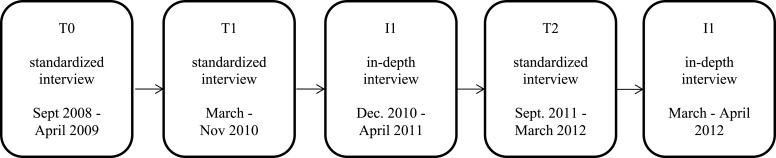
Life course theory considers events in study and work as potential turning points in deviance, including illicit drug use. This qualitative study explores the role of occupational life in cannabis use and dependence in young adults. Two and three years after the initial structured interview, 47 at baseline frequent cannabis users were interviewed in-depth about the dynamics underlying changes in their cannabis use and dependence. Overall, cannabis use and dependence declined, including interviewees who quit using cannabis completely, in particular with students, both during their study and after they got employed. Life course theory appeared to be a useful framework to explore how and why occupational life is related to cannabis use and dependence over time. Our study showed that life events in this realm are rather common in young adults and can have a strong impact on cannabis use. While sometimes changes in use are temporary, turning points can evolve from changes in educational and employment situations; an effect that seems to be related to the consequences of these changes in terms of amount of leisure time and agency (i.e., feelings of being in control).
生命历程理论认为,学习和工作中的事件可能成为越轨行为(包括非法药物使用)的转折点。本定性研究探讨了职业生活在年轻人的大麻使用和依赖中的作用。在初始结构访谈后的两年和三年,对 47 名基线时经常使用大麻的参与者进行了深入访谈,探讨了他们大麻使用和依赖变化背后的动态。总体而言,大麻使用和依赖下降,包括完全戒断大麻的参与者,尤其是学生,无论是在学习期间还是在就业后。生命历程理论似乎是一个有用的框架,可以探讨职业生活如何以及为何随着时间的推移与大麻使用和依赖有关。我们的研究表明,该领域的生活事件在年轻人中很常见,并且会对大麻使用产生重大影响。虽然有时使用的变化是暂时的,但转折点可能会从教育和就业情况的变化中产生;这种效应似乎与这些变化在闲暇时间和自主性方面(即控制感)的后果有关。