Department of Molecular Microbiology and Immunology, Oregon Health & Science University, Portland, Oregon, USA.
PLoS One. 2013 Aug 12;8(8):e70753. doi: 10.1371/journal.pone.0070753. eCollection 2013.
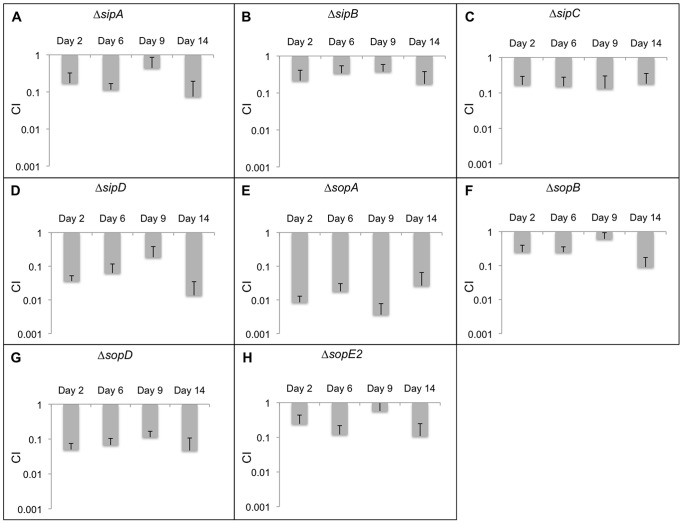
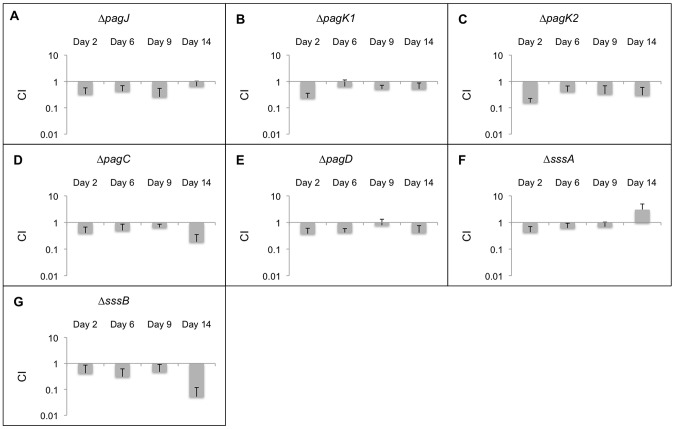
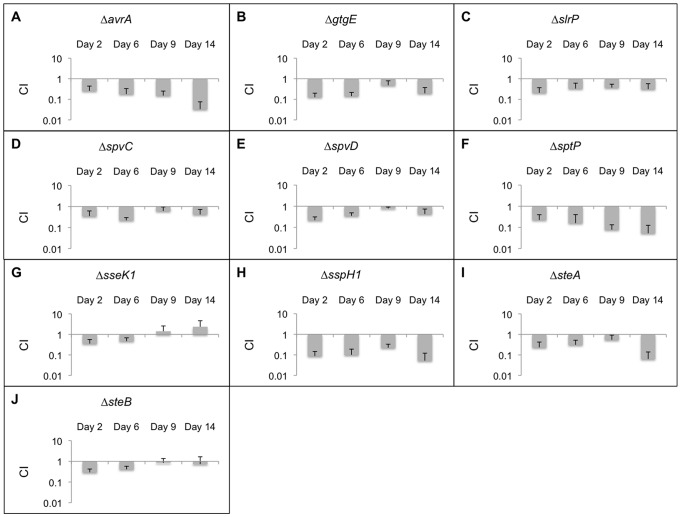
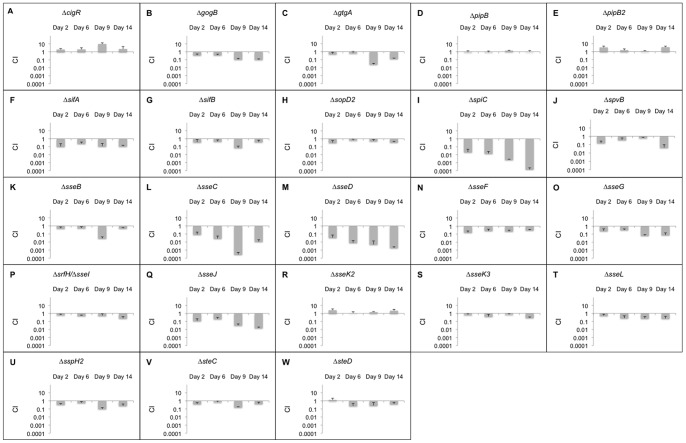
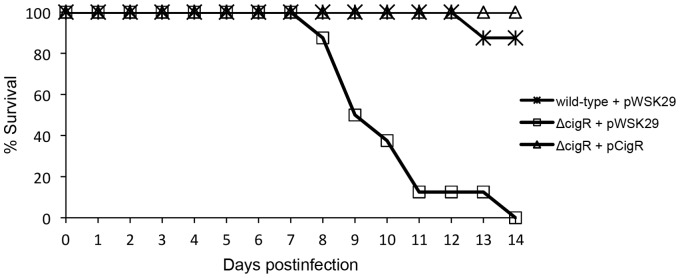
Salmonella enterica serovar Typhimurium causes typhoid-like disease in mice and is a model of typhoid fever in humans. One of the hallmarks of typhoid is persistence, the ability of the bacteria to survive in the host weeks after infection. Virulence factors called effectors facilitate this process by direct transfer to the cytoplasm of infected cells thereby subverting cellular processes. Secretion of effectors to the cell cytoplasm takes place through multiple routes, including two separate type III secretion (T3SS) apparati as well as outer membrane vesicles. The two T3SS are encoded on separate pathogenicity islands, SPI-1 and -2, with SPI-1 more strongly associated with the intestinal phase of infection, and SPI-2 with the systemic phase. Both T3SS are required for persistence, but the effectors required have not been systematically evaluated. In this study, mutations in 48 described effectors were tested for persistence. We replaced each effector with a specific DNA barcode sequence by allelic exchange and co-infected with a wild-type reference to calculate the ratio of wild-type parent to mutant at different times after infection. The competitive index (CI) was determined by quantitative PCR in which primers that correspond to the barcode were used for amplification. Mutations in all but seven effectors reduced persistence demonstrating that most effectors were required. One exception was CigR, a recently discovered effector that is widely conserved throughout enteric bacteria. Deletion of cigR increased lethality, suggesting that it may be an anti-virulence factor. The fact that almost all Salmonella effectors are required for persistence argues against redundant functions. This is different from effector repertoires in other intracellular pathogens such as Legionella.
鼠伤寒沙门氏菌血清型 Typhimurium 可引起类似伤寒的疾病,是人类伤寒的模型。伤寒的一个特点是持续性,即在感染后数周细菌在宿主体内存活的能力。效应因子等毒力因子通过直接转移到受感染细胞的细胞质中,从而颠覆细胞过程,促进了这一过程。效应因子分泌到细胞质中通过多种途径发生,包括两个独立的 III 型分泌(T3SS)装置以及外膜囊泡。两个 T3SS 分别编码在独立的致病性岛上,SPI-1 和 -2,SPI-1 与感染的肠道阶段更密切相关,SPI-2 与系统阶段相关。两种 T3SS 都需要持续存在,但所需的效应因子尚未系统评估。在这项研究中,通过等位基因交换测试了 48 种描述的效应因子突变体在持续性方面的作用。我们用特定的 DNA 条码序列替换每个效应子,并与野生型参考菌共感染,以计算在感染后不同时间野生型亲本与突变体的比例。通过定量 PCR 计算竞争指数(CI),其中使用对应于条码的引物进行扩增。除了七个效应因子外,所有突变体的持续性都降低了,这表明大多数效应因子都是必需的。一个例外是 CigR,它是一种新发现的效应因子,在肠道细菌中广泛保守。cigR 的缺失增加了致死率,表明它可能是一种抗毒力因子。几乎所有沙门氏菌效应因子都需要持续性,这表明它们没有冗余功能。这与其他胞内病原体如军团菌的效应因子库不同。