1] Department of Radiology and Athinoula A. Martinos Center for Biomedical Imaging, Massachusetts General Hospital and Harvard Medical School, Boston, Massachusetts, USA. [2] The Intervention Centre, Oslo University Hospital, Oslo, Norway.
Nat Med. 2013 Sep;19(9):1178-83. doi: 10.1038/nm.3289. Epub 2013 Aug 18.
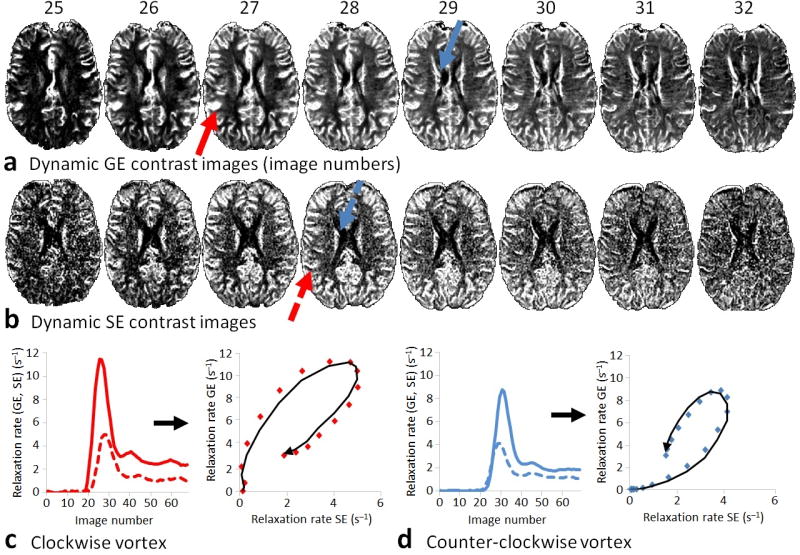
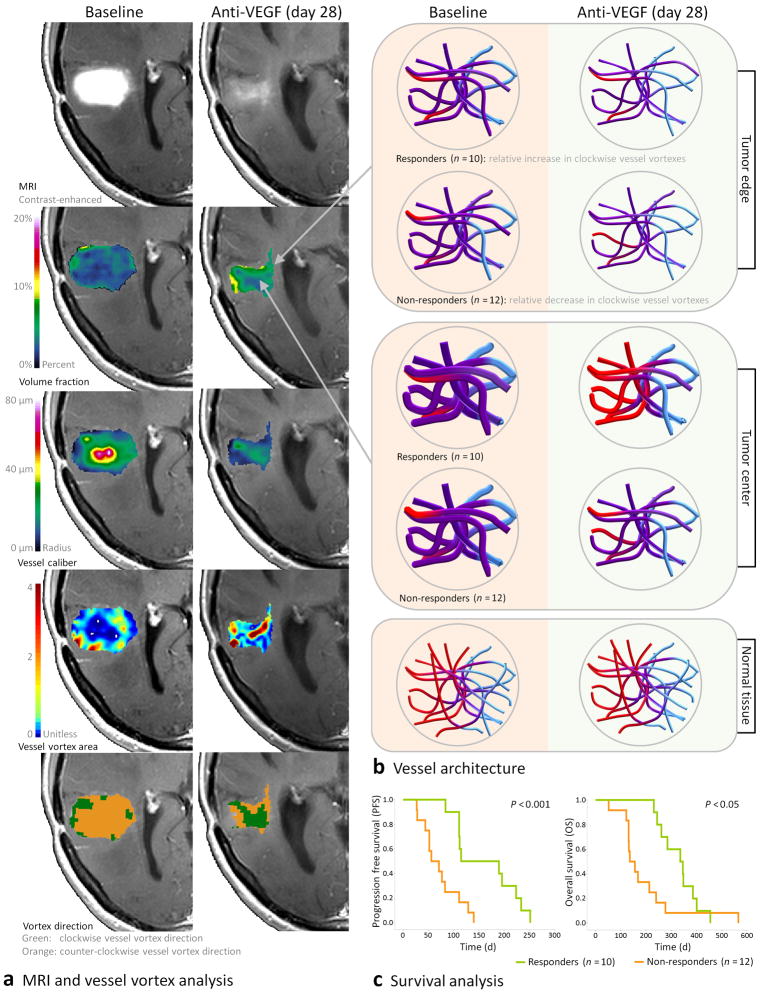
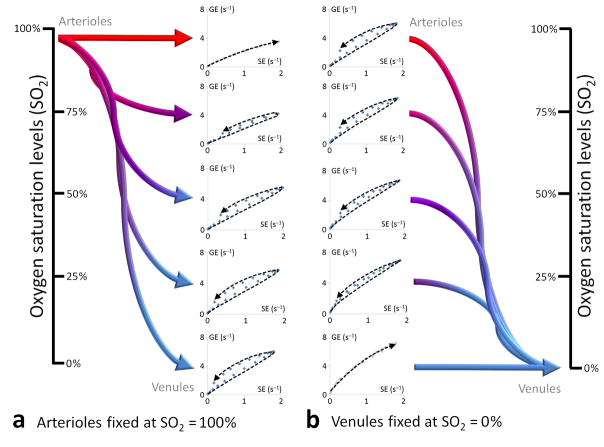
Measurement of vessel caliber by magnetic resonance imaging (MRI) is a valuable technique for in vivo monitoring of hemodynamic status and vascular development, especially in the brain. Here, we introduce a new paradigm in MRI termed vessel architectural imaging (VAI) that exploits an overlooked temporal shift in the magnetic resonance signal, forming the basis for vessel caliber estimation, and show how this phenomenon can reveal new information on vessel type and function not assessed by any other noninvasive imaging technique. We also show how this biomarker can provide new biological insights into the treatment of patients with cancer. As an example, we demonstrate using VAI that anti-angiogenic therapy can improve microcirculation and oxygen saturation and reduce vessel calibers in patients with recurrent glioblastomas and, more crucially, that patients with these responses have prolonged survival. Thus, VAI has the potential to identify patients who would benefit from therapies.
磁共振成像(MRI)测量血管口径是一种用于活体监测血液动力学状态和血管发育的有价值的技术,特别是在大脑中。在这里,我们引入了一种新的 MRI 方法,称为血管结构成像(VAI),它利用磁共振信号中被忽视的时间偏移,为血管口径估计奠定了基础,并展示了这一现象如何揭示其他任何非侵入性成像技术都无法评估的血管类型和功能的新信息。我们还展示了这种生物标志物如何为癌症患者的治疗提供新的生物学见解。例如,我们通过 VAI 证明,抗血管生成治疗可以改善复发性胶质母细胞瘤患者的微循环和氧饱和度,并减少血管口径,更重要的是,具有这些反应的患者的存活时间延长。因此,VAI 有可能识别出受益于治疗的患者。