Seong Su Kyoung, Kim Ha Won
Center for Drug Development Assistance, National Institute of Food and Drug Safety Evaluation, Korea Food and Drug Administration, Seoul 122-704, Korea.
Mycobiology. 2010 Jun;38(2):144-8. doi: 10.4489/MYCO.2010.38.2.144. Epub 2010 Jun 30.
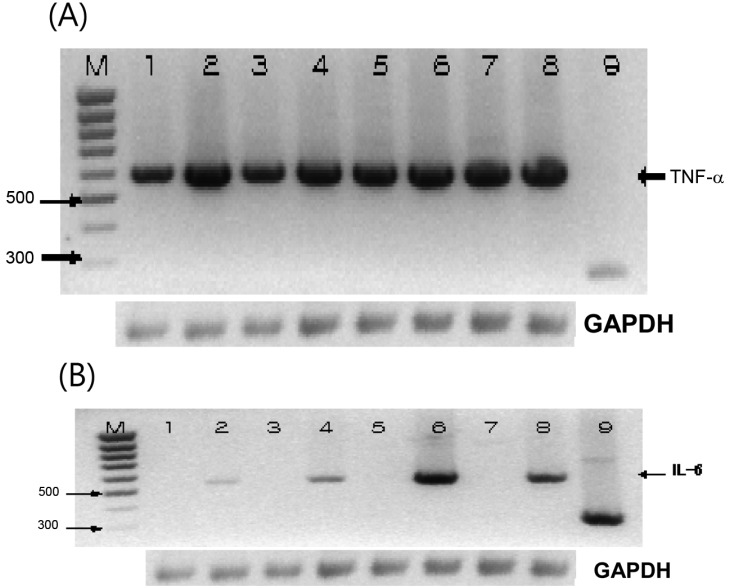
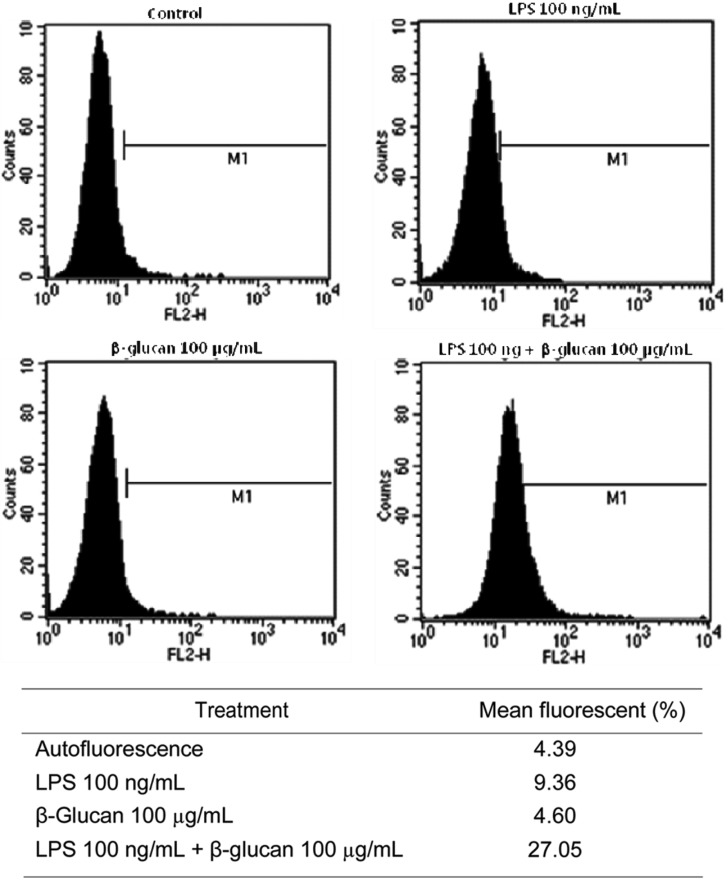
β-Glucans have been known to exhibit antitumor activities by potentiating host immunity by an unknown mechanism. The C-type lectin dectin-1, a β-glucan receptor, is found on the macrophage and can recognize various β-glucans. Previously, we demonstrated the presence of β-glucan receptor, dectin-1, on the Raw 264.7 cells as well as on murine mucosal organs, such as the thymus, the lung, and the spleen. In order to investigate immunopotentiation of innate immunity by β-glucan, we stimulated a murine macrophage Raw 264.7 cell line with β-glucans from Pleurotus ostreatus, Saccharomyces cerevisiae, and Laminaria digitata. Then, we analyzed cytokines such as tumor necrosis factor (TNF)-α and interleukin (IL)-6 by reverse transcription-polymerase chain reaction (RT-PCR). In addition we analyzed gene expression patterns in β-glucan-treated Raw 264.7 cells by applying total mRNA to cDNA microarray to investigate the expression of 7,000 known genes. When stimulated with β-glucans, the macrophage cells increased TNF-α expression. When co-stimulation of the cells with β-glucan and lipopolysaccharide (LPS), a synergy effect was observed by increased TNF-α expression. In IL-6 expression, any of the β-glucans tested could not induce IL-6 expression by itself. However, when co-stimulation occurred with β-glucan and LPS, the cells showed strong synergistic effects by increased IL-6 expression. Chip analysis showed that β-glucan of P. ostreatus increased gene expressions of immunomodulating gene families such as kinases, lectin associated genes and TNF-related genes in the macrophage cell line. Induction of TNF receptor expression by FACS analysis was synergized only when co-stimulated with β-glucan and LPS, not with β-glucan alone. From these data, β-glucan increased expressions of immunomodulating genes and showed synergistic effect with LPS.
已知β-葡聚糖可通过一种未知机制增强宿主免疫力,从而发挥抗肿瘤活性。C型凝集素dectin-1是一种β-葡聚糖受体,存在于巨噬细胞上,能够识别多种β-葡聚糖。此前,我们已证明在Raw 264.7细胞以及小鼠黏膜器官(如胸腺、肺和脾脏)中存在β-葡聚糖受体dectin-1。为了研究β-葡聚糖对先天免疫的免疫增强作用,我们用平菇、酿酒酵母和海带的β-葡聚糖刺激小鼠巨噬细胞Raw 264.7细胞系。然后,我们通过逆转录-聚合酶链反应(RT-PCR)分析肿瘤坏死因子(TNF)-α和白细胞介素(IL)-6等细胞因子。此外,我们将总mRNA应用于cDNA微阵列,分析β-葡聚糖处理的Raw 264.7细胞中的基因表达模式,以研究7000个已知基因的表达情况。当用β-葡聚糖刺激时,巨噬细胞会增加TNF-α的表达。当细胞同时受到β-葡聚糖和脂多糖(LPS)刺激时,TNF-α表达增加,观察到协同效应。在IL-6表达方面,所测试的任何一种β-葡聚糖本身都不能诱导IL-6表达。然而,当β-葡聚糖与LPS共同刺激时,细胞通过增加IL-6表达表现出强烈的协同效应。芯片分析表明,平菇的β-葡聚糖可增加巨噬细胞系中免疫调节基因家族(如激酶、凝集素相关基因和TNF相关基因)的基因表达。仅在与β-葡聚糖和LPS共同刺激时,而不是仅与β-葡聚糖刺激时,通过流式细胞术分析诱导的TNF受体表达才会产生协同作用。根据这些数据,β-葡聚糖增加了免疫调节基因的表达,并与LPS表现出协同效应。