Kocerha Jannet, Liu Yuhong, Willoughby David, Chidamparam Kumaravel, Benito Joseph, Nelson Kate, Xu Yan, Chi Tim, Engelhardt Heidi, Moran Sean, Yang Shang-Hsun, Li Shi-Hua, Li Xiao-Jiang, Larkin Katherine, Neumann Adam, Banta Heather, Yang Jin Jing, Chan Anthony W S
BMC Neurosci. 2013 Aug 17;14:88. doi: 10.1186/1471-2202-14-88.
Huntington's Disease (HD) is a progressive neurodegenerative disorder caused by an expansion in the polyglutamine (polyQ) region of the Huntingtin (HTT) gene. The clinical features of HD are characterized by cognitive, psychological, and motor deficits. Molecular instability, a core component in neurological disease progression, can be comprehensively evaluated through longitudinal transcriptomic profiling. Development of animal models amenable to longitudinal examination enables distinct disease-associated mechanisms to be identified.
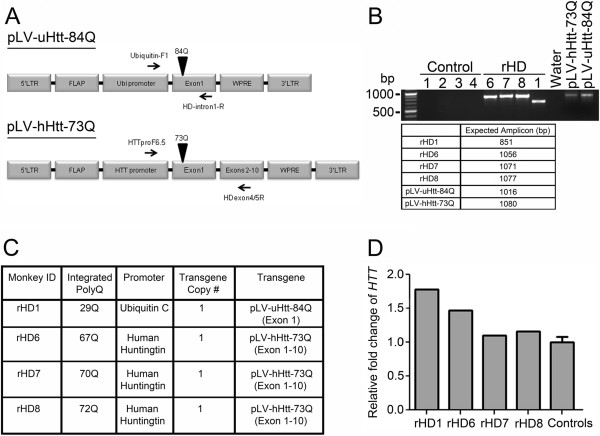
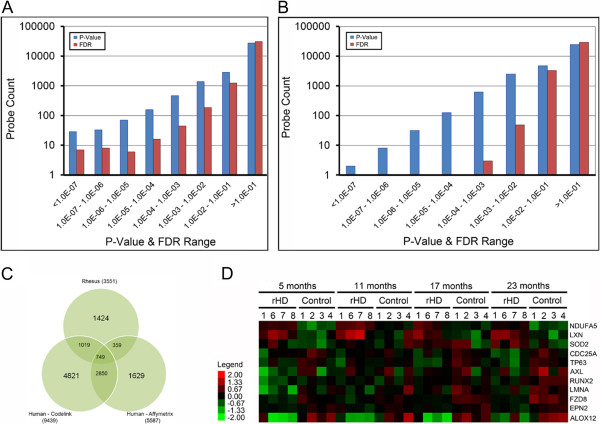
Here we report the first longitudinal study of transgenic monkeys with genomic integration of various lengths of the human HTT gene and a range of polyQ repeats. With this unique group of transgenic HD nonhuman primates (HD monkeys), we profiled over 47,000 transcripts from peripheral blood collected over a 2 year timespan from HD monkeys and age-matched wild-type control monkeys.
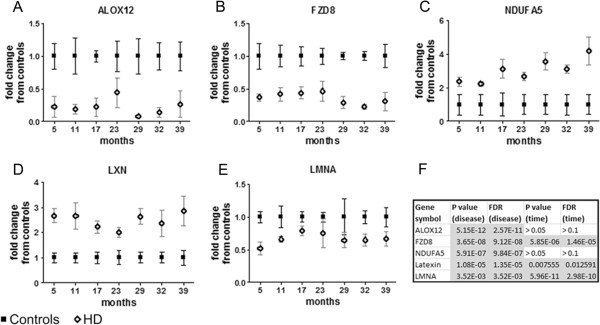
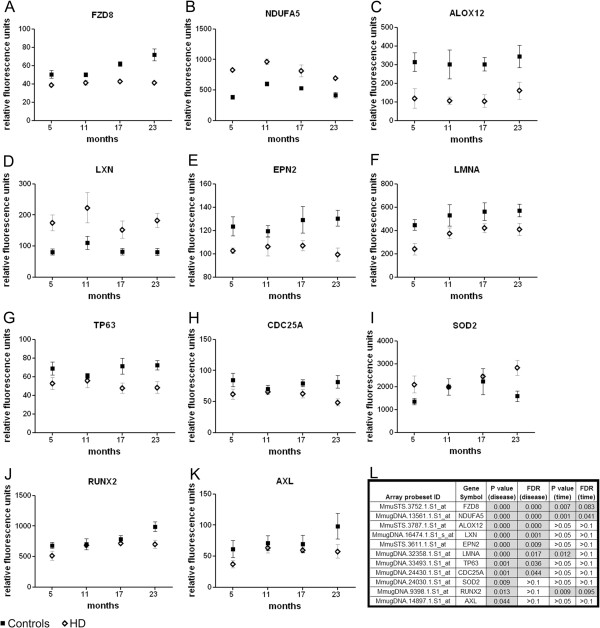
Messenger RNAs with expression patterns which diverged with disease progression in the HD monkeys considerably facilitated our search for transcripts with diagnostic or therapeutic potential in the blood of human HD patients, opening up a new avenue for clinical investigation.
亨廷顿舞蹈症(HD)是一种由亨廷顿蛋白(HTT)基因的多聚谷氨酰胺(polyQ)区域扩张引起的进行性神经退行性疾病。HD的临床特征表现为认知、心理和运动功能缺陷。分子不稳定性是神经疾病进展的核心组成部分,可通过纵向转录组分析进行全面评估。开发适合纵向检查的动物模型能够识别不同的疾病相关机制。
在此,我们报告了对基因组整合了不同长度人类HTT基因和一系列polyQ重复序列的转基因猴子进行的首次纵向研究。利用这组独特的转基因HD非人灵长类动物(HD猴子),我们对HD猴子和年龄匹配的野生型对照猴子在两年时间跨度内采集的外周血中的47000多个转录本进行了分析。
在HD猴子中,表达模式随疾病进展而变化的信使RNA极大地促进了我们在人类HD患者血液中寻找具有诊断或治疗潜力的转录本,为临床研究开辟了一条新途径。