Laboratory of Nematology, Wageningen University, Droevendaalsesteeg 1, Wageningen 6708PB, The Netherlands.
BMC Biol. 2013 Aug 19;11:93. doi: 10.1186/1741-7007-11-93.
Analyzing and understanding the relationship between genotypes and phenotypes is at the heart of genetics. Research on the nematode Caenorhabditis elegans has been instrumental for unraveling genotype-phenotype relations, and has important implications for understanding the biology of mammals, but almost all studies, including forward and reverse genetic screens, are limited by investigations in only one canonical genotype. This hampers the detection and functional analysis of allelic variants, which play a key role in controlling many complex traits. It is therefore essential to explore the full potential of the natural genetic variation and evolutionary context of the genotype-phenotype map in wild C. elegans populations.
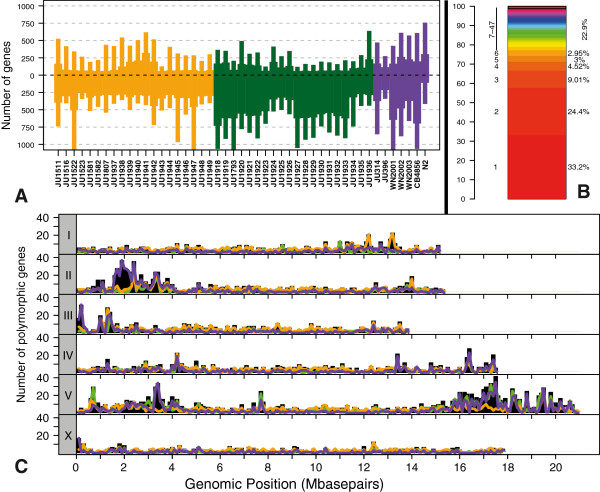
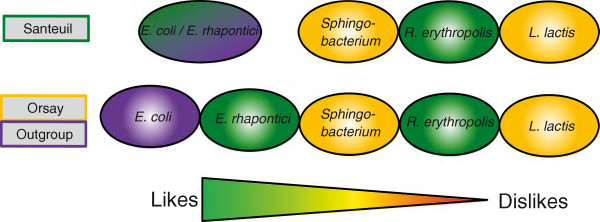
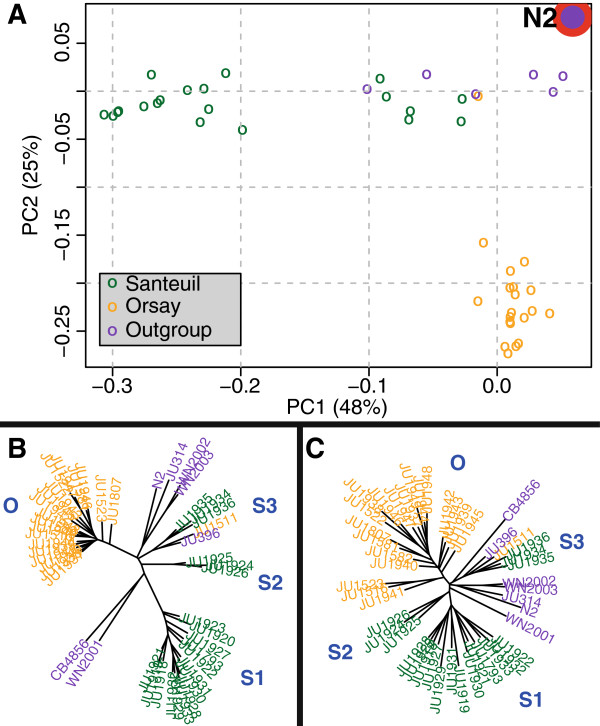
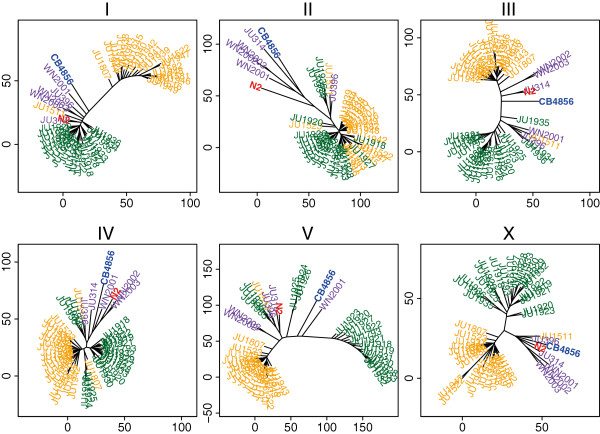
We used multiple wild C. elegans populations freshly isolated from local sites to investigate gene sequence polymorphisms and a multitude of phenotypes including the transcriptome, fitness, and behavioral traits. The genotype, transcriptome, and a number of fitness traits showed a direct link with the original site of the strains. The separation between the isolation sites was prevalent on all chromosomes, but chromosome V was the largest contributor to this variation. These results were supported by a differential food preference of the wild isolates for naturally co-existing bacterial species. Comparing polymorphic genes between the populations with a set of genes extracted from 19 different studies on gene expression in C. elegans exposed to biotic and abiotic factors, such as bacteria, osmotic pressure, and temperature, revealed a significant enrichment for genes involved in gene-environment interactions and protein degradation.
We found that wild C. elegans populations are characterized by gene-environment signatures, and we have unlocked a wealth of genotype-phenotype relations for the first time. Studying natural isolates provides a treasure trove of evidence compared with that unearthed by the current research in C. elegans, which covers only a diminutive part of the myriad of genotype-phenotype relations that are present in the wild.
分析和理解基因型与表型之间的关系是遗传学的核心。对秀丽隐杆线虫的研究对于揭示基因型-表型关系至关重要,并且对理解哺乳动物的生物学具有重要意义,但几乎所有的研究,包括正向和反向遗传筛选,都受到限于仅在一个规范基因型中进行的调查。这阻碍了等位变异的检测和功能分析,而等位变异在控制许多复杂性状方面起着关键作用。因此,探索野生秀丽隐杆线虫群体中基因型-表型图谱的自然遗传变异和进化背景的全部潜力至关重要。
我们使用了多个从当地地点新分离的野生秀丽隐杆线虫群体,研究了基因序列多态性和多种表型,包括转录组、适应性和行为特征。基因型、转录组和一些适应性特征与菌株的原始来源地直接相关。分离位点之间的分离在所有染色体上都很普遍,但染色体 V 是造成这种变异的最大因素。这些结果得到了野生分离株对自然共存细菌物种的不同食物偏好的支持。将种群之间的多态性基因与从 19 项不同的秀丽隐杆线虫基因表达研究中提取的一组基因进行比较,这些研究涉及生物和非生物因素,如细菌、渗透压和温度,结果表明,参与基因-环境相互作用和蛋白质降解的基因显著富集。
我们发现野生秀丽隐杆线虫群体具有基因-环境特征,并且我们首次揭示了大量的基因型-表型关系。与目前在秀丽隐杆线虫中进行的研究相比,研究自然分离株提供了丰富的证据,后者仅涵盖了野生环境中存在的无数基因型-表型关系的一小部分。