Department of Plant Science and Landscape Architecture, University of Maryland, Plant Science Building, College Park, Maryland 20742, USA.
BMC Plant Biol. 2013 Aug 19;13:118. doi: 10.1186/1471-2229-13-118.
Nucleoside phosphorylases (NPs) have been extensively investigated in human and bacterial systems for their role in metabolic nucleotide salvaging and links to oncogenesis. In plants, NP-like proteins have not been comprehensively studied, likely because there is no evidence of a metabolic function in nucleoside salvage. However, in the forest trees genus Populus a family of NP-like proteins function as an important ecophysiological adaptation for inter- and intra-seasonal nitrogen storage and cycling.
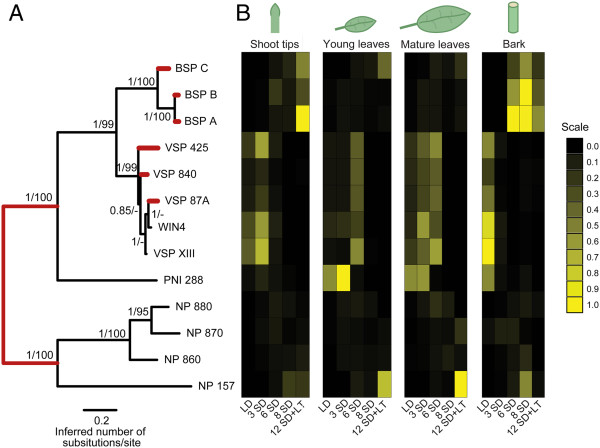
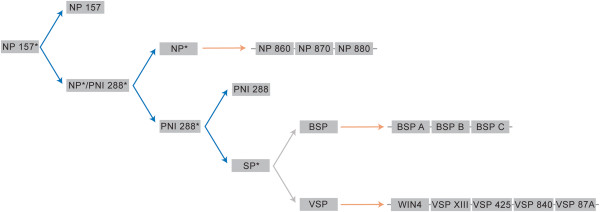
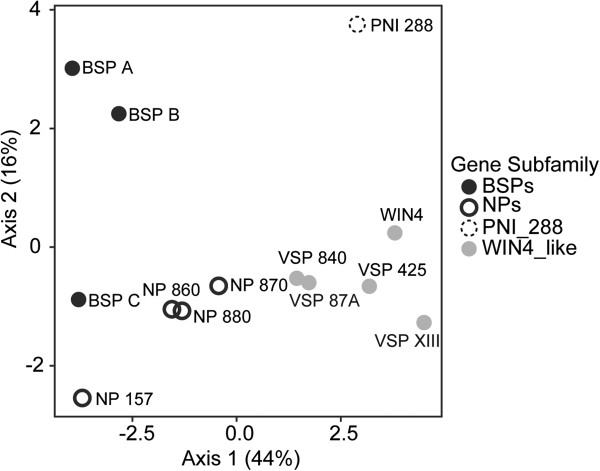
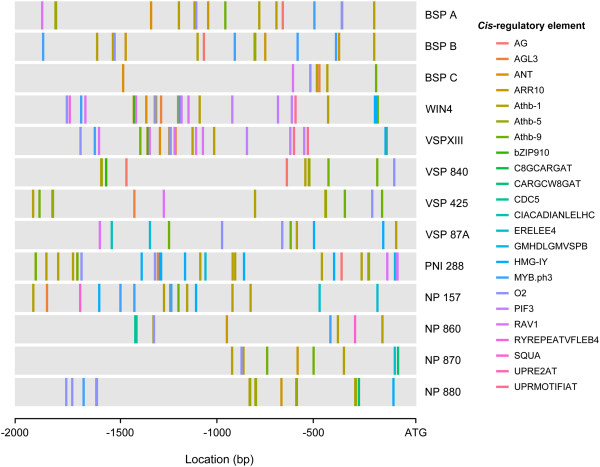
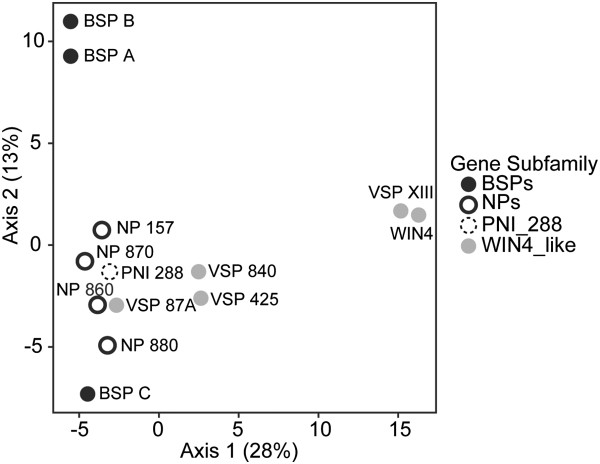
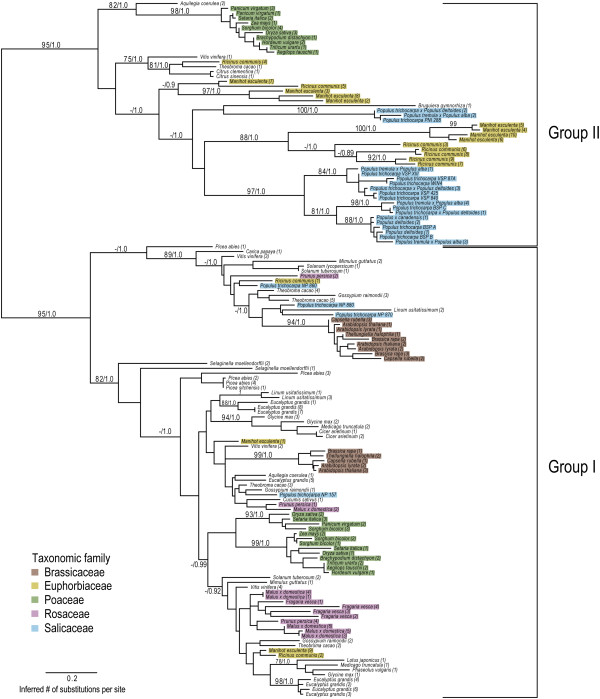
We conducted phylogenetic analyses to determine the distribution and evolution of NP-like proteins in plants. These analyses revealed two major clusters of NP-like proteins in plants. Group I proteins were encoded by genes across a wide range of plant taxa while proteins encoded by Group II genes were dominated by species belonging to the order Malpighiales and included the Populus Bark Storage Protein (BSP) and WIN4-like proteins. Additionally, we evaluated the NP-like genes in Populus by examining the transcript abundance of the 13 NP-like genes found in the Populus genome in various tissues of plants exposed to long-day (LD) and short-day (SD) photoperiods. We found that all 13 of the Populus NP-like genes belonging to either Group I or II are expressed in various tissues in both LD and SD conditions. Tests of natural selection and expression evolution analysis of the Populus genes suggests that divergence in gene expression may have occurred recently during the evolution of Populus, which supports the adaptive maintenance models. Lastly, in silico analysis of cis-regulatory elements in the promoters of the 13 NP-like genes in Populus revealed common regulatory elements known to be involved in light regulation, stress/pathogenesis and phytohormone responses.
In Populus, the evolution of the NP-like protein and gene family has been shaped by duplication events and natural selection. Expression data suggest that previously uncharacterized NP-like proteins may function in nutrient sensing and/or signaling. These proteins are members of Group I NP-like proteins, which are widely distributed in many plant taxa. We conclude that NP-like proteins may function in plants, although this function is undefined.
核苷磷酸化酶(NPs)在人类和细菌系统中因其在代谢核苷酸挽救和与致癌作用的联系而得到广泛研究。在植物中,NP 样蛋白尚未得到全面研究,可能是因为在核昔 salvage 中没有代谢功能的证据。然而,在森林树种杨属中,一类 NP 样蛋白作为一种重要的生态生理适应,用于氮的季节间和季内储存和循环。
我们进行了系统发育分析,以确定 NP 样蛋白在植物中的分布和进化。这些分析揭示了植物中 NP 样蛋白的两个主要簇。I 组蛋白由广泛的植物分类群中的基因编码,而 II 组蛋白由属于 Malpighiales 目且包括杨属 Bark 储存蛋白(BSP)和 WIN4 样蛋白的物种的基因编码。此外,我们通过检查在长日照(LD)和短日照(SD)光周期下暴露于不同组织的杨树基因组中发现的 13 个 NP 样基因的转录丰度,评估了杨树中的 NP 样基因。我们发现,属于 I 组或 II 组的杨树 13 个 NP 样基因都在 LD 和 SD 条件下的各种组织中表达。对杨树基因的自然选择和表达进化分析的检验表明,基因表达的分歧可能是在杨树进化的最近时期发生的,这支持了适应性维持模型。最后,对杨树 13 个 NP 样基因启动子中的顺式调控元件进行了计算机分析,揭示了已知参与光调节、胁迫/发病和植物激素反应的常见调控元件。
在杨属中,NP 样蛋白和基因家族的进化受到了复制事件和自然选择的影响。表达数据表明,以前未被表征的 NP 样蛋白可能在营养感应和/或信号转导中发挥作用。这些蛋白是广泛分布于许多植物分类群中的 I 组 NP 样蛋白的成员。我们得出结论,NP 样蛋白可能在植物中发挥作用,尽管其功能尚未确定。