Costa R H, Van Dyke T A, Yan C, Kuo F, Darnell J E
Department of Biochemistry, University of Illinois College of Medicine, Chicago 60612.
Proc Natl Acad Sci U S A. 1990 Sep;87(17):6589-93. doi: 10.1073/pnas.87.17.6589.
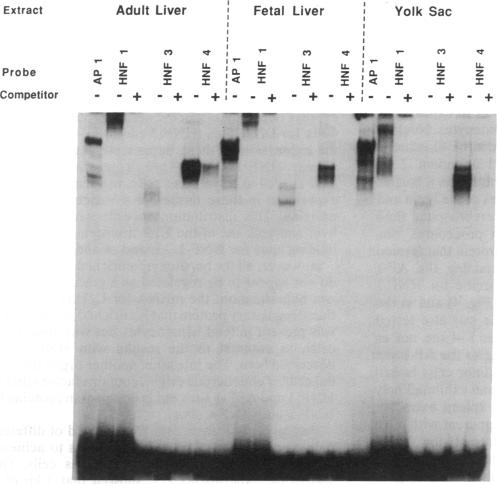
The serum thyroxine-binding protein, transthyretin (TTR), is made by hepatocytes and by choroid plexus epithelium in adults and by yolk sac cells in embryogenesis. Four hepatocyte nuclear factors (HNF-1, -3, and -4 and C/EBP) that are present in liver but not in most other adult tissues bind DNA sites in the TTR gene that are sufficient to direct transgenic expression. Three of these proteins were also found in yolk sac cells, which also express the transgene. A limited transgenic construct is not active in the choroid plexus and a TTR-producing choroid plexus tumor lacks three of the liver-enriched DNA-binding proteins. We conclude that cell-specific expression of TTR is regulated at least in part by the differential cellular distribution of positive-acting transcription factors.
血清甲状腺素结合蛋白,即转甲状腺素蛋白(TTR),在成体中由肝细胞和脉络丛上皮细胞产生,在胚胎发育过程中由卵黄囊细胞产生。四种存在于肝脏而非大多数其他成体组织中的肝细胞核因子(HNF-1、-3、-4和C/EBP)结合TTR基因中的DNA位点,这些位点足以指导转基因表达。其中三种蛋白质也存在于卵黄囊细胞中,卵黄囊细胞也表达该转基因。一个有限的转基因构建体在脉络丛中无活性,并且产生TTR的脉络丛肿瘤缺乏三种肝脏富集的DNA结合蛋白。我们得出结论,TTR的细胞特异性表达至少部分受正性作用转录因子的差异细胞分布调节。