Department of Medicine III, RWTH University-Hospital Aachen, Aachen, Germany.
Hepatology. 2014 Feb;59(2):630-42. doi: 10.1002/hep.26697. Epub 2013 Dec 23.
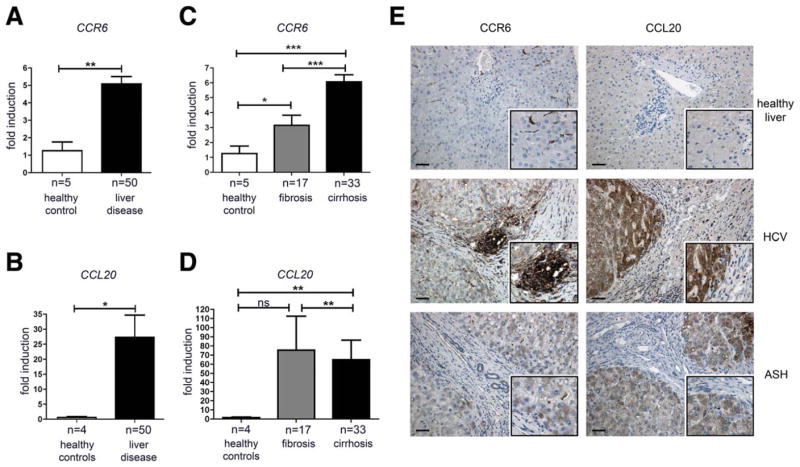
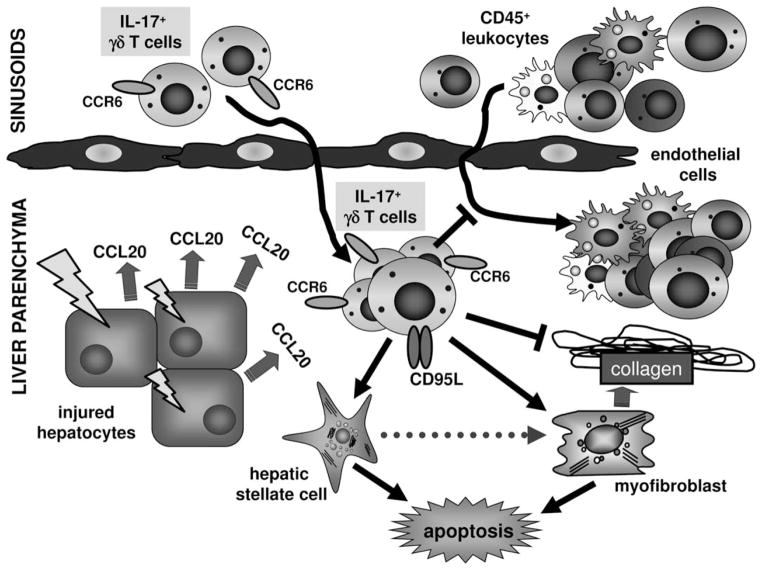
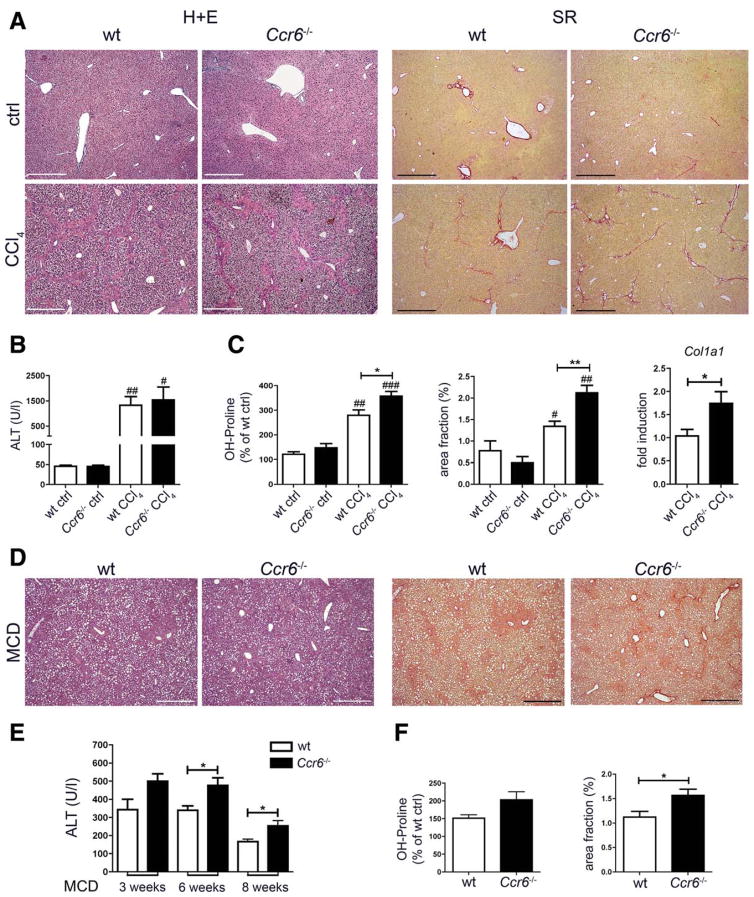
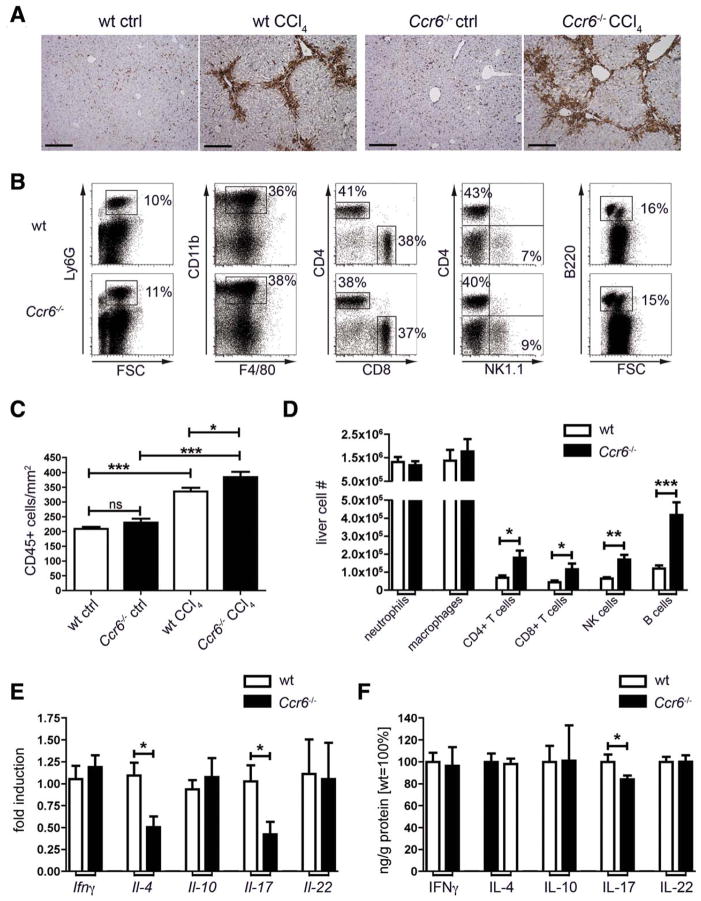
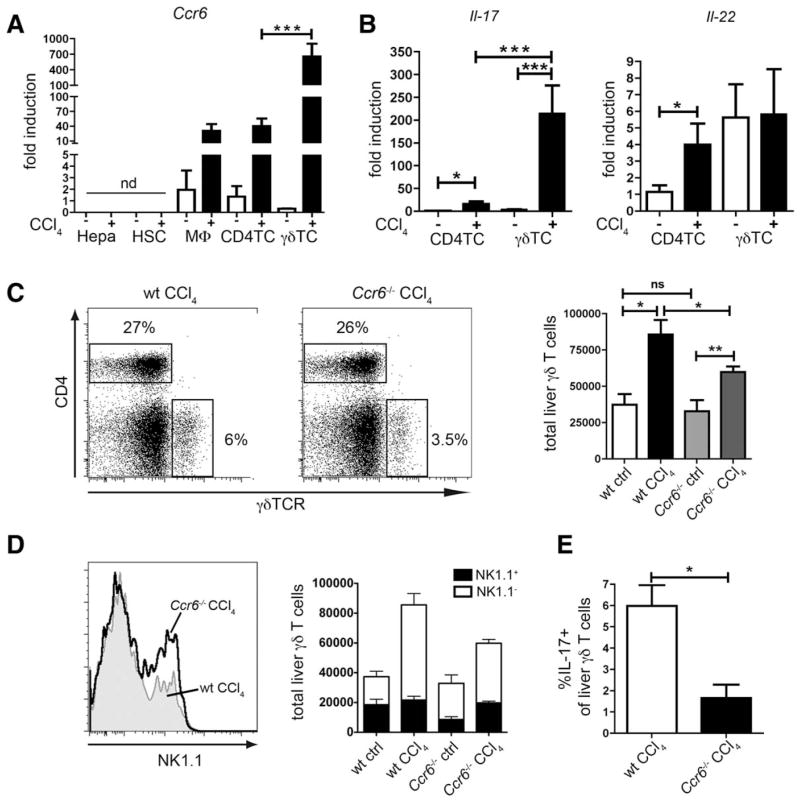
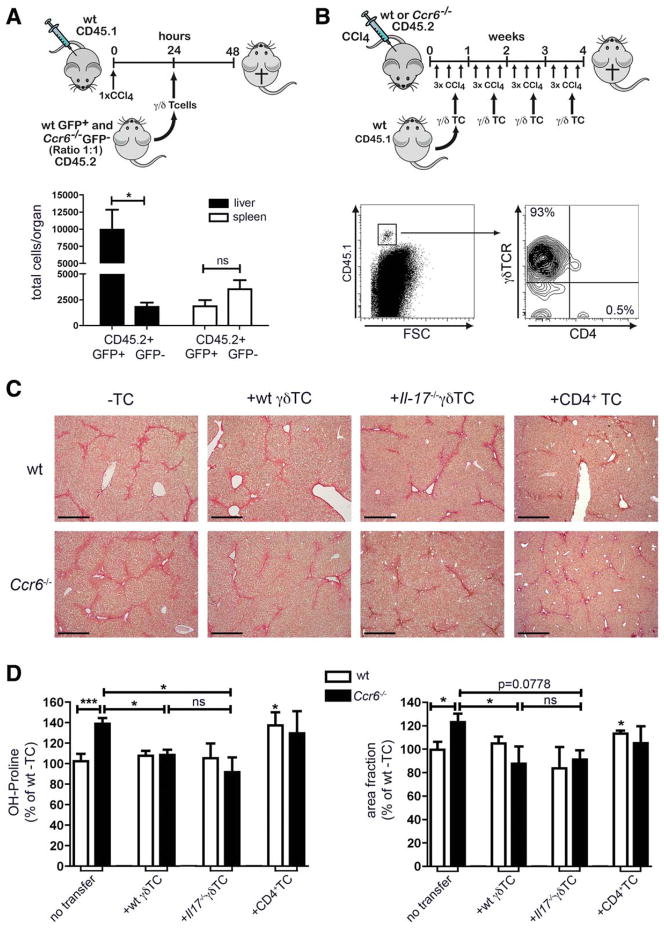
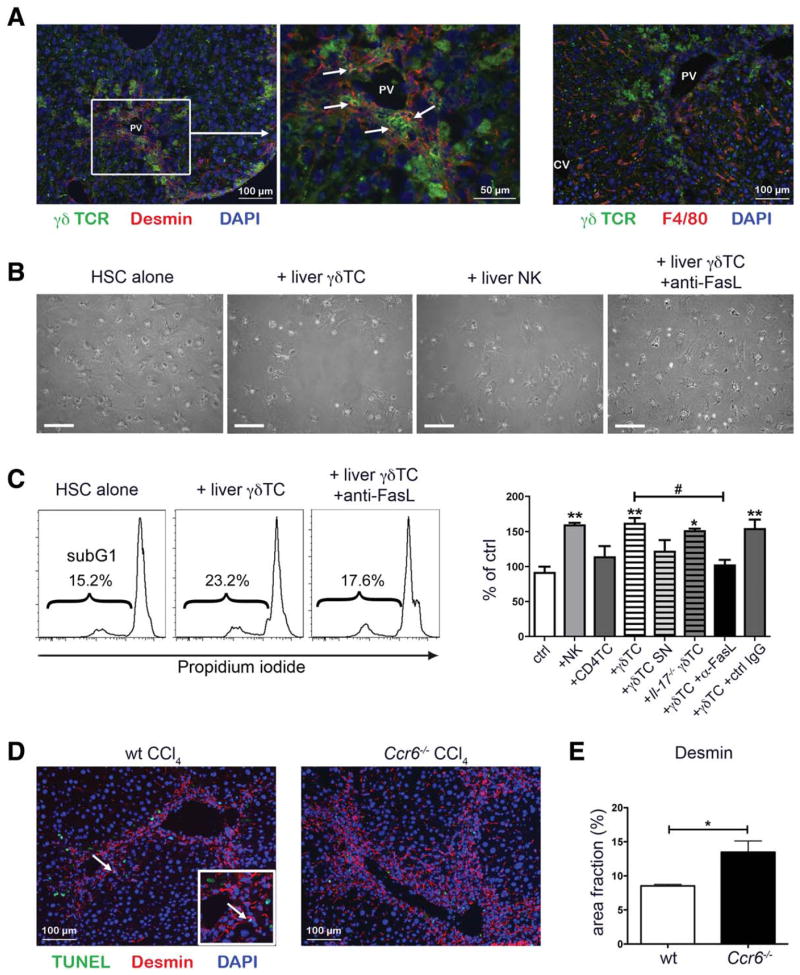
Chronic liver injury promotes hepatic inflammation, representing a prerequisite for organ fibrosis. We hypothesized a contribution of chemokine receptor CCR6 and its ligand, CCL20, which may regulate migration of T-helper (Th)17, regulatory, and gamma-delta (γδ) T cells. CCR6 and CCL20 expression was intrahepatically up-regulated in patients with chronic liver diseases (n = 50), compared to control liver (n = 5). Immunohistochemistry revealed the periportal accumulation of CCR6(+) mononuclear cells and CCL20 induction by hepatic parenchymal cells in liver disease patients. Similarly, in murine livers, CCR6 was expressed by macrophages, CD4 and γδ T-cells, and up-regulated in fibrosis, whereas primary hepatocytes induced CCL20 upon experimental injury. In two murine models of chronic liver injury (CCl4 and methionine-choline-deficient diet), Ccr6(-/-) mice developed more severe fibrosis with strongly enhanced hepatic immune cell infiltration, compared to wild-type (WT) mice. Although CCR6 did not affect hepatic Th-cell subtype composition, CCR6 was explicitly required by the subset of interleukin (IL)-17- and IL-22-expressing γδ T cells for accumulation in injured liver. The adoptive transfer of WT γδ, but not CD4 T cells, into Ccr6(-/-) mice reduced hepatic inflammation and fibrosis in chronic injury to WT level. The anti-inflammatory function of hepatic γδ T cells was independent of IL-17, as evidenced by transfer of Il-17(-/-) cells. Instead, hepatic γδ T cells colocalized with hepatic stellate cells (HSCs) in vivo and promoted apoptosis of primary murine HSCs in a cell-cell contact-dependent manner, involving Fas-ligand (CD95L). Consistent with γδ T-cell-induced HSC apoptosis, activated myofibroblasts were more frequent in fibrotic livers of Ccr6(-/-) than in WT mice.
γδ T cells are recruited to the liver by CCR6 upon chronic injury and protect the liver from excessive inflammation and fibrosis by inhibiting HSCs.
慢性肝损伤促进肝炎症,代表器官纤维化的前提。我们假设趋化因子受体 CCR6 及其配体 CCL20 的贡献,这可能调节 Th17、调节和 γδ T 细胞的迁移。与对照肝(n = 5)相比,患有慢性肝病的患者(n = 50)肝内 CCR6 和 CCL20 的表达上调。免疫组织化学显示在肝病患者中,CCR6(+)单核细胞和 CCL20 诱导的门脉周围细胞积聚。同样,在鼠肝中,CCR6 由巨噬细胞、CD4 和 γδ T 细胞表达,并在纤维化中上调,而原代肝细胞在实验性损伤时诱导 CCL20。在两种慢性肝损伤的鼠模型(CCl4 和蛋氨酸-胆碱缺乏饮食)中,与野生型(WT)小鼠相比,Ccr6(-/-)小鼠发展出更严重的纤维化,伴有强烈增强的肝免疫细胞浸润。虽然 CCR6 不影响肝 Th 细胞亚型组成,但 CCR6 是表达白细胞介素(IL)-17 和 IL-22 的 γδ T 细胞亚群在损伤肝中积累所必需的。WT γδ,但不是 CD4 T 细胞的过继转移到 Ccr6(-/-)小鼠中可降低慢性损伤中的肝炎症和纤维化至 WT 水平。肝 γδ T 细胞的抗炎功能与 IL-17 无关,如转移 Il-17(-/-)细胞所示。相反,肝 γδ T 细胞在体内与肝星状细胞(HSCs)共定位,并以细胞-细胞接触依赖的方式促进原代鼠 HSCs 的凋亡,涉及 Fas 配体(CD95L)。与 γδ T 细胞诱导的 HSC 凋亡一致,在 Ccr6(-/-)而非 WT 小鼠的纤维化肝中更频繁地出现活化的肌成纤维细胞。
慢性损伤时 γδ T 细胞通过 CCR6 募集到肝脏,并通过抑制 HSCs 防止肝脏过度炎症和纤维化。