Department of Food Science and Nutrition, Dankook University, 126, Jukjeon-dong, Suji-gu, Yongin-si, Gyunggi 448-701, Korea.
Nutr Res Pract. 2013 Aug;7(4):287-93. doi: 10.4162/nrp.2013.7.4.287. Epub 2013 Aug 7.
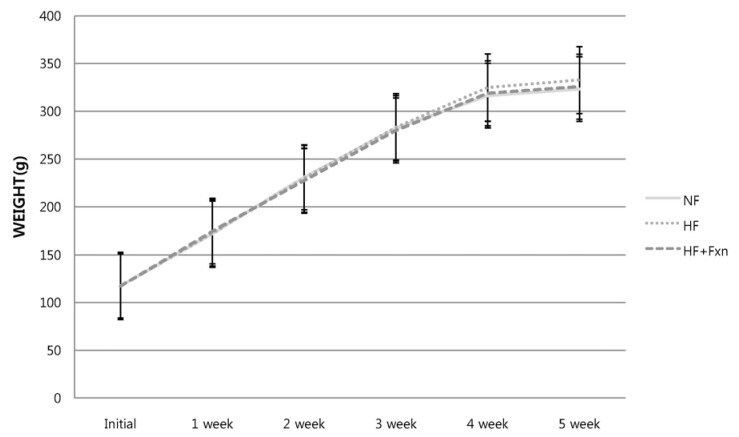
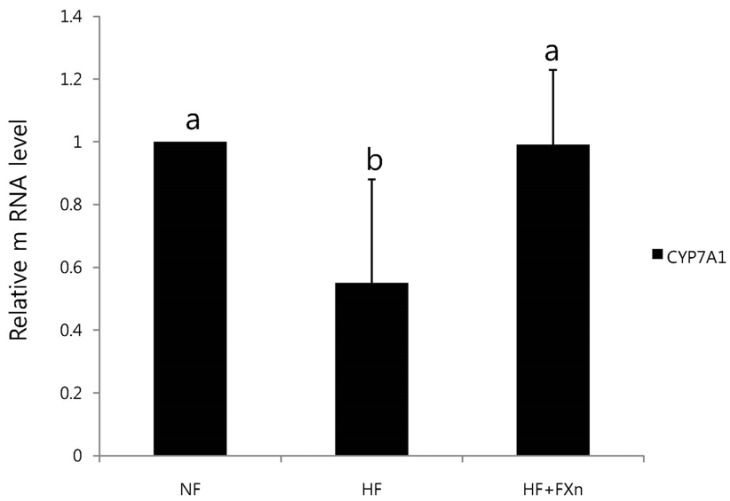
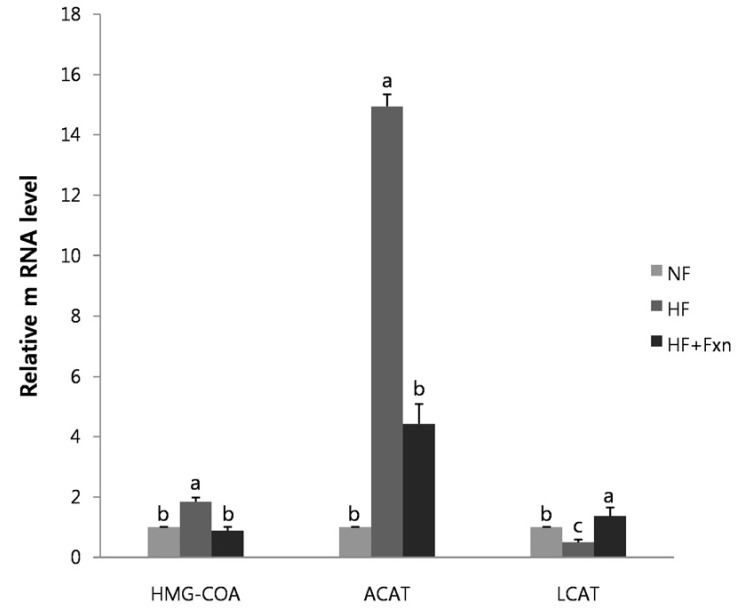
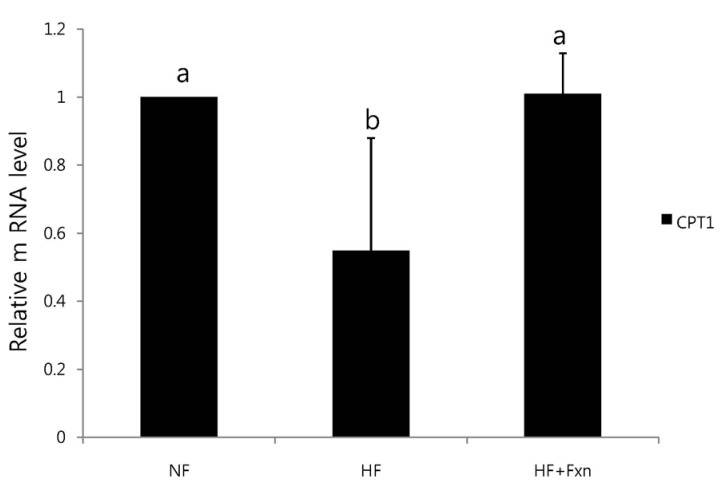
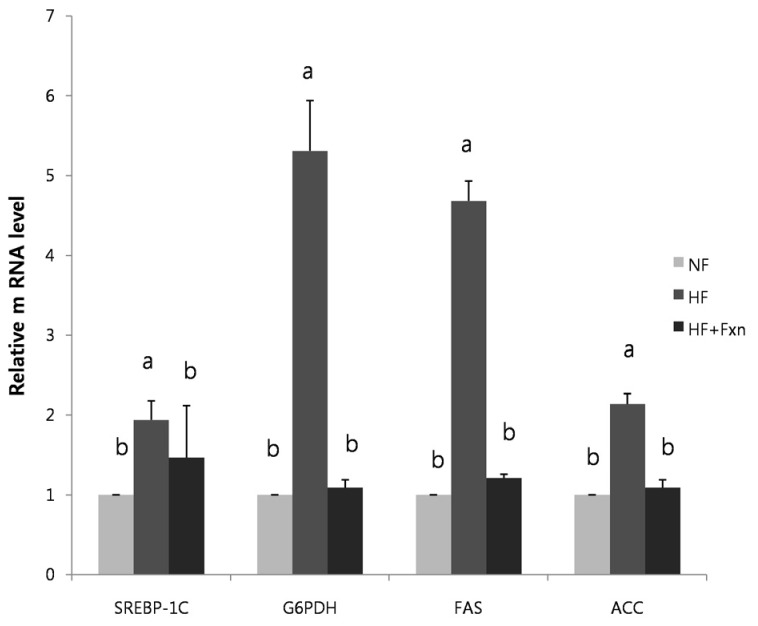
This study determined the effects of fucoxanthin on gene expressions related to lipid metabolism in rats with a high-fat diet. Rats were fed with normal fat diet (NF, 7% fat) group, high fat diet group (HF, 20% fat), and high fat with 0.2% fucoxanthin diet group (HF+Fxn) for 4 weeks. Body weight changes and lipid profiles in plasma, liver, and feces were determined. The mRNA expressions of transcriptional factors such as sterol regulatory element binding protein (SREBP)-1c, Carnitine palmitoyltransferase-1 (CPT1), Cholesterol 7α-hydroxylase1 (CYP7A1) as well as mRNA expression of several lipogenic enzymes were determined. Fucoxanthin supplements significantly increased plasma high density lipoprotein (HDL) concentration (P < 0.05). The hepatic total lipids, total cholesterols, and triglycerides were significantly decreased while the fecal excretions of total lipids, cholesterol, and triglycerides were significantly increased in HF+Fxn group (P < 0.05). The mRNA expression of hepatic Acetyl-CoA carboxylase (ACC), Fatty acid synthase (FAS), and Glucose-6-phosphate dehydrogenase (G6PDH) as well as SREBP-1C were significantly lower in HF+Fxn group compared to the HF group (P < 0.05). The hepatic mRNA expression of Hydroxy-3-methylglutaryl coenzyme A (HMG-CoA) and Acyl-CoA cholesterol acyltransferase (ACAT) were significantly low while lecithin-cholesterol acyltransferase (LCAT) was significantly high in the HF+Fxn group (P < 0.05). There was significant increase in mRNA expression of CPT1 and CYP7A1 in the HF+Fxn group, compared to the HF group (P < 0.05). In conclusion, consumption of fucoxanthin is thought to be effective in improving lipid and cholesterol metabolism in rats with a high fat diet.
本研究旨在探讨褐藻多酚对高脂肪饮食大鼠脂代谢相关基因表达的影响。实验选用大鼠分为正常脂肪饮食组(NF,7%脂肪)、高脂肪饮食组(HF,20%脂肪)和高脂肪加 0.2%褐藻多酚饮食组(HF+Fxn),分别喂养 4 周。检测各组大鼠体重变化、血浆、肝脏和粪便中的脂质谱,以及固醇调节元件结合蛋白-1c(SREBP-1c)、肉碱棕榈酰转移酶-1(CPT1)、胆固醇 7α-羟化酶 1(CYP7A1)等转录因子以及几种脂肪生成酶的 mRNA 表达水平。褐藻多酚补充剂可显著提高血浆高密度脂蛋白(HDL)浓度(P<0.05)。HF+Fxn 组大鼠肝脏总脂质、总胆固醇和三酰甘油含量显著降低,粪便中总脂质、胆固醇和三酰甘油排泄量显著增加(P<0.05)。与 HF 组相比,HF+Fxn 组大鼠肝脏乙酰辅酶 A 羧化酶(ACC)、脂肪酸合酶(FAS)和葡萄糖-6-磷酸脱氢酶(G6PDH)以及 SREBP-1C 的 mRNA 表达显著降低(P<0.05)。HF+Fxn 组大鼠肝脏羟甲基戊二酰辅酶 A(HMG-CoA)和酰基辅酶 A 胆固醇酰基转移酶(ACAT)mRNA 表达显著降低,卵磷脂胆固醇酰基转移酶(LCAT)mRNA 表达显著升高(P<0.05)。与 HF 组相比,HF+Fxn 组大鼠 CPT1 和 CYP7A1 的 mRNA 表达显著增加(P<0.05)。综上所述,褐藻多酚的摄入可有效改善高脂肪饮食大鼠的脂质和胆固醇代谢。