Department of Agricultural Biotechnology, National Academy of Agricultural Science, Rural Development Administration (RDA), 224 Suinro Gwonseon-gu, Suwon 441-707, Gyeonggi-do, Korea.
Int J Mol Sci. 2013 Aug 19;14(8):17073-84. doi: 10.3390/ijms140817073.
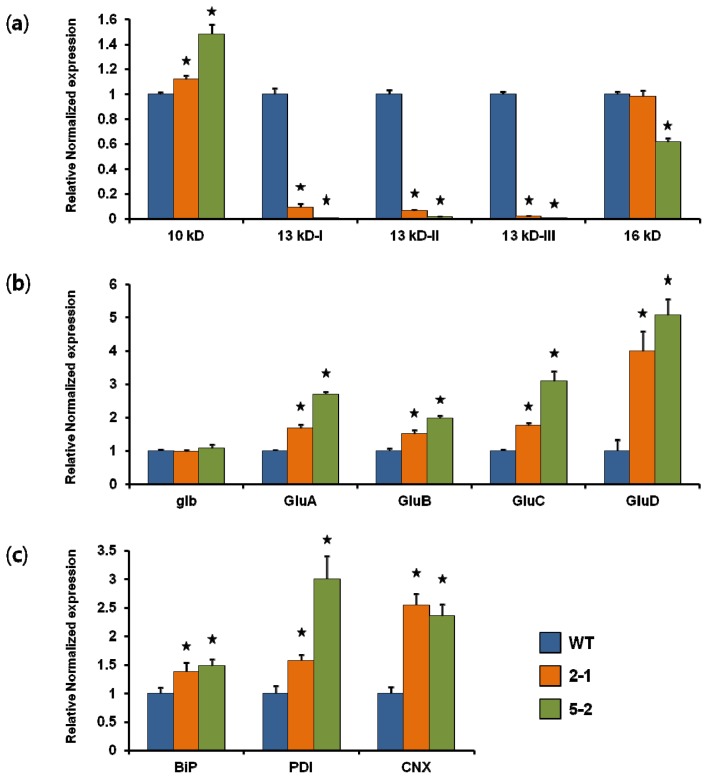
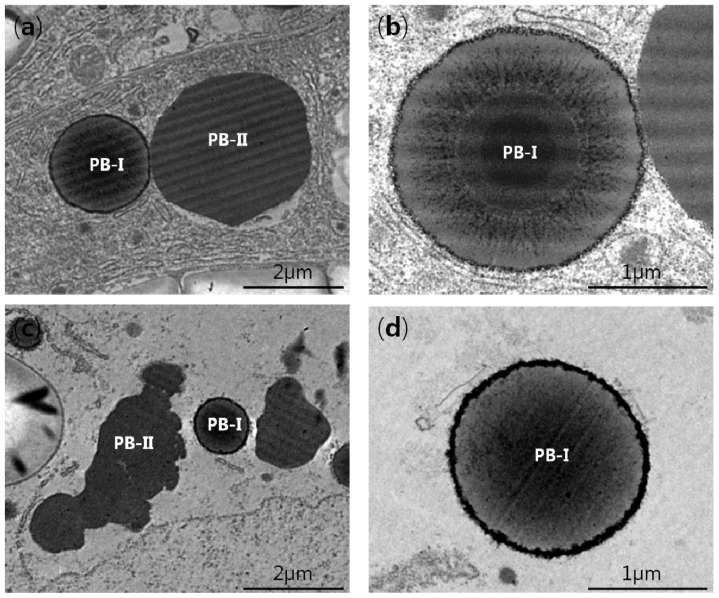
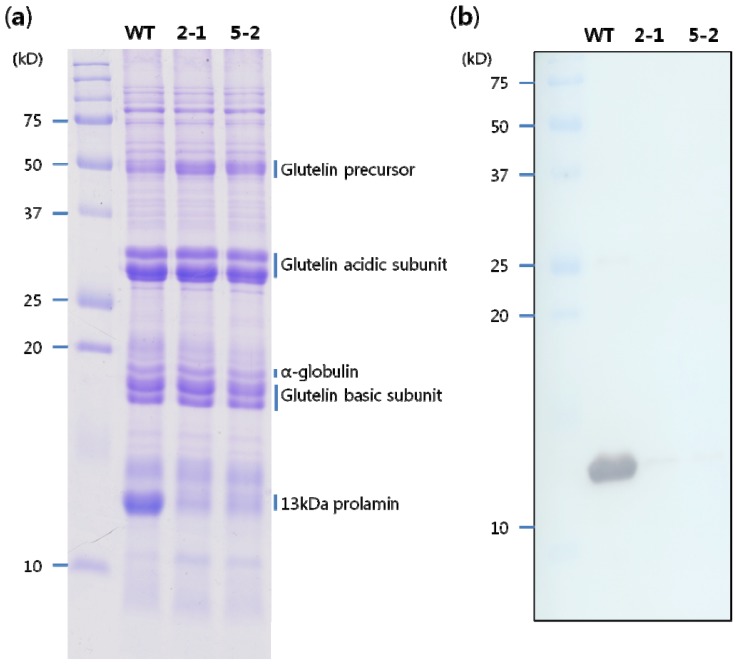
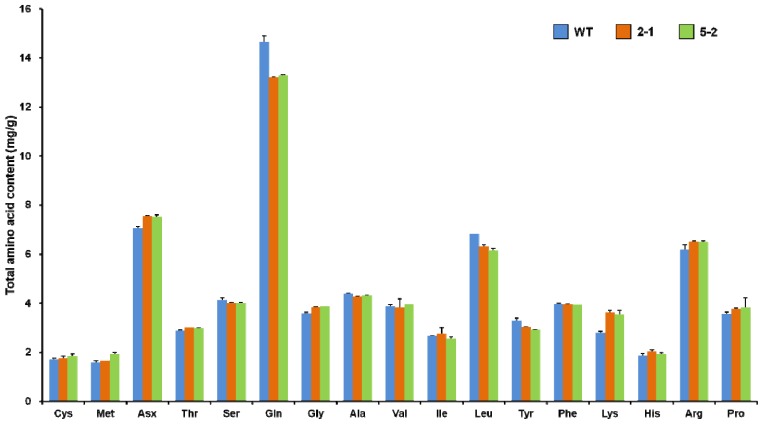
Rice seed storage proteins accumulate in two types of protein body (PB-I and PB-II) that are nutrient sources for animals. PB-I is indigestible and negatively affects rice protein quality. To improve the nutritional value of rice seeds we are aiming to engineer the composition and accumulation of endogenous seed storage proteins. In this study we generated transgenic rice plants in which 13 kD prolamin genes were suppressed by RNA interference (13 kD pro-RNAi). Analysis based on qRT-PCR confirmed that the targeted 13 kD prolamins were markedly suppressed, and were compensated for by an increase in other storage proteins including 10 kD prolamin, glutelins, and chaperone proteins. The storage protein profiles further revealed that the levels of 13 kD prolamins were significantly reduced, while that of the glutelin precursor was slightly increased and the remaining storage proteins did not change. Amino acid analysis showed that the reduction of 13 kD prolamins resulted in a 28% increase in the lysine content relative to the wild type, indicating that the 13 kD pro-RNAi rice seeds are more nutritious. Furthermore, a reduction in the levels of 13 kD prolamins resulted in abnormal formation of PB-I, which was small and had no lamellar structure. These results suggest that alteration of prolamins can contribute to improving the nutritional quality of rice.
水稻种子储存蛋白积累在两种类型的蛋白体(PB-I 和 PB-II)中,这些蛋白体是动物的营养来源。PB-I 是不可消化的,会降低水稻蛋白的质量。为了提高水稻种子的营养价值,我们旨在通过 RNA 干扰(13 kD pro-RNAi)工程改造内源种子储存蛋白的组成和积累。在这项研究中,我们生成了转基水稻植株,其中 13 kD 醇溶蛋白基因被 RNA 干扰抑制。基于 qRT-PCR 的分析证实,目标 13 kD 醇溶蛋白明显受到抑制,而其他储存蛋白如 10 kD 醇溶蛋白、谷蛋白和伴侣蛋白的含量增加。储存蛋白谱进一步表明,13 kD 醇溶蛋白的水平显著降低,而谷蛋白前体的水平略有增加,其余储存蛋白没有变化。氨基酸分析表明,13 kD 醇溶蛋白的减少导致赖氨酸含量相对野生型增加了 28%,表明 13 kD pro-RNAi 水稻种子更有营养。此外,13 kD 醇溶蛋白水平的降低导致 PB-I 的异常形成,其体积小且没有层状结构。这些结果表明,醇溶蛋白的改变有助于提高水稻的营养价值。