Baumann Michaela, Zwissler Bastian, Schalinski Inga, Ruf-Leuschner Martina, Schauer Maggie, Kissler Johanna
Department of Psychology, University of Konstanz , Konstanz , Germany.
Front Behav Neurosci. 2013 Aug 7;7:94. doi: 10.3389/fnbeh.2013.00094. eCollection 2013.
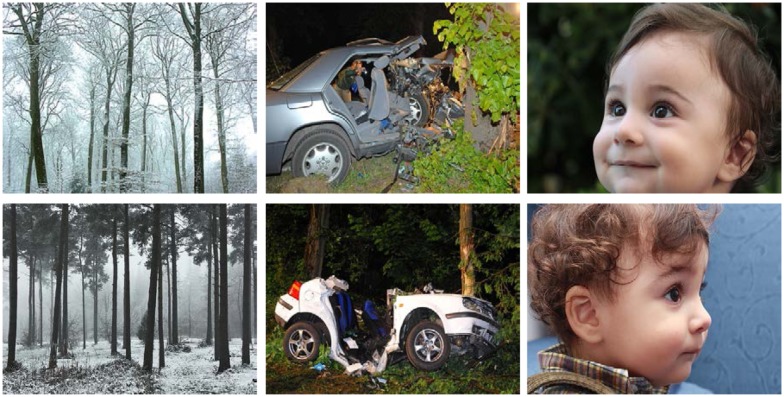
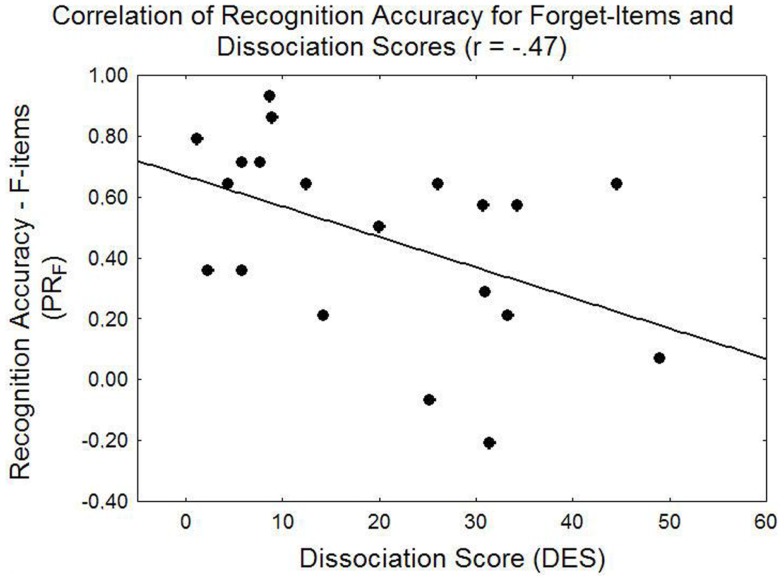
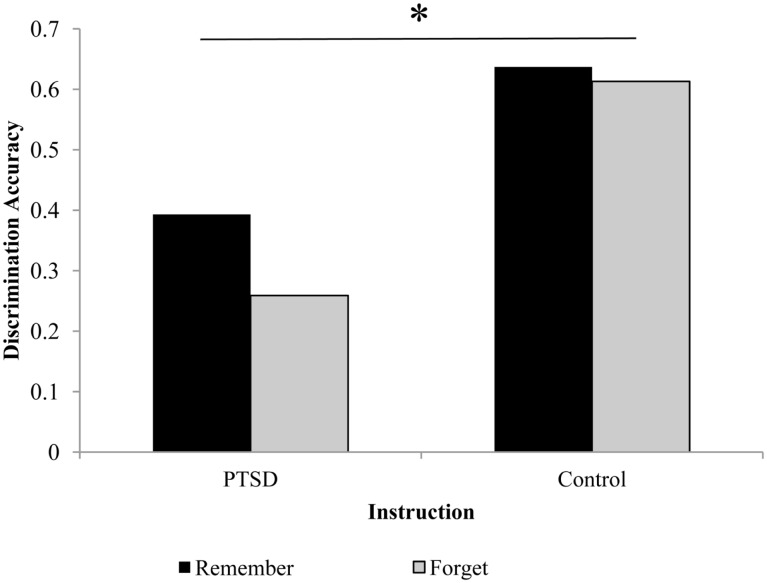
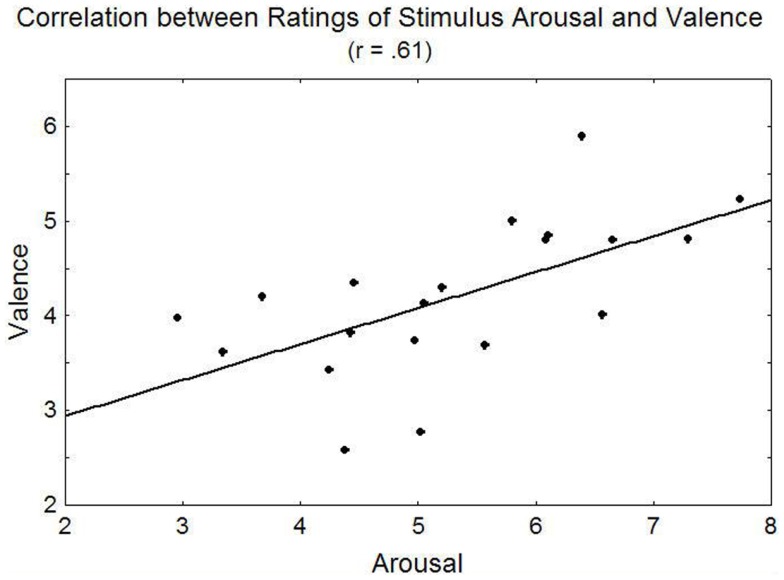
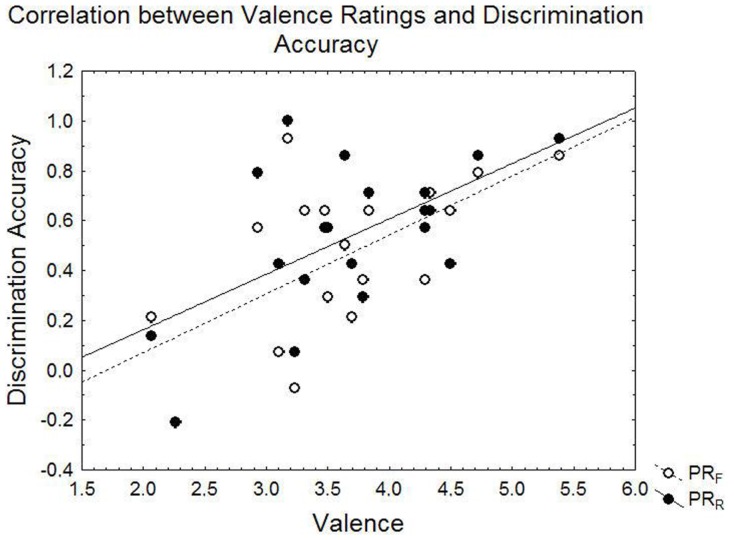
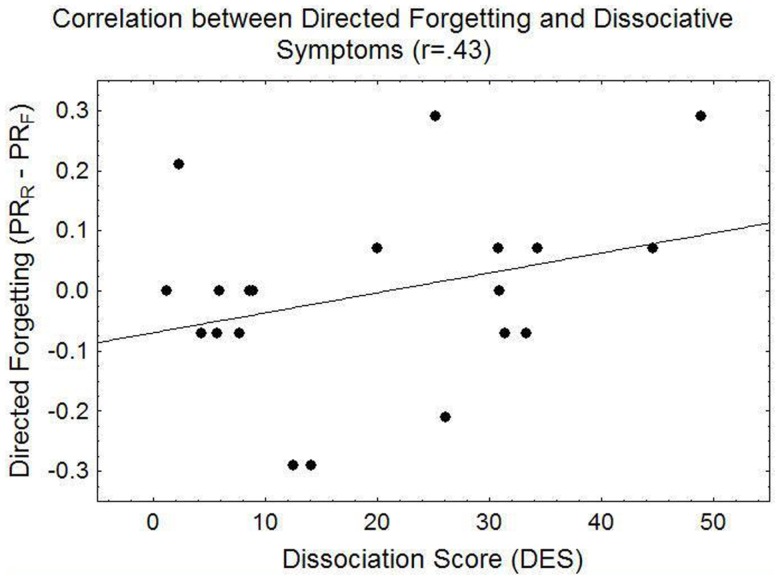
People with post-traumatic stress disorder (PTSD) often suffer from memory disturbances. In particular, previous studies suggest that PTSD patients perform atypically on tests of directed forgetting, which may be mediated by an altered emotional appraisal of the presented material. Also, a special role of dissociative symptoms in traumatized individuals' memory performance has been suggested. Here, we investigate these issues in traumatized immigrants in Germany. In an item-method directed forgetting task, pictures were presented individually, each followed by an instruction to either remember or forget it. Later, recognition memory was tested for all pictures, regardless of initial instruction. Overall, the PTSD group's discrimination accuracy was lower than the control group's, as PTSD participants produced fewer hits and more false alarms, but the groups did not differ in directed forgetting itself. Moreover, the more negatively participants evaluated the stimuli, the less they were able to discriminate old from new items. Participants with higher dissociation scores were particularly poor at recognizing to-be-forgotten items. Results confirm PTSD patients' general discrimination deficits, but provide no evidence for a distinct directed forgetting pattern in PTSD. Furthermore, data indicate that, in general, more negatively perceived items are discriminated with less accuracy than more positively appraised ones. Results are discussed in the larger context of emotion and stress-related modulations of episodic memory, with particular focus on the role of dissociative symptoms.
患有创伤后应激障碍(PTSD)的人常常遭受记忆障碍之苦。特别是,先前的研究表明,PTSD患者在定向遗忘测试中的表现异常,这可能是由对所呈现材料的情绪评估改变所介导的。此外,解离症状在受创伤个体的记忆表现中所起的特殊作用也已被提及。在此,我们对德国受创伤的移民进行这些问题的研究。在一项项目法定向遗忘任务中,图片被逐一呈现,每张图片之后都会给出记住或忘记它的指令。随后,对所有图片进行识别记忆测试,无论其最初的指令如何。总体而言,PTSD组的辨别准确率低于对照组,因为PTSD参与者的命中数较少且错误警报较多,但两组在定向遗忘本身方面并无差异。此外,参与者对刺激的评价越负面,他们区分新旧项目的能力就越弱。解离分数较高的参与者在识别要忘记的项目方面尤其差。结果证实了PTSD患者普遍存在辨别缺陷,但没有为PTSD中独特的定向遗忘模式提供证据。此外,数据表明,一般来说,与评价更积极的项目相比,评价更消极的项目在辨别时准确率更低。我们将在与情景记忆的情绪和压力相关调节的更大背景下讨论这些结果,特别关注解离症状的作用。