Computational Systems Biology Lab, University of Georgia, Athens, Georgia, United States of America.
PLoS One. 2013 Aug 14;8(8):e71177. doi: 10.1371/journal.pone.0071177. eCollection 2013.
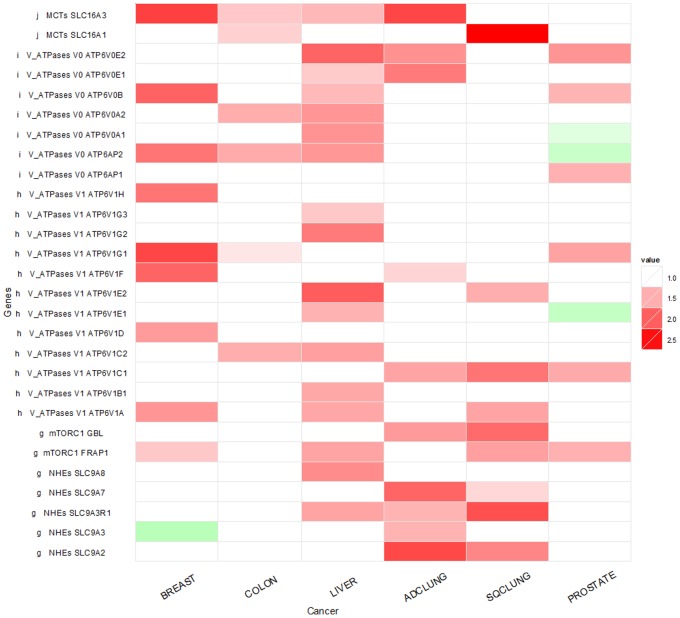
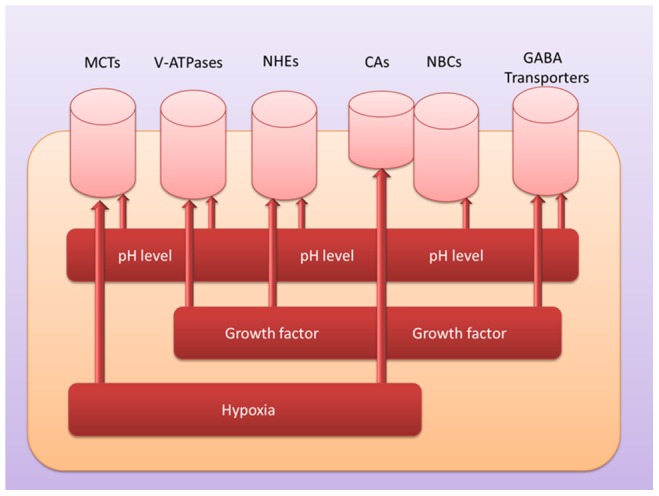
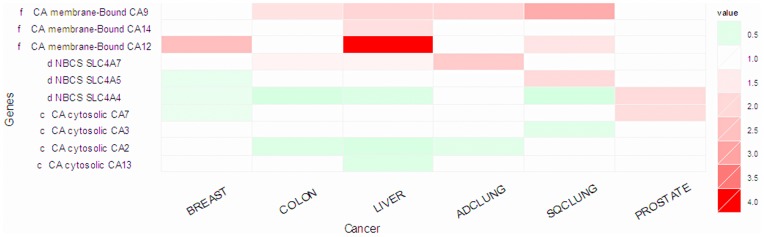
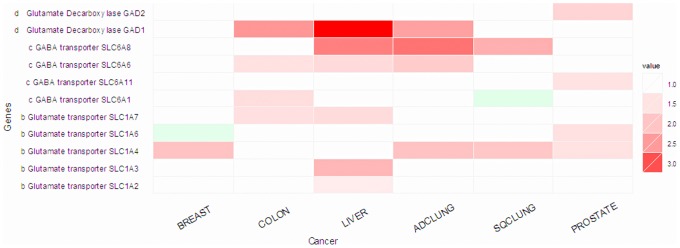
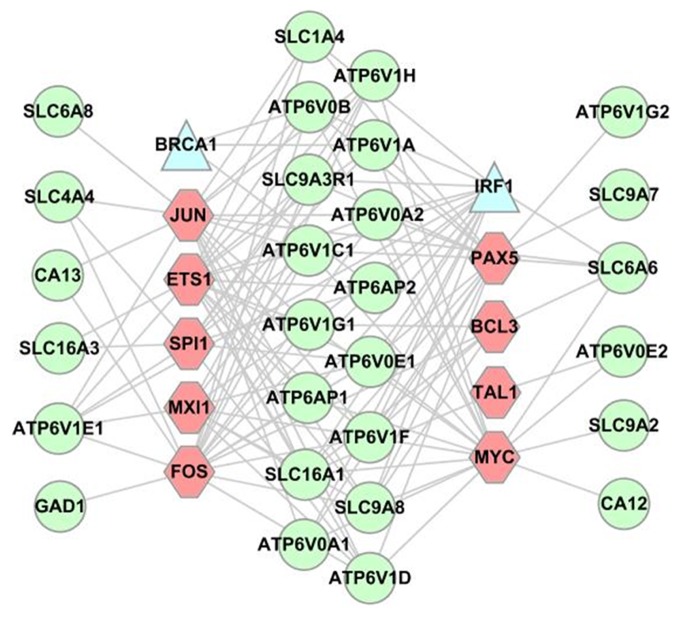
The rapid growth of cancer cells fueled by glycolysis produces large amounts of protons in cancer cells, which tri mechanisms to transport them out, hence leading to increased acidity in their extracellular environments. It has been well established that the increased acidity will induce cell death of normal cells but not cancer cells. The main question we address here is: how cancer cells deal with the increased acidity to avoid the activation of apoptosis. We have carried out a comparative analysis of transcriptomic data of six solid cancer types, breast, colon, liver, two lung (adenocarcinoma, squamous cell carcinoma) and prostate cancers, and proposed a model of how cancer cells utilize a few mechanisms to keep the protons outside of the cells. The model consists of a number of previously, well or partially, studied mechanisms for transporting out the excess protons, such as through the monocarboxylate transporters, V-ATPases, NHEs and the one facilitated by carbonic anhydrases. In addition we propose a new mechanism that neutralizes protons through the conversion of glutamate to γ-aminobutyrate, which consumes one proton per reaction. We hypothesize that these processes are regulated by cancer related conditions such as hypoxia and growth factors and by the pH levels, making these encoded processes not available to normal cells under acidic conditions.
癌细胞中糖酵解的快速生长会产生大量质子,这些质子有三种机制将其运出细胞,从而导致细胞外环境酸度增加。已经证实,酸度增加会诱导正常细胞而不是癌细胞死亡。我们在这里要解决的主要问题是:癌细胞如何应对增加的酸度以避免细胞凋亡的激活。我们对六种实体癌(乳腺癌、结肠癌、肝癌、两种肺癌(腺癌、鳞状细胞癌)和前列腺癌)的转录组数据进行了比较分析,并提出了一个癌细胞如何利用几种机制将质子保持在细胞外的模型。该模型由一些以前、很好或部分研究过的机制组成,用于将多余的质子转运出去,例如通过单羧酸转运蛋白、V-ATP 酶、NHE 和碳酸酐酶促进的机制。此外,我们提出了一种新的机制,通过将谷氨酸转化为γ-氨基丁酸来中和质子,每反应消耗一个质子。我们假设这些过程受到癌症相关条件(如缺氧和生长因子)和 pH 值的调节,使得这些编码过程在酸性条件下对正常细胞不可用。