Sonehara Nathália Martins, Lacerda Jéssica Zani, Jardim-Perassi Bruna Victorasso, de Paula Jr Rubens, Moschetta-Pinheiro Marina Gobbe, Souza Ynaiá Santos Traba, de Andrade Júlia Carolina Junqueira, De Campos Zuccari Debora Aparecida Pires
Faculty of Medicine of São José do Rio Preto (FAMERP), Department of Molecular Biology, São José do Rio Preto, SP 15090-000, Brazil.
Laboratory of Cancer Molecular Investigation (LIMC), Department of Molecular Biology, Faculty of Medicine of São José do Rio Preto (FAMERP), São José do Rio Preto, SP 15090-000, Brazil.
Oncol Lett. 2019 Feb;17(2):1635-1645. doi: 10.3892/ol.2018.9758. Epub 2018 Nov 26.
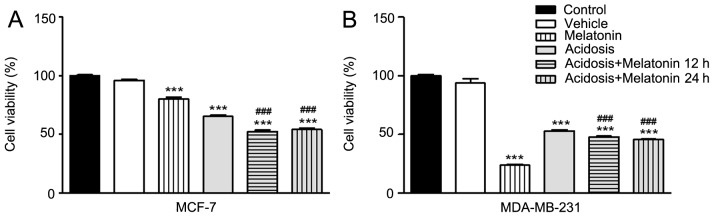
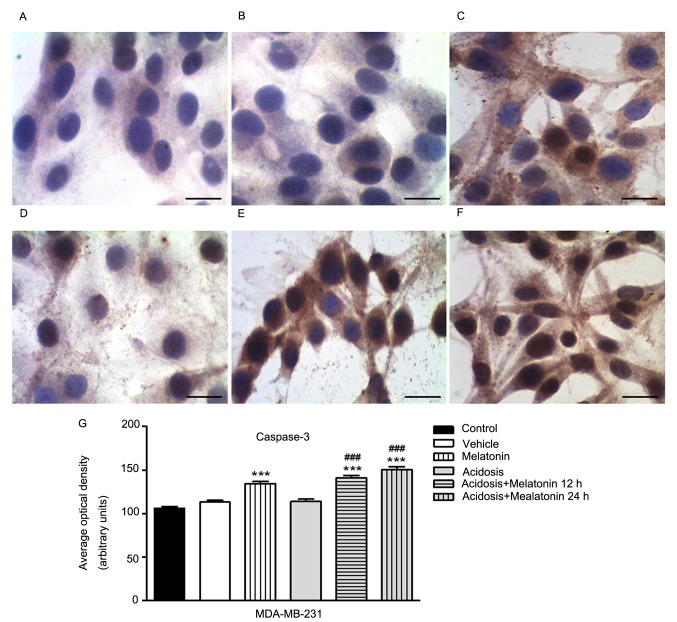
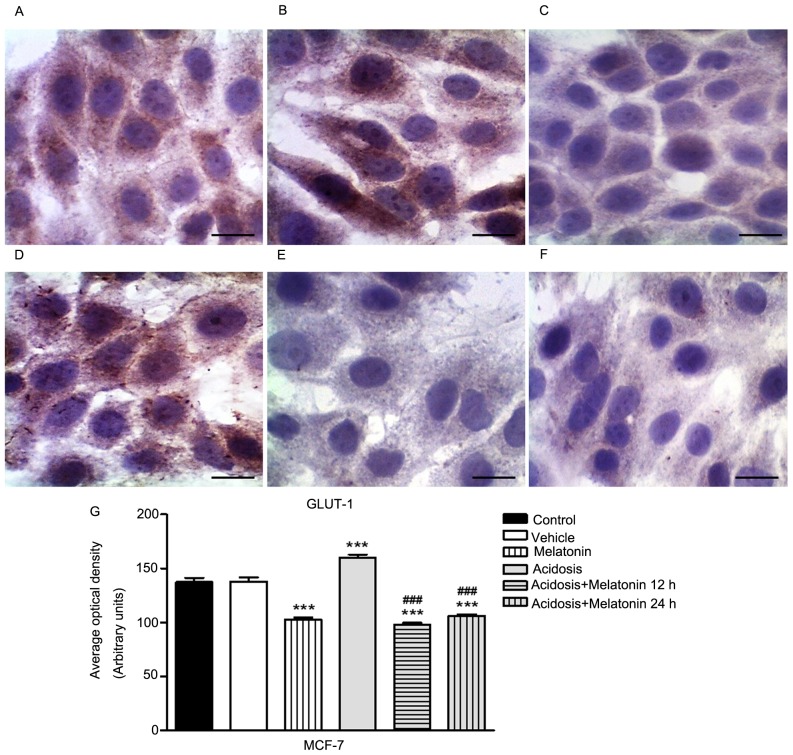
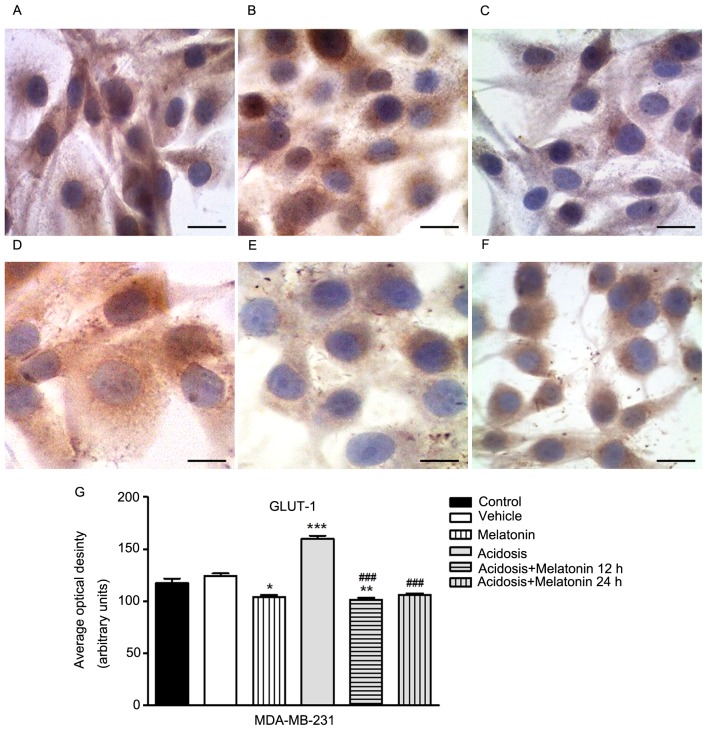
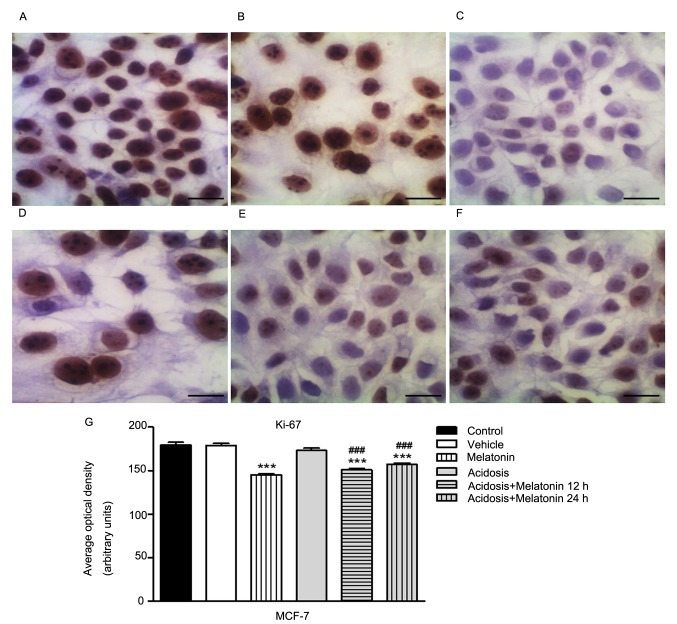
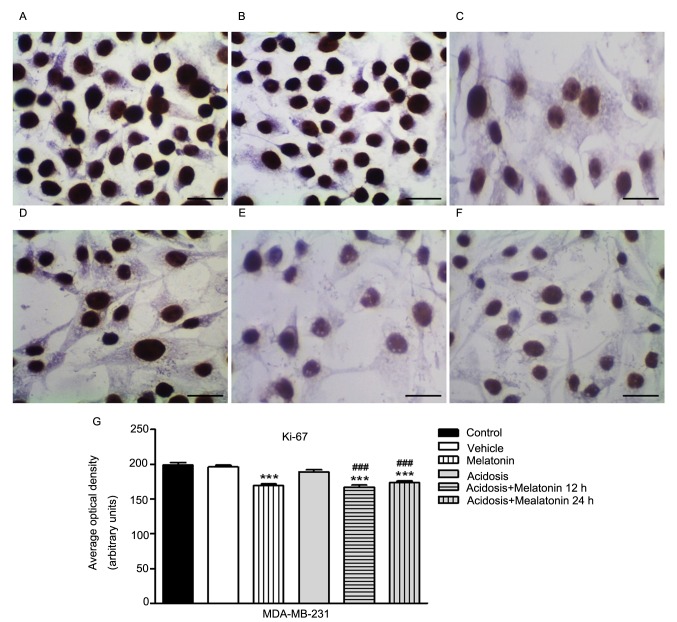
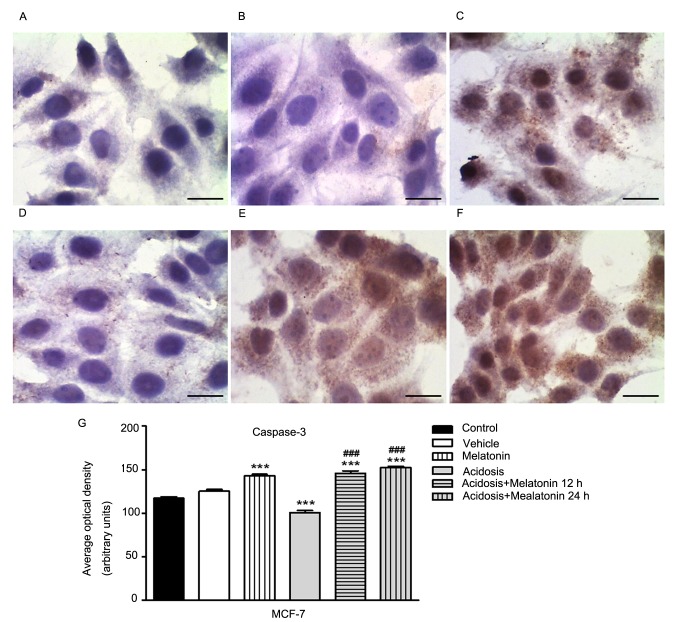
Breast cancer progression is composed of multiple steps that are influenced by tumor cell adaptations to survive under acidic conditions in the tumor microenvironment. Regulation of this cell survival behavior is a promising strategy to avoid cancer development. Melatonin is a natural hormone produced and secreted by the pineal gland capable of modulating different biological pathways in cancer. Although the anti-cancer effects of melatonin are currently widespread, its role in the acid tumor microenvironment remains poorly understood. The aim of the present study was to investigate the effect of low pH (6.7) on human breast cancer cell lines MCF-7 and MDA-MB-231, and the effectiveness of melatonin in acute acidosis survival mechanisms. Cell viability was measured by a MTT assay and the protein expression of glucose transporter (GLUT)-1, Ki-67 and caspase-3 was evaluated by immunocytochemical (ICC) analysis following low pH media and melatonin treatment. In both cell lines the viability was decreased after melatonin treatment (1 mM) under acidosis conditions for 24 h. ICC analysis showed a significant increase in GLUT-1 and Ki-67 expression at pH 6.7, and a decrease after treatment with melatonin for 12 and 24 h. The low pH media decreased the expression of caspase-3, which was increased after melatonin treatment for 12 and 24 h. Overall, the results of the present study revealed melatonin treatment increases apoptosis, as indicated by changes in caspase-3, and decreases proliferation, indicated by changes to Ki-67, and GLUT-1 protein expression under acute acidosis conditions in breast cancer cell lines.
乳腺癌的进展由多个步骤组成,这些步骤受到肿瘤细胞适应在肿瘤微环境酸性条件下生存的影响。调节这种细胞存活行为是一种有望避免癌症发展的策略。褪黑素是一种由松果体产生和分泌的天然激素,能够调节癌症中的不同生物学途径。尽管褪黑素的抗癌作用目前已广泛存在,但其在酸性肿瘤微环境中的作用仍知之甚少。本研究的目的是探讨低pH值(6.7)对人乳腺癌细胞系MCF-7和MDA-MB-231的影响,以及褪黑素在急性酸中毒存活机制中的有效性。通过MTT法测定细胞活力,并在低pH培养基和褪黑素处理后,通过免疫细胞化学(ICC)分析评估葡萄糖转运蛋白(GLUT)-1、Ki-67和半胱天冬酶-3的蛋白表达。在两种细胞系中,在酸中毒条件下用褪黑素(1 mM)处理24小时后,细胞活力均降低。ICC分析显示,在pH 6.7时,GLUT-1和Ki-67表达显著增加,而在褪黑素处理12小时和24小时后表达降低。低pH培养基降低了半胱天冬酶-3的表达,而在褪黑素处理12小时和24小时后表达增加。总体而言,本研究结果表明,在乳腺癌细胞系急性酸中毒条件下,褪黑素处理可增加半胱天冬酶-3变化所表明的细胞凋亡,并降低Ki-67和GLUT-1蛋白表达变化所表明的细胞增殖。