Zoology and Animal Physiology, Institute of Zoology, TU Dresden, D-01217 Dresden, Germany.
Department of Biology, University of Kaiserslautern, D-67653 Kaiserslautern, Germany.
Int J Mol Sci. 2021 Mar 20;22(6):3171. doi: 10.3390/ijms22063171.
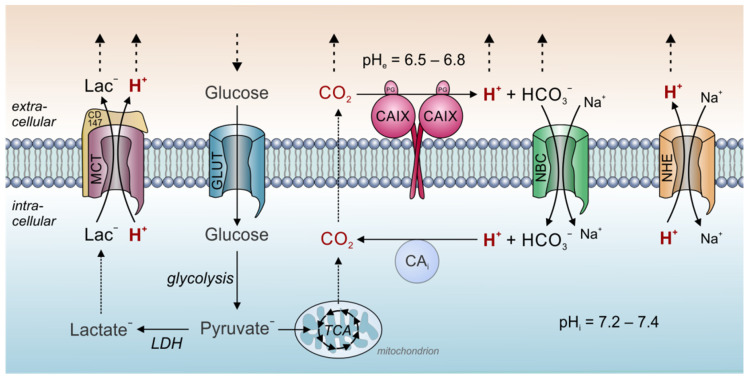
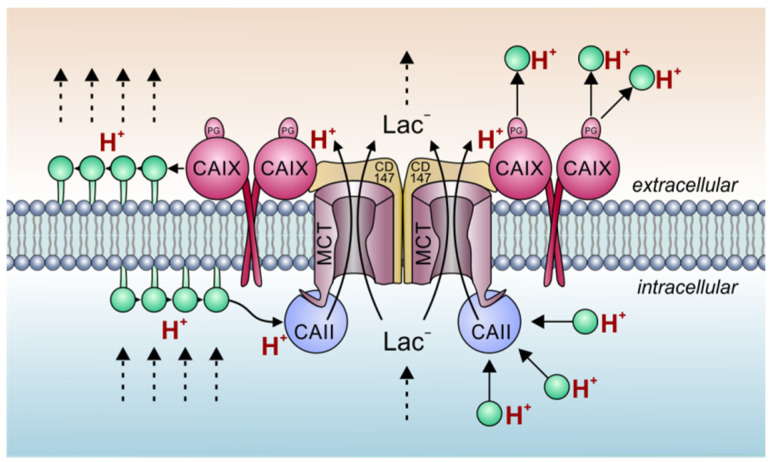
Intra- and extracellular pH regulation is a pivotal function of all cells and tissues. Net outward transport of H is a prerequisite for normal physiological function, since a number of intracellular processes, such as metabolism and energy supply, produce acid. In tumor tissues, distorted pH regulation results in extracellular acidification and the formation of a hostile environment in which cancer cells can outcompete healthy local host cells. Cancer cells employ a variety of H/HCO-coupled transporters in combination with intra- and extracellular carbonic anhydrase (CA) isoforms, to alter intra- and extracellular pH to values that promote tumor progression. Many of the transporters could closely associate to CAs, to form a protein complex coined "transport metabolon". While transport metabolons built with HCO-coupled transporters require CA catalytic activity, transport metabolons with monocarboxylate transporters (MCTs) operate independently from CA catalytic function. In this article, we assess some of the processes and functions of CAs for tumor pH regulation and discuss the role of intra- and extracellular pH regulation for cancer pathogenesis and therapeutic intervention.
细胞内外 pH 调节是所有细胞和组织的关键功能。H 的净外向转运是正常生理功能的先决条件,因为许多细胞内过程,如代谢和能量供应,会产生酸。在肿瘤组织中,pH 调节的扭曲导致细胞外酸化,并形成一种恶劣的环境,使癌细胞能够与健康的局部宿主细胞竞争。癌细胞采用多种 H/HCO 偶联转运体与细胞内外碳酸酐酶 (CA) 同工型相结合,改变细胞内外 pH 值,促进肿瘤进展。许多转运体可以与 CAs 密切相关,形成一个被称为“转运代谢物”的蛋白质复合物。虽然与 HCO 偶联转运体形成的转运代谢物需要 CA 的催化活性,但与单羧酸转运体 (MCT) 形成的转运代谢物独立于 CA 的催化功能。本文评估了 CAs 在肿瘤 pH 调节中的一些过程和功能,并讨论了细胞内外 pH 调节在癌症发病机制和治疗干预中的作用。