School of Public Health, Faculty of Health Sciences, University of the Witwatersrand, Johannesburg, South Africa.
PLoS One. 2013 Aug 14;8(8):e71437. doi: 10.1371/journal.pone.0071437. eCollection 2013.
Health inequities in developing countries are difficult to eradicate because of limited resources. The neglect of adult mortality in Sub-Saharan Africa (SSA) is a particular concern. Advances in data availability, software and analytic methods have created opportunities to address this challenge and tailor interventions to small areas. This study demonstrates how a generic framework can be applied to guide policy interventions to reduce adult mortality in high risk areas. The framework, therefore, incorporates the spatial clustering of adult mortality, estimates the impact of a range of determinants and quantifies the impact of their removal to ensure optimal returns on scarce resources.
Data from a national cross-sectional survey in 2007 were used to illustrate the use of the generic framework for SSA and elsewhere. Adult mortality proportions were analyzed at four administrative levels and spatial analyses were used to identify areas with significant excess mortality. An ecological approach was then used to assess the relationship between mortality "hotspots" and various determinants. Population attributable fractions were calculated to quantify the reduction in mortality as a result of targeted removal of high-impact determinants.
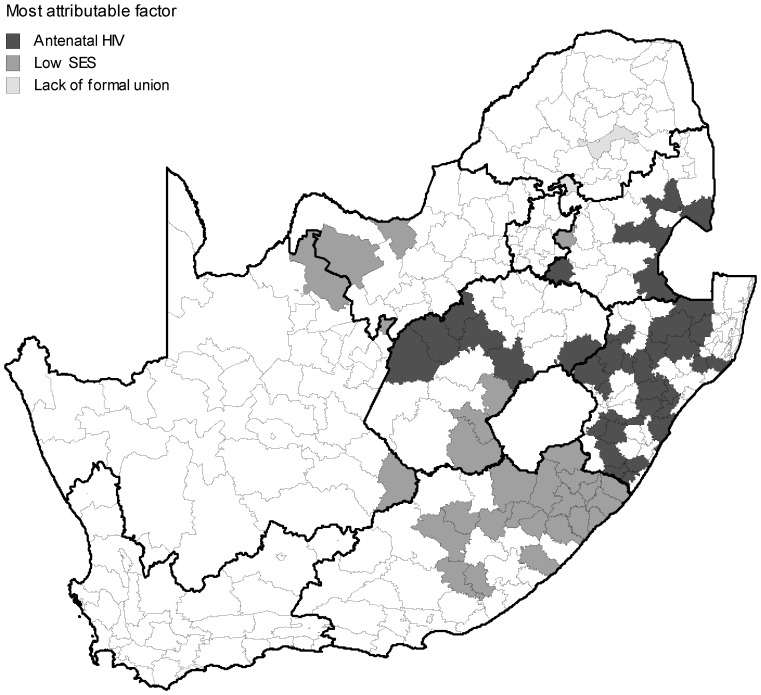
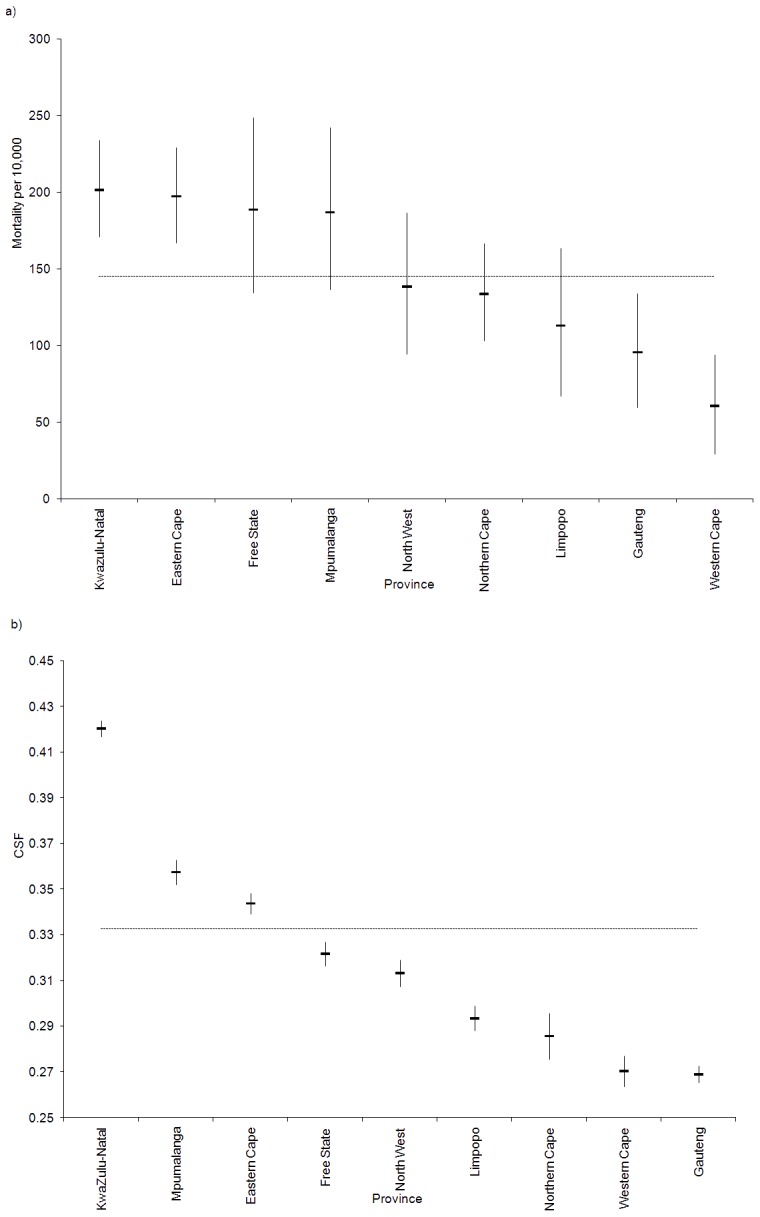
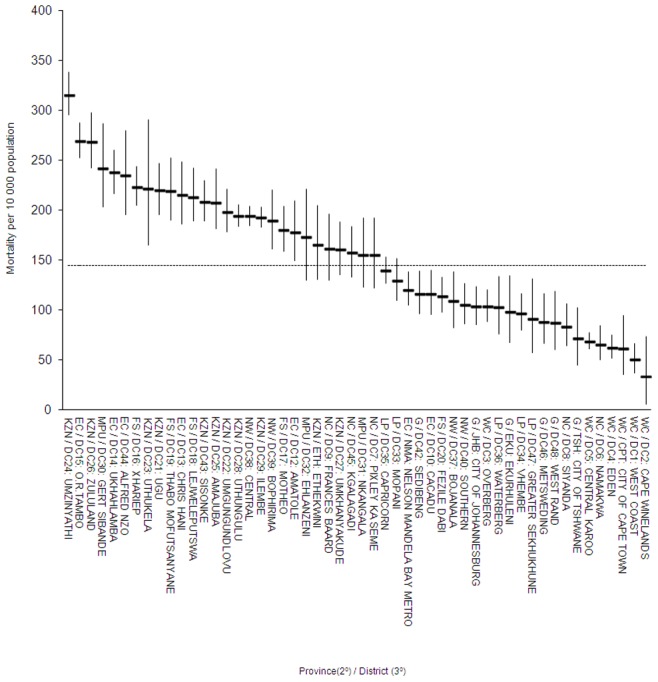
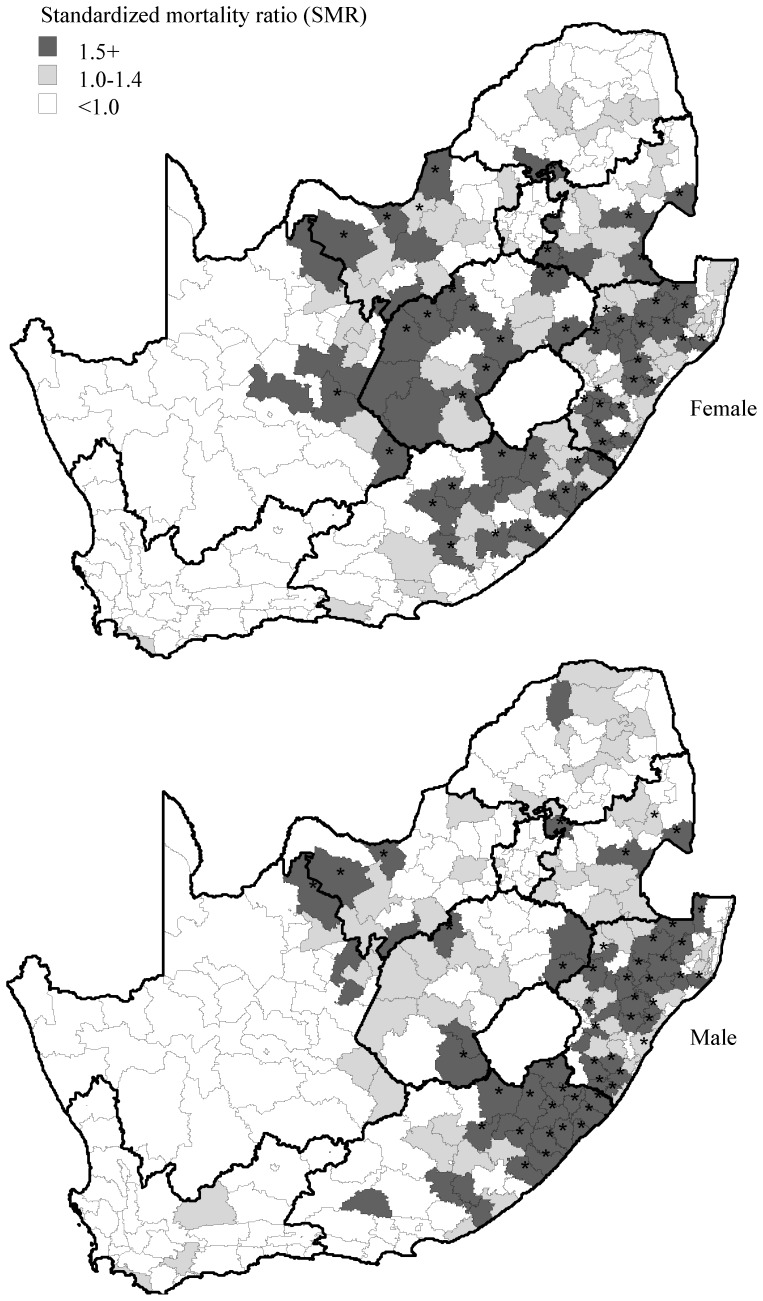
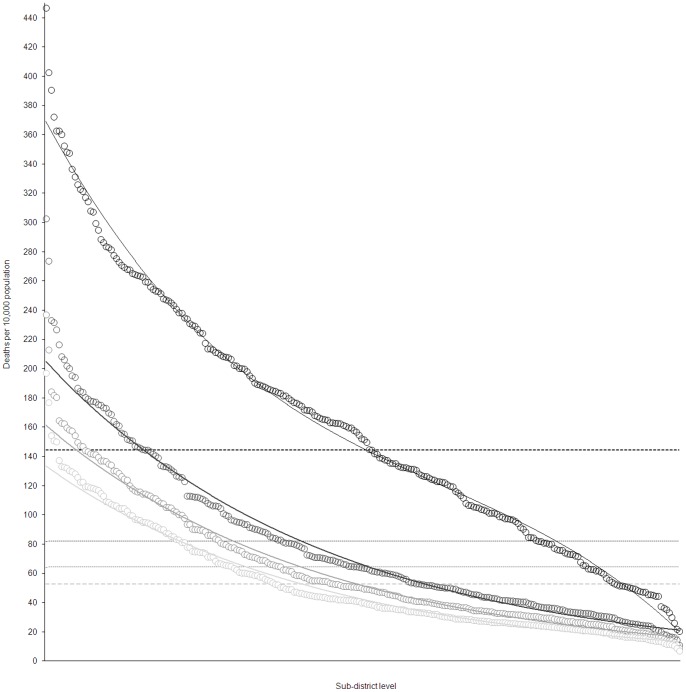
Overall adult mortality rate was 145 per 10,000. Spatial disaggregation identified a highly non-random pattern and 67 significant high risk local municipalities were identified. The most prominent determinants of adult mortality included HIV antenatal sero-prevalence, low SES and lack of formal marital union status. The removal of the most attributable factors, based on local area prevalence, suggest that overall adult mortality could be potentially reduced by ∼90 deaths per 10,000.
The innovative use of secondary data and advanced epidemiological techniques can be combined in a generic framework to identify and map mortality to the lowest administration level. The identification of high risk mortality determinants allows health authorities to tailor interventions at local level. This approach can be replicated elsewhere.
发展中国家的卫生不公平现象难以消除,因为资源有限。撒哈拉以南非洲(SSA)忽视成人死亡率是一个特别令人关注的问题。数据可用性、软件和分析方法的进步为解决这一挑战并针对小区域量身定制干预措施创造了机会。本研究展示了如何应用通用框架来指导政策干预,以降低高风险地区的成人死亡率。因此,该框架包含了成人死亡率的空间聚类,估计了一系列决定因素的影响,并量化了消除这些因素对确保稀缺资源的最佳回报的影响。
使用 2007 年全国横断面调查的数据来说明通用框架在 SSA 和其他地区的应用。在四个行政级别上分析了成人死亡率比例,并使用空间分析来确定死亡率过高的地区。然后使用生态方法评估死亡率“热点”与各种决定因素之间的关系。计算人群归因分数,以量化有针对性地消除高影响决定因素对死亡率的降低程度。
成人死亡率总体为每 10000 人 145 人。空间分解确定了一个高度非随机的模式,并确定了 67 个具有高风险的地方自治市。成人死亡率的最主要决定因素包括艾滋病毒产前血清阳性率、低社会经济地位和缺乏正式婚姻状况。根据当地流行率,消除最归因因素表明,总体成人死亡率可能潜在降低约 90 人每 10000 人。
通过使用二次数据和先进的流行病学技术,可以在通用框架中结合使用,以将死亡率识别和映射到最低行政级别。确定高风险死亡率决定因素使卫生当局能够在地方一级量身定制干预措施。这种方法可以在其他地方复制。