Institute of Environmental Science & Research, National Centre for Biosecurity & Infectious Disease, Wallaceville, Upper Hutt, New Zealand.
PLoS One. 2013 Aug 14;8(8):e72226. doi: 10.1371/journal.pone.0072226. eCollection 2013.
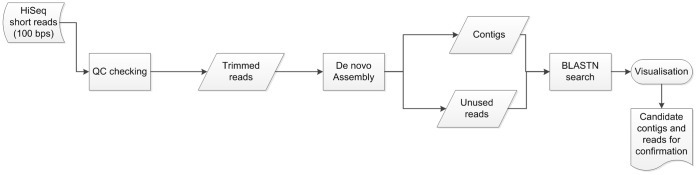
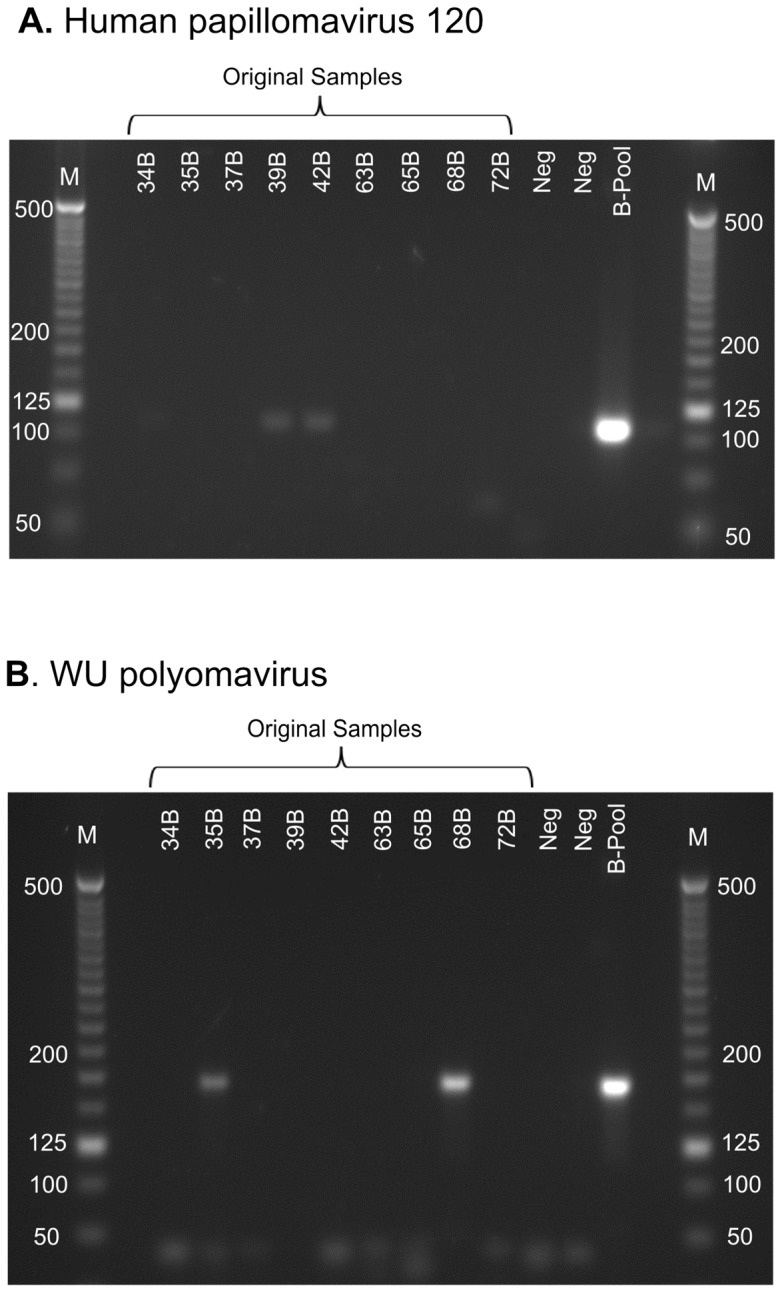
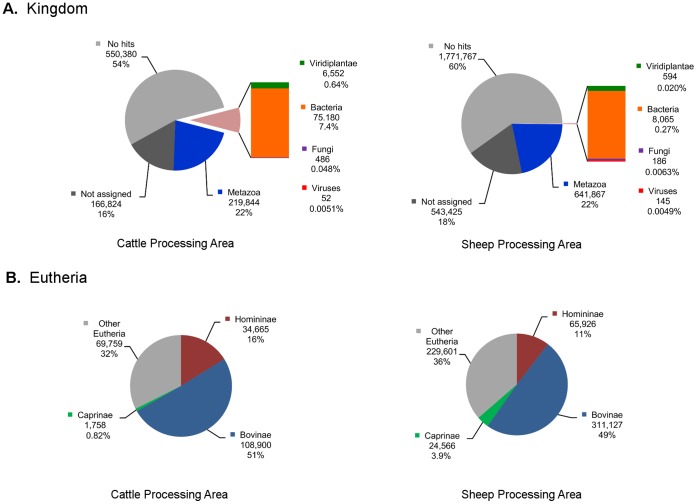
Published studies have shown that workers in animal slaughterhouses are at a higher risk of lung cancers as compared to the general population. No specific causal agents have been identified, and exposures to several chemicals have been examined and found to be unrelated. Evidence suggests a biological aetiology as the risk is highest for workers who are exposed to live animals or to biological material containing animal faeces, urine or blood. To investigate possible biological exposures in animal slaughterhouses, we used a metagenomic approach to characterise the profile of organisms present within an aerosol sample. An assessment of aerosol exposures for individual workers was achieved by the collection of personal samples that represent the inhalable fraction of dust/bioaerosol in workplace air in both cattle and sheep slaughterhouses. Two sets of nine personal aerosol samples were pooled for the cattle processing and sheep processing areas respectively, with a total of 332,677,346 sequence reads and 250,144,492 sequence reads of 85 bp in length produced for each. Eukaryotic genome sequence was found in both sampling locations, and bovine, ovine and human sequences were common. Sequences from WU polyomavirus and human papillomavirus 120 were detected in the metagenomic dataset from the cattle processing area, and these sequences were confirmed as being present in the original personal aerosol samples. This study presents the first metagenomic description of personal aerosol exposure and this methodology could be applied to a variety of environments. Also, the detection of two candidate viruses warrants further investigation in the setting of occupational exposures in animal slaughterhouses.
已发表的研究表明,与普通人群相比,动物屠宰场的工人患肺癌的风险更高。目前尚未确定特定的致病因子,而且已经检查了几种化学物质的暴露情况,但发现它们之间没有关联。有证据表明,这种风险与接触活动物或含有动物粪便、尿液或血液的生物材料的工人最高,其病因具有生物学基础。为了调查动物屠宰场可能存在的生物暴露,我们使用宏基因组学方法来描述气溶胶样本中存在的生物体特征。通过收集个人样本来评估个体工人的气溶胶暴露情况,这些样本代表了牛和羊屠宰场工作场所空气中可吸入粉尘/生物气溶胶的部分。分别为牛处理区和羊处理区汇集了两组九个个人气溶胶样本,分别产生了 332,677,346 条 85 个碱基长的序列和 250,144,492 条序列。在两个采样地点都发现了真核生物基因组序列,牛、羊和人类的序列很常见。在牛处理区的宏基因组数据集中检测到了 WU 多瘤病毒和人乳头瘤病毒 120 的序列,并且在原始个人气溶胶样本中也证实了这些序列的存在。本研究首次对个人气溶胶暴露进行了宏基因组描述,并且这种方法可以应用于各种环境。此外,两种候选病毒的检测需要在动物屠宰场的职业暴露环境中进行进一步研究。