Department of Aquatic Sciences and Assessment, Swedish University of Agricultural Sciences, Uppsala, Sweden.
PLoS One. 2013 Aug 15;8(8):e72237. doi: 10.1371/journal.pone.0072237. eCollection 2013.
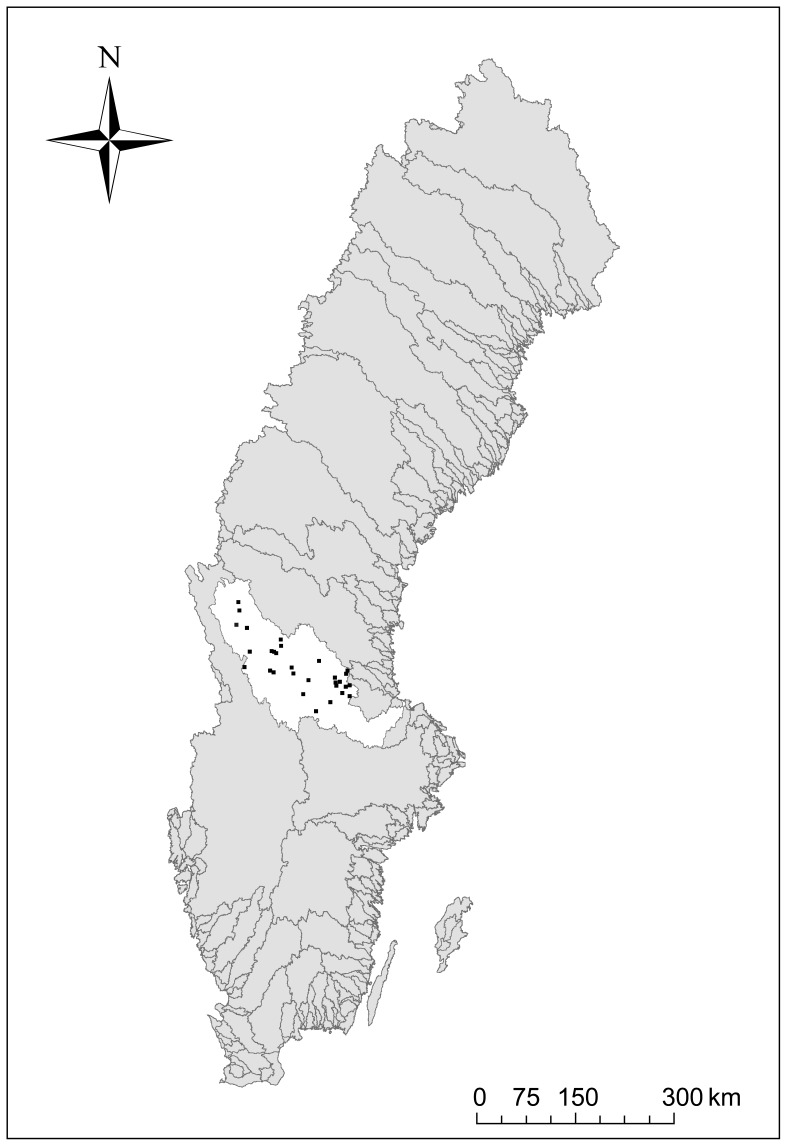
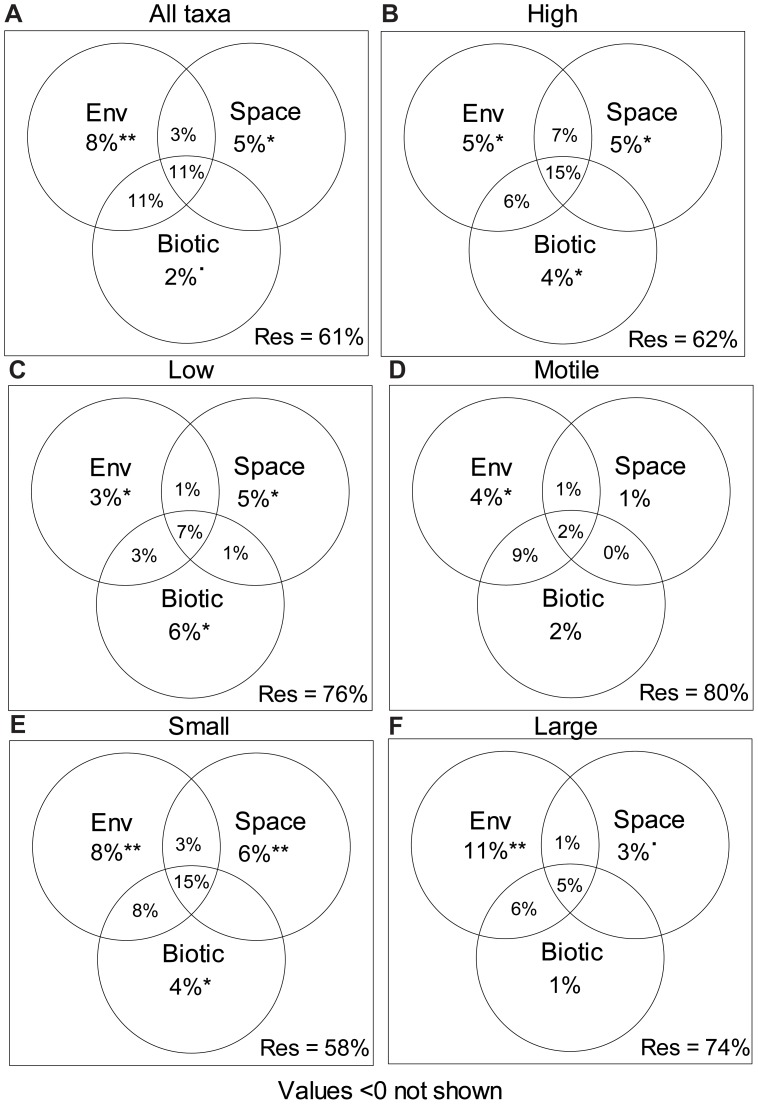
Stream assemblages are structured by a combination of local (environmental filtering and biotic interactions) and regional factors (e.g., dispersal related processes). The relative importance of environmental and spatial (i.e., regional) factors structuring stream assemblages has been frequently assessed in previous large-scale studies, but biotic predictors (potentially reflecting local biotic interactions) have rarely been included. Diatoms may be useful for studying the effect of trophic interactions on community structure since: (1) a majority of experimental studies shows significant grazing effects on diatom species composition, and (2) assemblages can be divided into guilds that have different susceptibility to grazing. We used a dataset from boreal headwater streams in south-central Sweden (covering a spatial extent of ∼14000 km(2)), which included information about diatom taxonomic composition, abundance of invertebrate grazers (biotic factor), environmental (physicochemical) and spatial factors (obtained through spatial eigenfunction analyses). We assessed the relative importance of environmental, biotic, and spatial factors structuring diatom assemblages, and performed separate analyses on different diatom guilds. Our results showed that the diatom assemblages were mainly structured by environmental factors. However, unique spatial and biological gradients, specific to different guilds and unrelated to each other, were also evident. We conclude that biological predictors, in combination with environmental and spatial variables, can reveal a more complete picture of the local vs. regional control of species assemblages in lotic environments. Biotic factors should therefore not be overlooked in applied research since they can capture additional local control and therefore increase accuracy and performance of predictive models. The inclusion of biotic predictors did, however, not significantly influence the unique fraction explained by spatial factors, which suggests low bias in previous assessments of unique regional control of stream assemblages.
流集合是由局部(环境过滤和生物相互作用)和区域因素(例如,扩散相关过程)共同构成的。在以前的大规模研究中,经常评估环境和空间(即区域)因素对溪流集合结构的相对重要性,但很少包括生物预测因子(可能反映局部生物相互作用)。由于以下原因,硅藻可能有助于研究营养相互作用对群落结构的影响:(1)大多数实验研究表明,硅藻物种组成存在明显的摄食作用,(2)可以将组合分为对摄食有不同敏感性的群体。我们使用了来自瑞典中南部的源头溪流的数据集(涵盖了约 14000 平方公里的空间范围),其中包括硅藻分类组成、无脊椎动物捕食者的丰度(生物因素)、环境(物理化学)和空间因素(通过空间本征函数分析获得)。我们评估了环境、生物和空间因素对硅藻集合结构的相对重要性,并对不同的硅藻群体进行了单独的分析。我们的结果表明,硅藻集合主要由环境因素构成。然而,还存在独特的空间和生物梯度,这些梯度与其他梯度无关,且特定于不同的群体。我们的结论是,生物预测因子与环境和空间变量结合使用,可以更全面地揭示生物群落的局部与区域控制,在流动环境中。因此,在应用研究中不应忽视生物因素,因为它们可以捕捉到额外的局部控制,从而提高预测模型的准确性和性能。然而,包括生物预测因子并没有显著影响空间因素解释的独特部分,这表明以前对溪流集合的独特区域控制的评估存在低偏差。