Sun Lixian, Liu Cuiqing, Xu Xiaohua, Ying Zhekang, Maiseyeu Andrei, Wang Aixia, Allen Katryn, Lewandowski Ryan P, Bramble Lori A, Morishita Masako, Wagner James G, Dvonch J, Sun Zhichao, Yan Xiaowei, Brook Robert D, Rajagopalan Sanjay, Harkema Jack R, Sun Qinghua, Fan Zhongjie
Part Fibre Toxicol. 2013 Aug 22;10:43. doi: 10.1186/1743-8977-10-43.
Inflammation and oxidative stress play critical roles in the pathogenesis of inhaled air pollutant-mediated metabolic disease. Inflammation in the adipose tissues niches are widely believed to exert important effects on organ dysfunction. Recent data from both human and animal models suggest a role for inflammation and oxidative stress in epicardial adipose tissue (EAT) as a risk factor for the development of cardiovascular disease. We hypothesized that inhalational exposure to concentrated ambient fine particulates (CAPs) and ozone (O3) exaggerates inflammation and oxidative stress in EAT and perirenal adipose tissue (PAT).
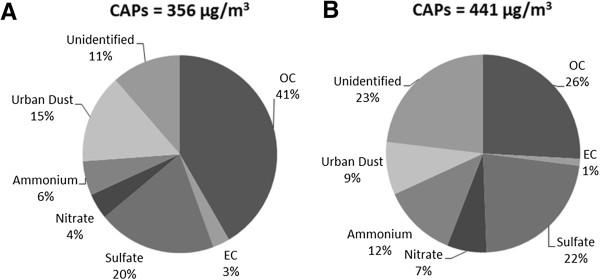
Eight- week-old Male Sprague-Dawley rats were fed a normal diet (ND) or high fructose diet (HFr) for 8 weeks, and then exposed to ambient AIR, CAPs at a mean of 356 μg/m3, O3 at 0.485 ppm, or CAPs (441 μg/m3) + O3 (0.497 ppm) in Dearborn, MI, 8 hours/day, 5 days/week, for 9 days over 2 weeks.
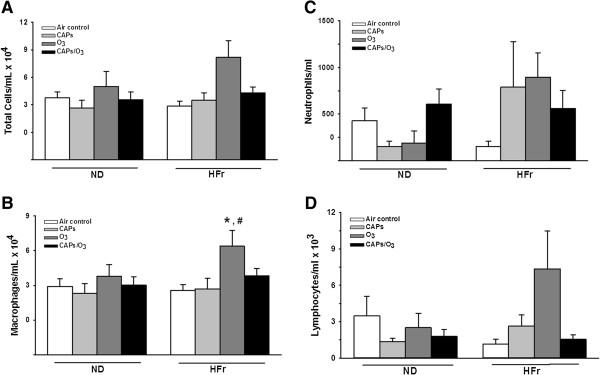
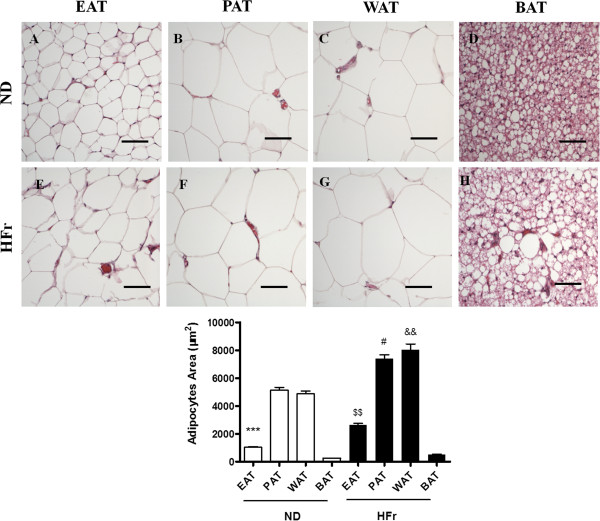
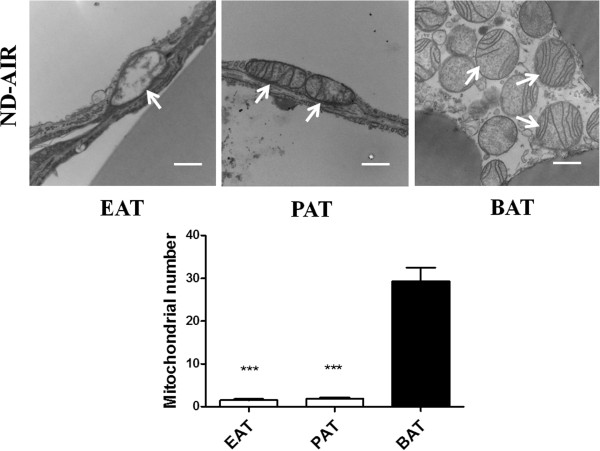
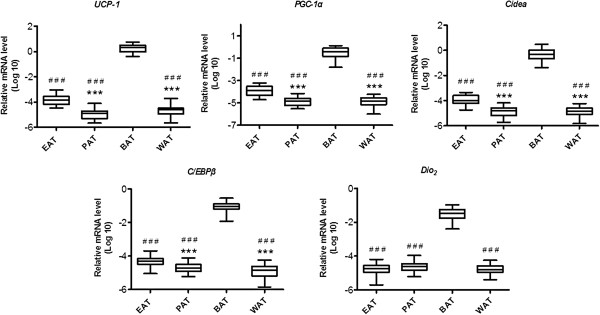
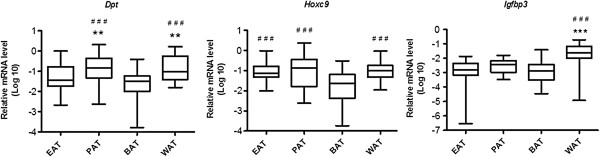
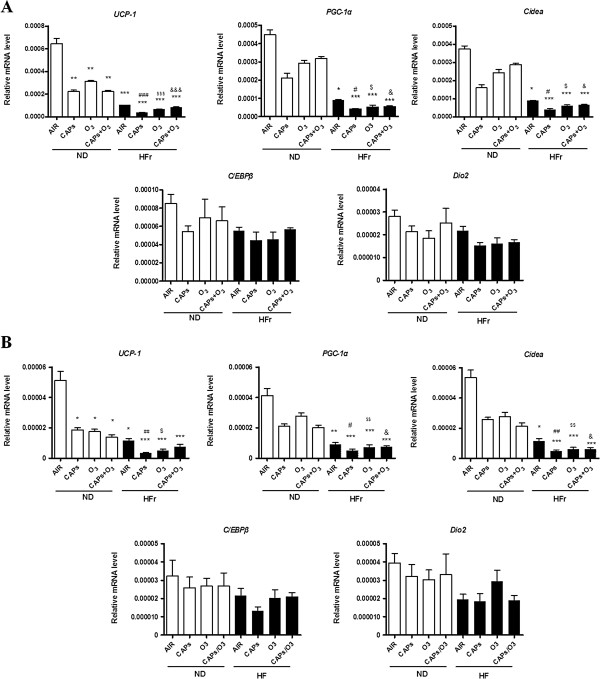
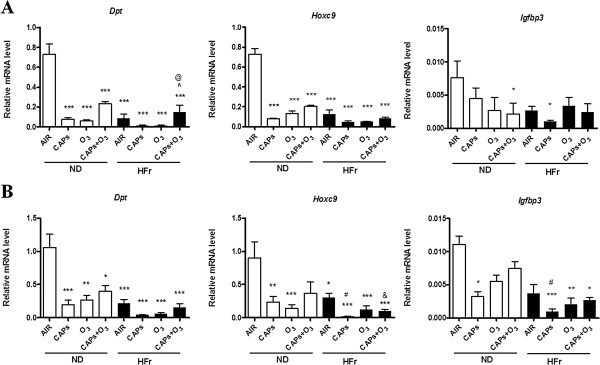
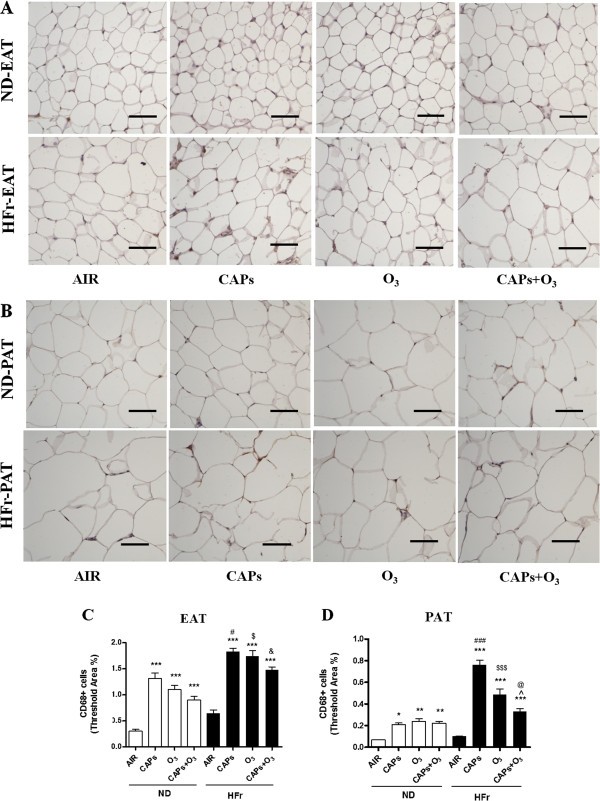
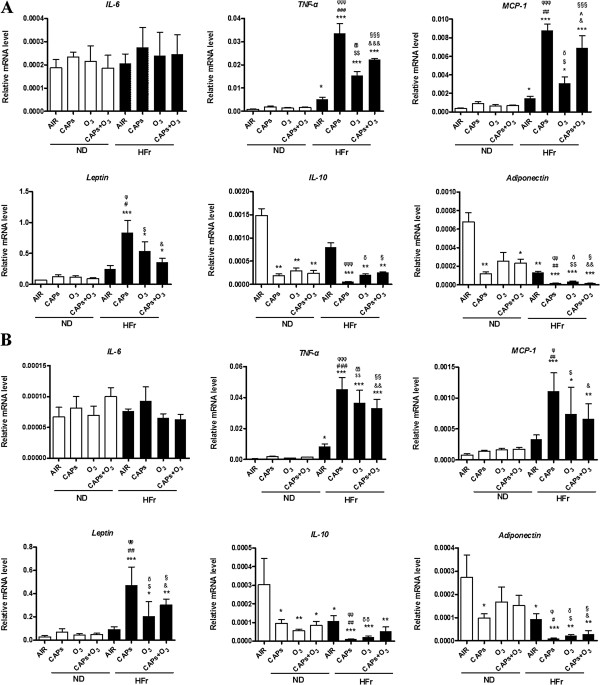
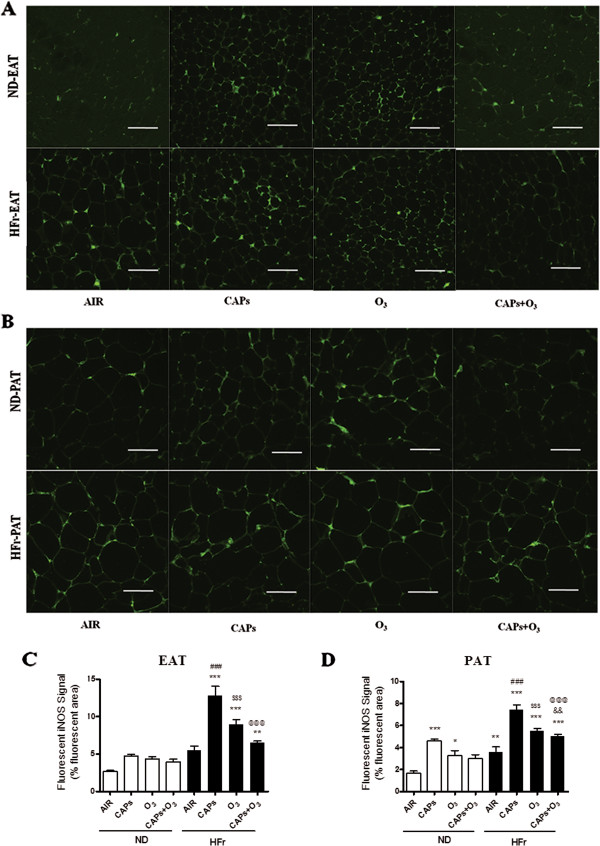
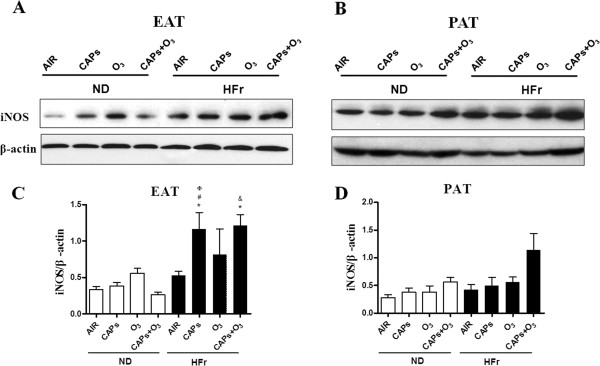
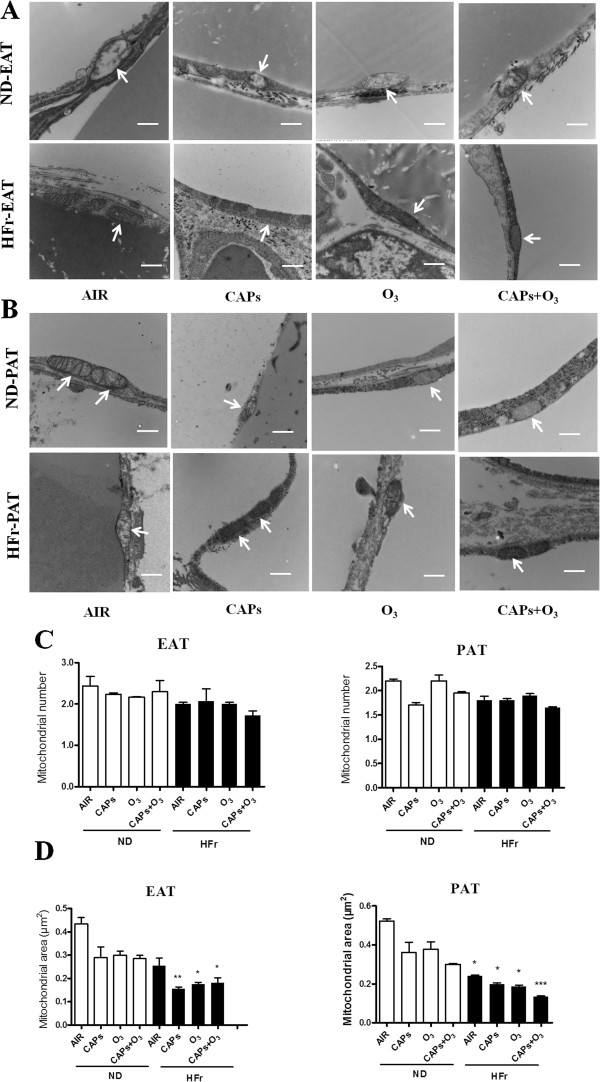
EAT and PAT showed whitish color in gross, and less mitochondria, higher mRNA expression of white adipose specific and lower brown adipose specific genes than in brown adipose tissues. Exposure to CAPs and O3 resulted in the increase of macrophage infiltration in both EAT and PAT of HFr groups. Proinflammatory genes of Tnf-α, Mcp-1 and leptin were significantly upregulated while IL-10 and adiponectin, known as antiinflammatory genes, were reduced after the exposures. CAPs and O3 exposures also induced an increase in inducible nitric oxide synthase (iNOS) protein expression, and decrease in mitochondrial area in EAT and PAT. We also found significant increases in macrophages of HFr-O3 rats. The synergetic interaction of HFr and dirty air exposure on the inflammation was found in most of the experiments. Surprisingly, exposure to CAPs or O3 induced more significant inflammation and oxidative stress than co-exposure of CAPs and O3 in EAT and PAT.
EAT and PAT are both white adipose tissues. Short-term exposure to CAPs and O3, especially with high fructose diet, induced inflammation and oxidative stress in EAT and PAT in rats. These findings may provide a link between air-pollution exposure and accelerated susceptibility to cardiovascular disease and metabolic complications.
炎症和氧化应激在吸入性空气污染物介导的代谢性疾病发病机制中起关键作用。脂肪组织微环境中的炎症被广泛认为对器官功能障碍有重要影响。来自人类和动物模型的最新数据表明,心外膜脂肪组织(EAT)中的炎症和氧化应激作为心血管疾病发生的危险因素发挥作用。我们假设吸入浓缩环境细颗粒物(CAPs)和臭氧(O3)会加剧EAT和肾周脂肪组织(PAT)中的炎症和氧化应激。
8周龄雄性Sprague-Dawley大鼠喂食正常饮食(ND)或高果糖饮食(HFr)8周,然后暴露于密歇根州迪尔伯恩的环境空气、平均浓度为356μg/m3的CAPs、0.485ppm的O3或CAPs(441μg/m3)+O3(0.497ppm),每天8小时,每周5天,持续2周,共9天。
EAT和PAT大体呈白色,与棕色脂肪组织相比,线粒体较少,白色脂肪特异性基因的mRNA表达较高,棕色脂肪特异性基因的mRNA表达较低。暴露于CAPs和O3导致HFr组EAT和PAT中巨噬细胞浸润增加。暴露后,促炎基因Tnf-α、Mcp-1和瘦素显著上调,而作为抗炎基因的IL-10和脂联素减少。CAPs和O3暴露还诱导EAT和PAT中诱导型一氧化氮合酶(iNOS)蛋白表达增加,线粒体面积减少。我们还发现HFr-O3大鼠的巨噬细胞显著增加。在大多数实验中发现HFr和暴露于污染空气对炎症有协同相互作用。令人惊讶的是,在EAT和PAT中,暴露于CAPs或O3比CAPs和O3共同暴露诱导更显著的炎症和氧化应激。
EAT和PAT均为白色脂肪组织。短期暴露于CAPs和O3,尤其是在高果糖饮食情况下,会诱导大鼠EAT和PAT中的炎症和氧化应激。这些发现可能为空气污染暴露与心血管疾病和代谢并发症易感性增加之间提供联系。