Department of Geography, Indiana University, Bloomington, Indiana, United States of America.
PLoS One. 2013 Aug 19;8(8):e71297. doi: 10.1371/journal.pone.0071297. eCollection 2013.
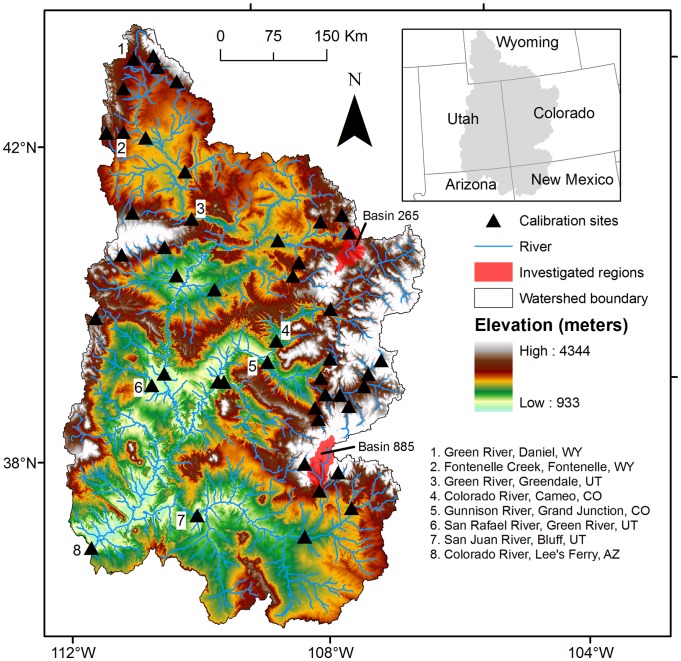
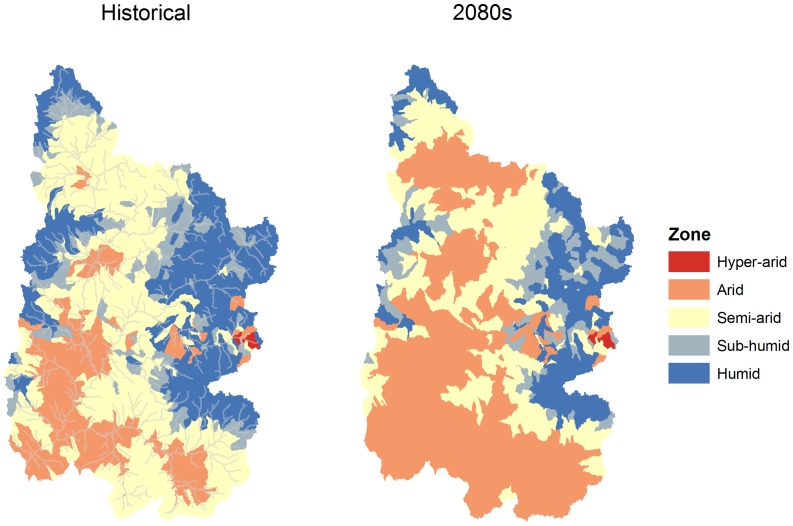
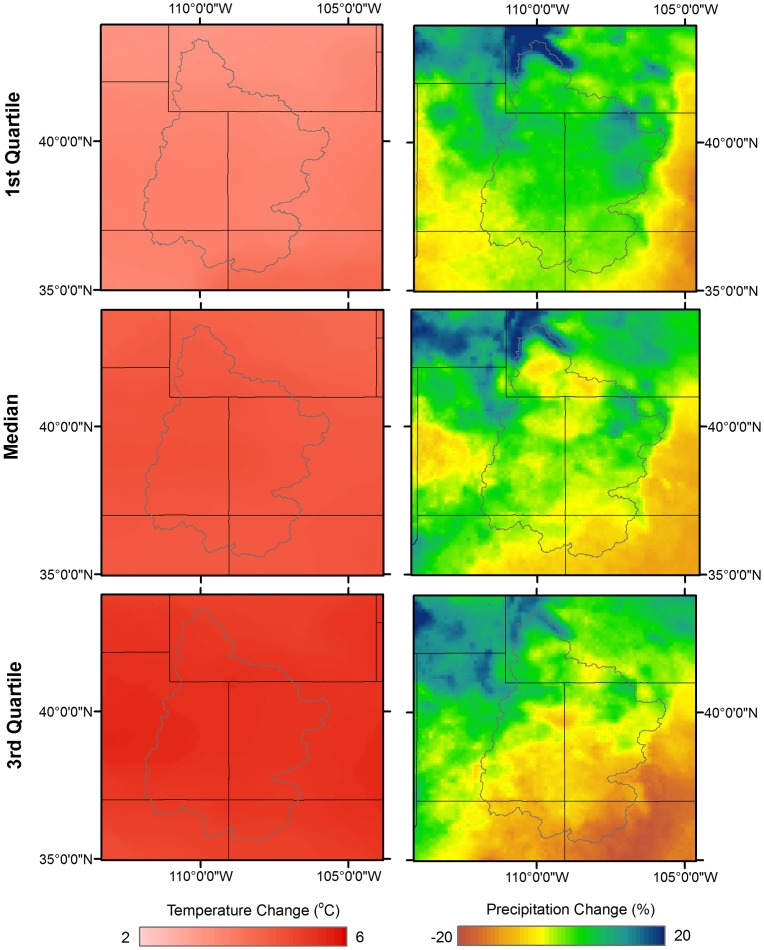
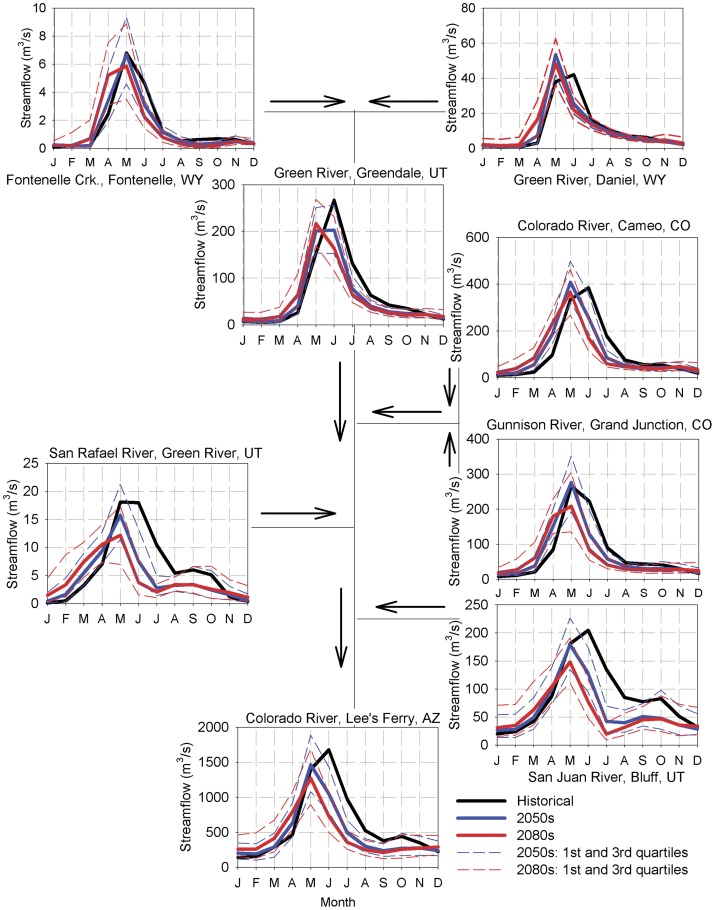
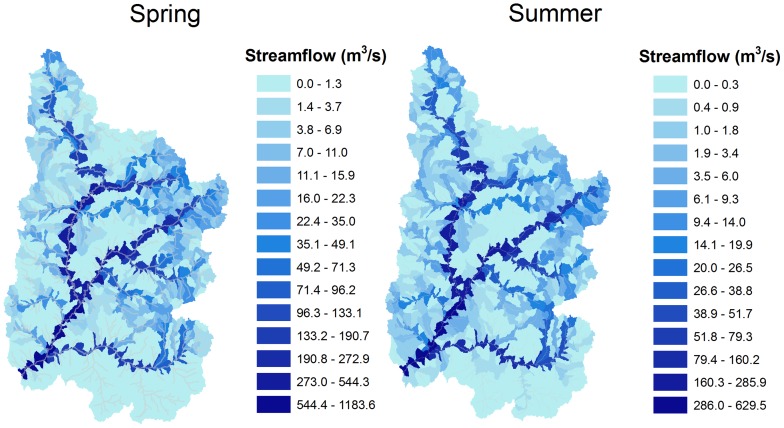
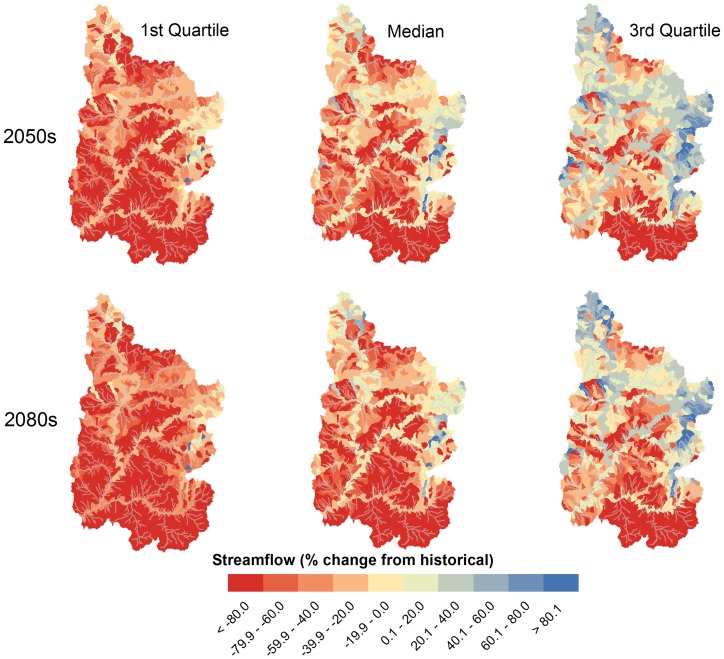
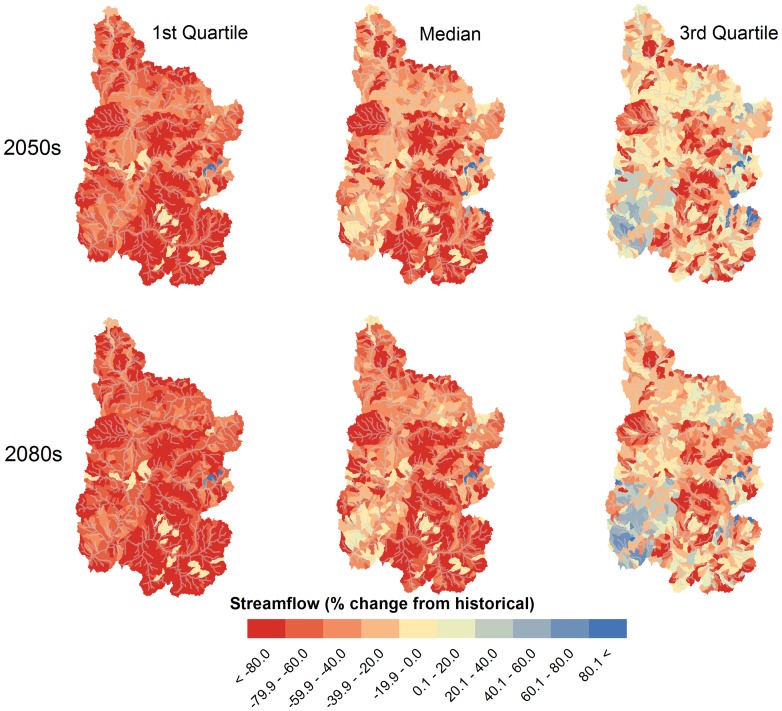
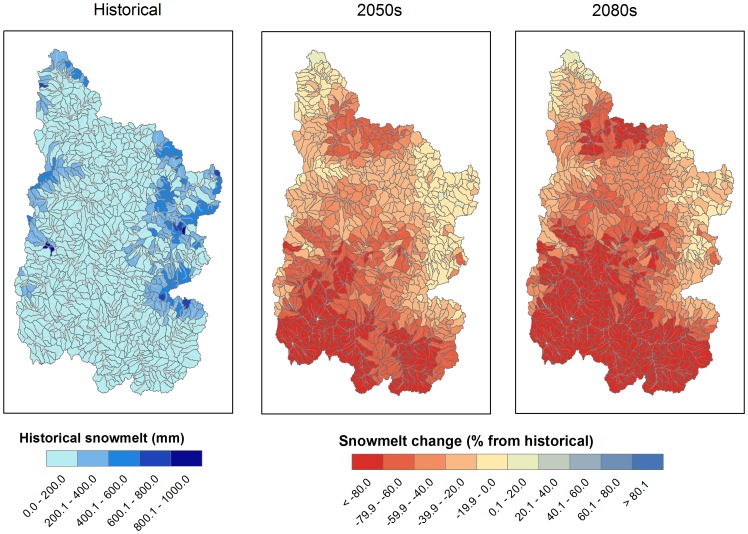
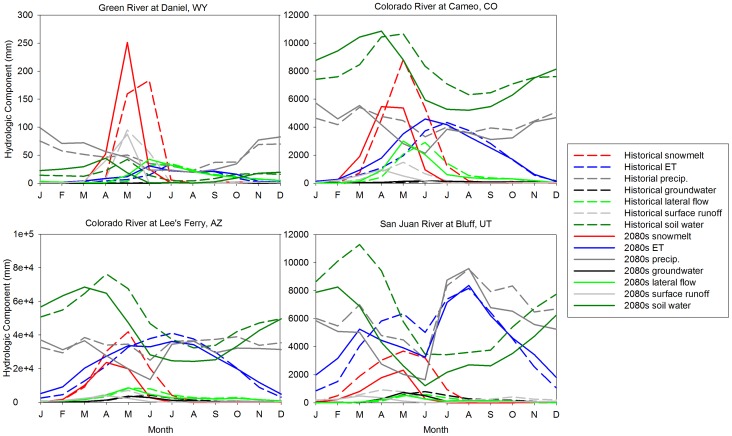
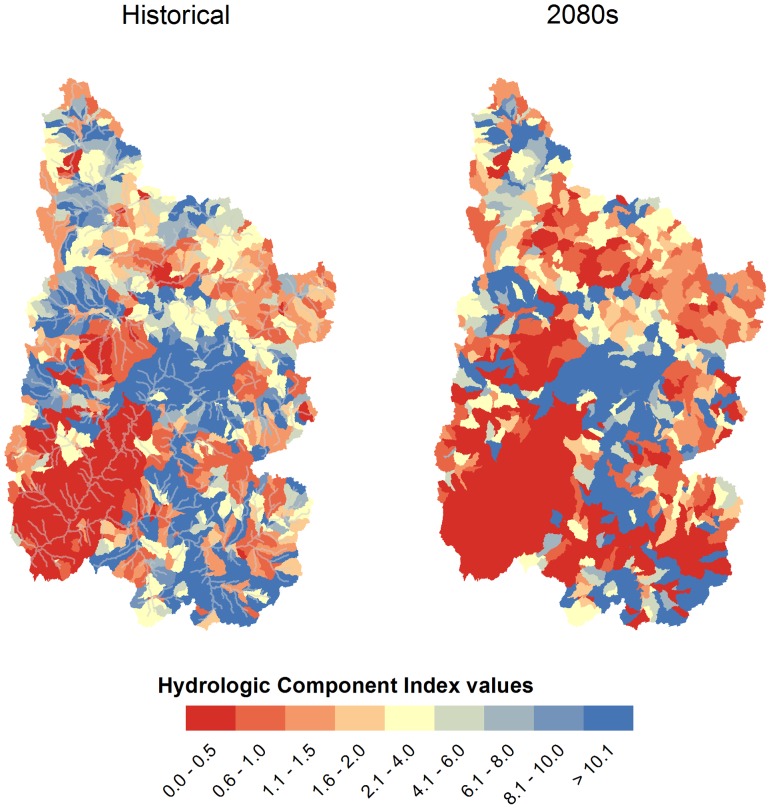
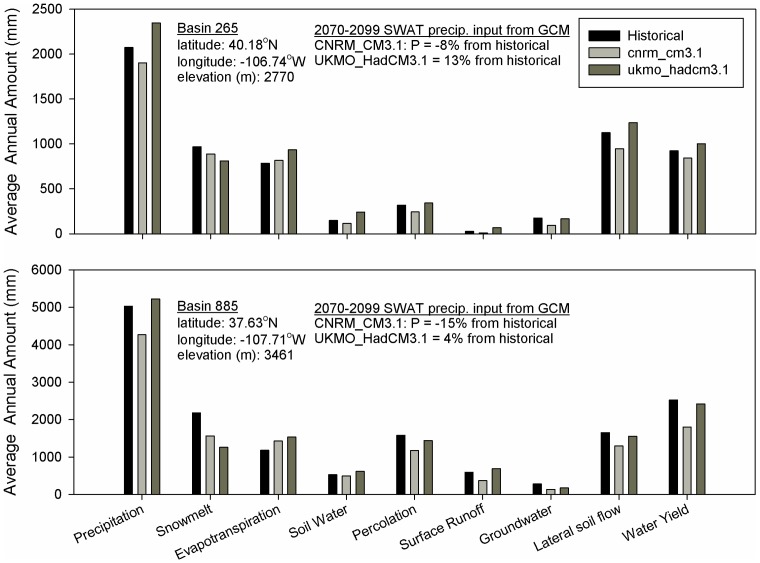
In the Upper Colorado River Basin (UCRB), the principal source of water in the southwestern U.S., demand exceeds supply in most years, and will likely continue to rise. While General Circulation Models (GCMs) project surface temperature warming by 3.5 to 5.6°C for the area, precipitation projections are variable, with no wetter or drier consensus. We assess the impacts of projected 21(st) century climatic changes on subbasins in the UCRB using the Soil and Water Assessment Tool, for all hydrologic components (snowmelt, evapotranspiration, surface runoff, subsurface runoff, and streamflow), and for 16 GCMs under the A2 emission scenario. Over the GCM ensemble, our simulations project median Spring streamflow declines of 36% by the end of the 21(st) century, with increases more likely at higher elevations, and an overall range of -100 to +68%. Additionally, our results indicated Summer streamflow declines with median decreases of 46%, and an overall range of -100 to +22%. Analysis of hydrologic components indicates large spatial and temporal changes throughout the UCRB, with large snowmelt declines and temporal shifts in most hydrologic components. Warmer temperatures increase average annual evapotranspiration by ∼23%, with shifting seasonal soil moisture availability driving these increases in late Winter and early Spring. For the high-elevation water-generating regions, modest precipitation decreases result in an even greater water yield decrease with less available snowmelt. Precipitation increases with modest warming do not translate into the same magnitude of water-yield increases due to slight decreases in snowmelt and increases in evapotranspiration. For these basins, whether modest warming is associated with precipitation decreases or increases, continued rising temperatures may make drier futures. Subsequently, many subbasins are projected to turn from semi-arid to arid conditions by the 2080 s. In conclusion, water availability in the UCRB could significantly decline with adverse consequences for water supplies, agriculture, and ecosystem health.
在美国西南部的科罗拉多河流域上游(UCRB),主要的水源地在大多数年份都供不应求,而且需求可能还会继续上升。虽然通用环流模型(GCM)预计该地区的地表温度将升高 3.5 到 5.6°C,但降水的预测结果却各不相同,没有形成更湿润或更干燥的共识。我们使用土壤和水评估工具,针对 UCRB 的各个子流域,评估了 projected 21(st) 世纪气候变化对该地区的影响,包括所有水文成分(融雪、蒸散、地表径流、地下径流和溪流流量),以及在 A2 排放情景下的 16 个 GCM。在 GCM 集合中,我们的模拟预测到 21(st) 世纪末春季溪流流量将下降 36%,高海拔地区的流量可能会增加,总体范围在-100 到+68%之间。此外,我们的结果还表明夏季溪流流量会下降,中位数降幅为 46%,总体范围在-100 到+22%之间。对水文成分的分析表明,UCRB 内存在较大的时空变化,大多数水文成分的融雪量大幅减少且时间发生转移。较高的温度使年均蒸散量增加了约 23%,而土壤湿度可用性的季节性变化导致冬季末和春季初蒸散量增加。对于高海拔地区的产水区,适度的降水减少会导致更少的融雪可用,从而使水资源产量减少得更多。适度的增暖导致的降水增加不会转化为同等幅度的水资源产量增加,这是因为融雪量略有减少,而蒸散量增加。对于这些流域,无论是与降水减少还是增加相关,适度的变暖可能会导致更干旱的未来。随后,许多子流域预计将在 2080 年代左右从半干旱转变为干旱条件。总之,UCRB 的水资源供应可能会大幅减少,对供水、农业和生态系统健康产生不利影响。