Department of Pathology, University of Washington, Seattle, Washington, United States of America.
PLoS One. 2013 Aug 19;8(8):e72047. doi: 10.1371/journal.pone.0072047. eCollection 2013.
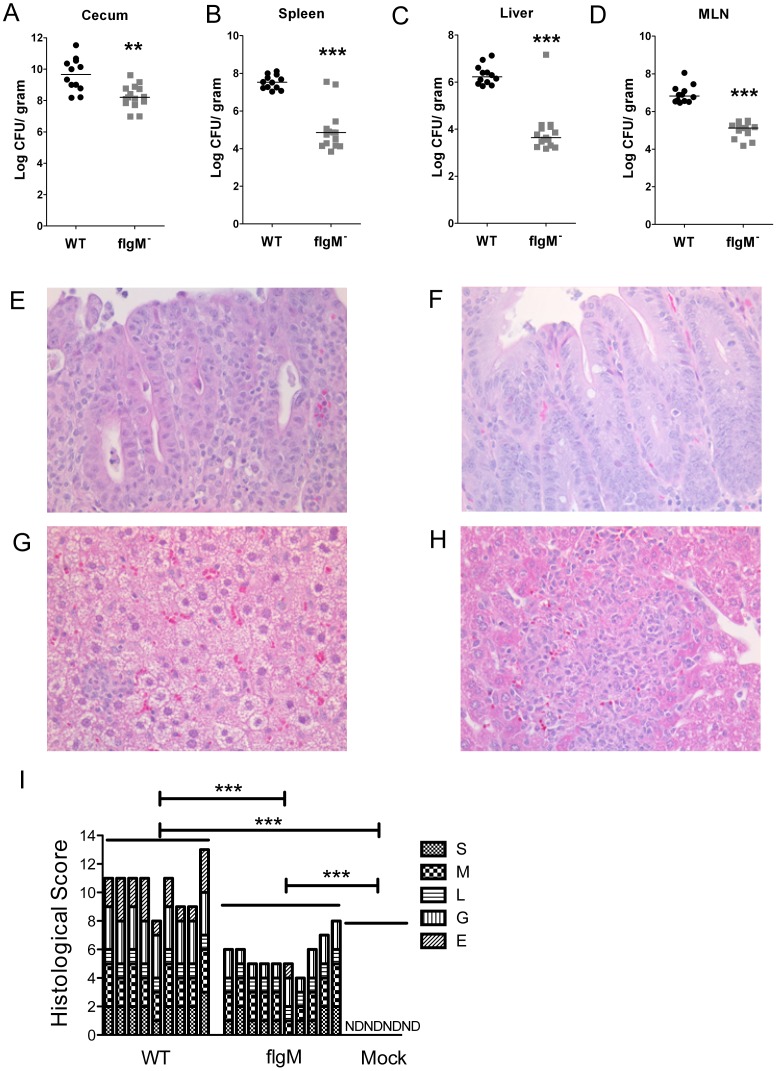
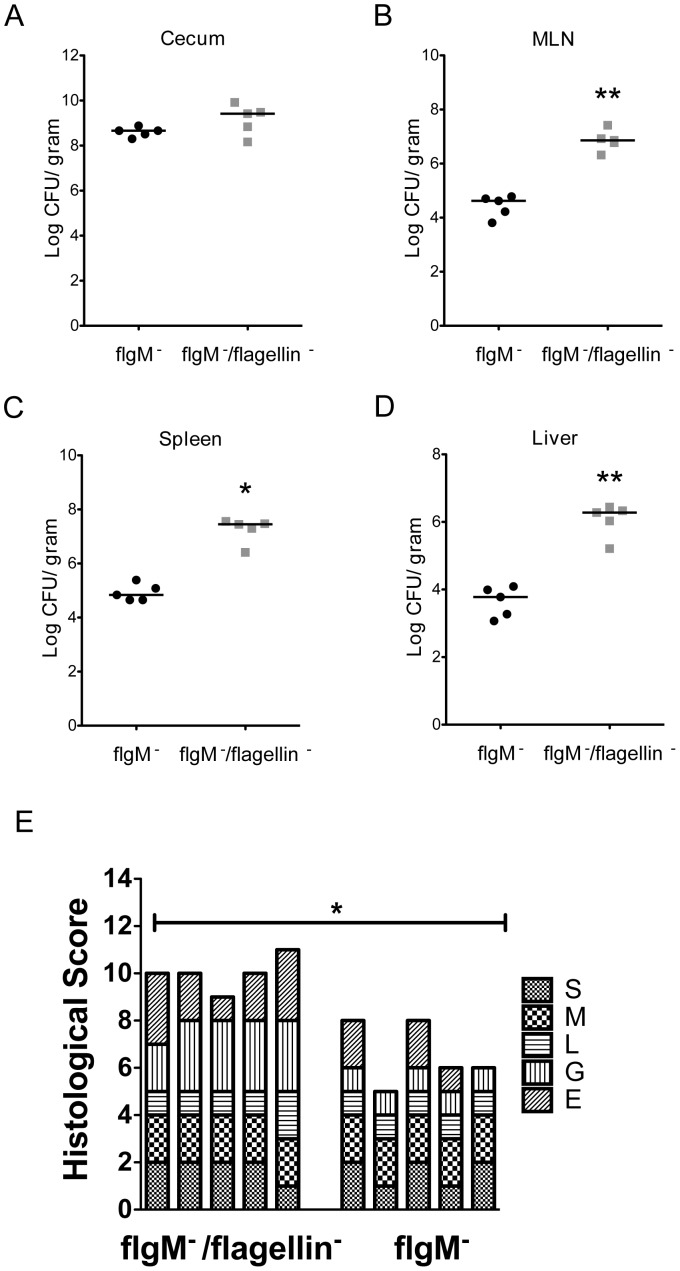
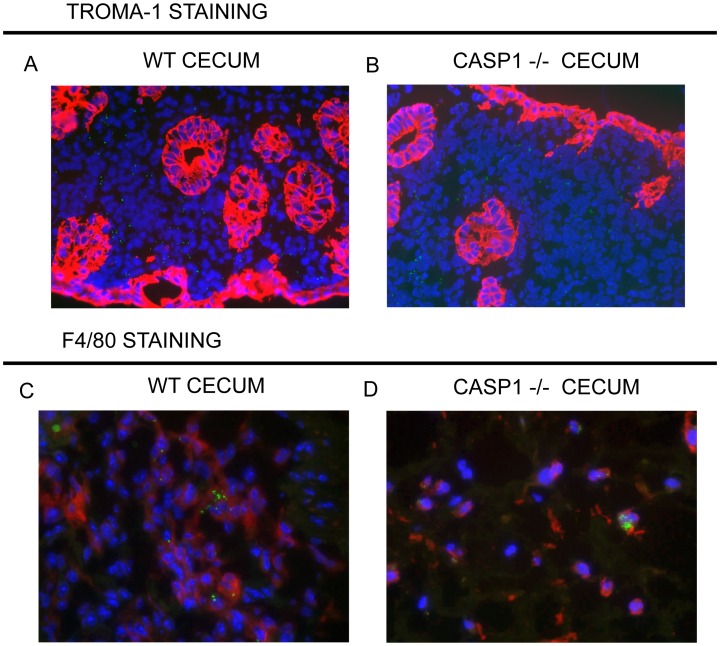
Salmonella enterica serovar Typhimurium is a flagellated bacterium and one of the leading causes of gastroenteritis in humans. Bacterial flagellin is required for motility and also a prime target of the innate immune system. Innate immune recognition of flagellin is mediated by at least two independent pathways, TLR5 and Naip5-Naip6/NlrC4/Caspase-1. The functional significance of each of the two independent flagellin recognition systems for host defense against wild type Salmonella infection is complex, and innate immune detection of flagellin contributes to both protection and susceptibility. We hypothesized that efficient modulation of flagellin expression in vivo permits Salmonella to evade innate immune detection and limit the functional role of flagellin-specific host innate defenses. To test this hypothesis, we used Salmonella deficient in the anti-sigma factor flgM, which overproduce flagella and are attenuated in vivo. In this study we demonstrate that flagellin recognition by the innate immune system is responsible for the attenuation of flgM(-) S. Typhimurium, and dissect the contribution of each flagellin recognition pathway to bacterial clearance and inflammation. We demonstrate that caspase-1 controls mucosal and systemic infection of flgM(-) S. Typhimurium, and also limits intestinal inflammation and injury. In contrast, TLR5 paradoxically promotes bacterial colonization in the cecum and systemic infection, but attenuates intestinal inflammation. Our results indicate that Salmonella evasion of caspase-1 dependent flagellin recognition is critical for establishing infection and that evasion of TLR5 and caspase-1 dependent flagellin recognition helps Salmonella induce intestinal inflammation and establish a niche in the inflamed gut.
鼠伤寒沙门氏菌血清型 Typhimurium 是一种鞭毛细菌,也是人类肠胃炎的主要病因之一。细菌鞭毛蛋白是运动所必需的,也是先天免疫系统的主要靶标。先天免疫系统对鞭毛蛋白的识别是由至少两种独立的途径介导的,即 TLR5 和 Naip5-Naip6/NlrC4/Caspase-1。两种独立的鞭毛蛋白识别系统对宿主防御野生型沙门氏菌感染的功能意义是复杂的,先天免疫系统对鞭毛蛋白的检测既有助于保护又有助于易感性。我们假设在体内有效地调节鞭毛蛋白的表达可以使沙门氏菌逃避先天免疫检测,并限制鞭毛蛋白特异性宿主先天防御的功能作用。为了验证这一假设,我们使用了抗 sigma 因子 flgM 缺失的沙门氏菌,该菌过度产生鞭毛,体内减毒。在这项研究中,我们证明了先天免疫系统对鞭毛蛋白的识别是导致 flgM(-)鼠伤寒沙门氏菌衰减的原因,并剖析了每种鞭毛蛋白识别途径对细菌清除和炎症的贡献。我们证明 caspase-1 控制着 flgM(-)鼠伤寒沙门氏菌的黏膜和全身感染,也限制了肠道炎症和损伤。相比之下,TLR5 出人意料地促进了盲肠和全身感染中的细菌定植,但减弱了肠道炎症。我们的结果表明,沙门氏菌逃避 caspase-1 依赖性鞭毛蛋白识别对于建立感染至关重要,而逃避 TLR5 和 caspase-1 依赖性鞭毛蛋白识别有助于沙门氏菌诱导肠道炎症并在发炎的肠道中建立一个小生境。