Haslam Michael, Gumert Michael D, Biro Dora, Carvalho Susana, Malaivijitnond Suchinda
Research Laboratory for Archaeology and the History of Art, University of Oxford, Oxford, United Kingdom.
PLoS One. 2013 Aug 16;8(8):e72872. doi: 10.1371/journal.pone.0072872. eCollection 2013.
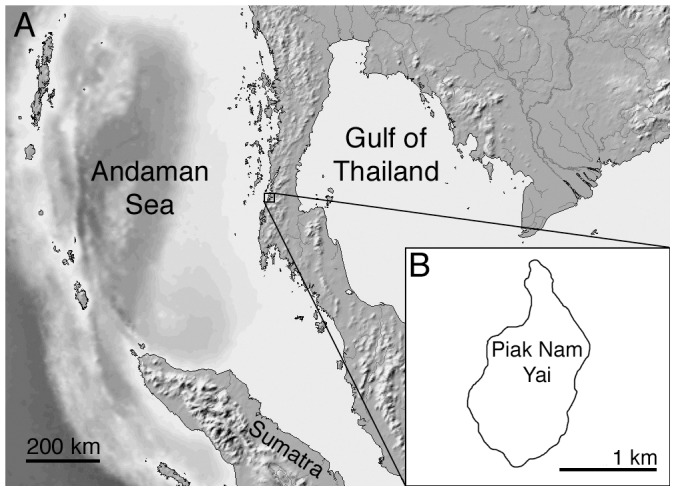
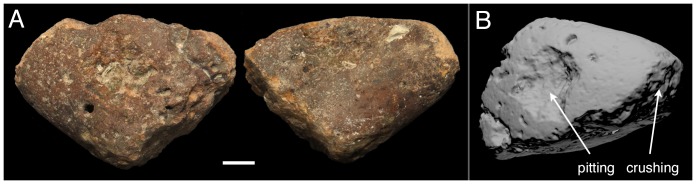
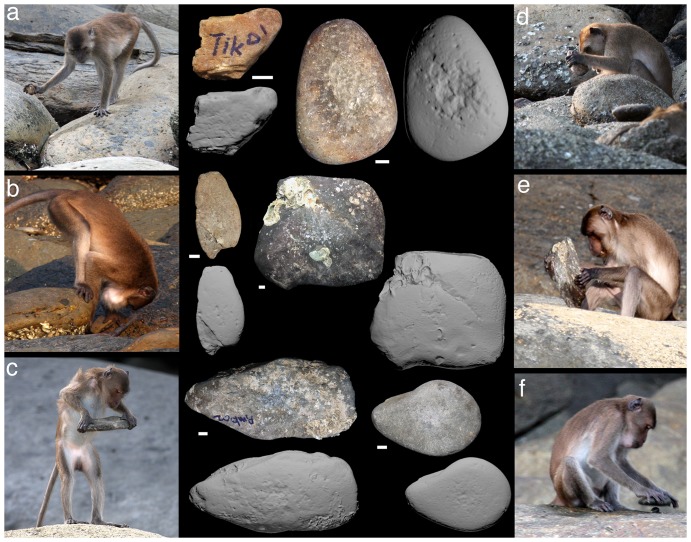
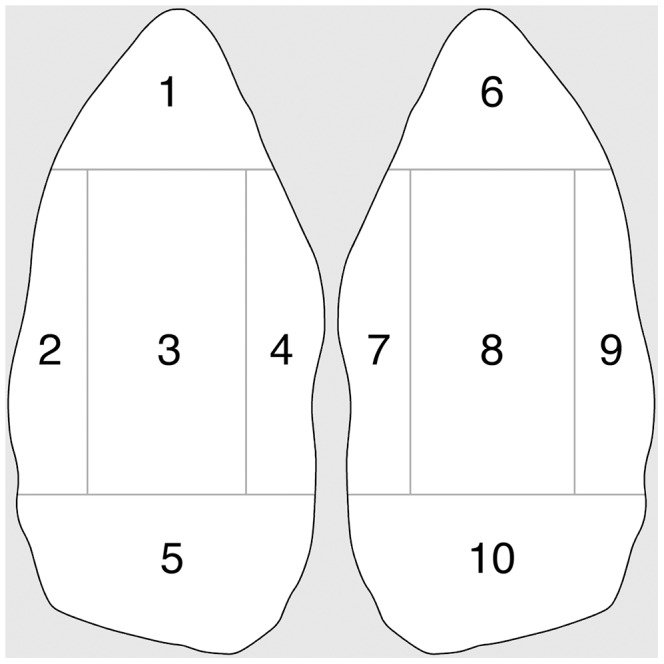
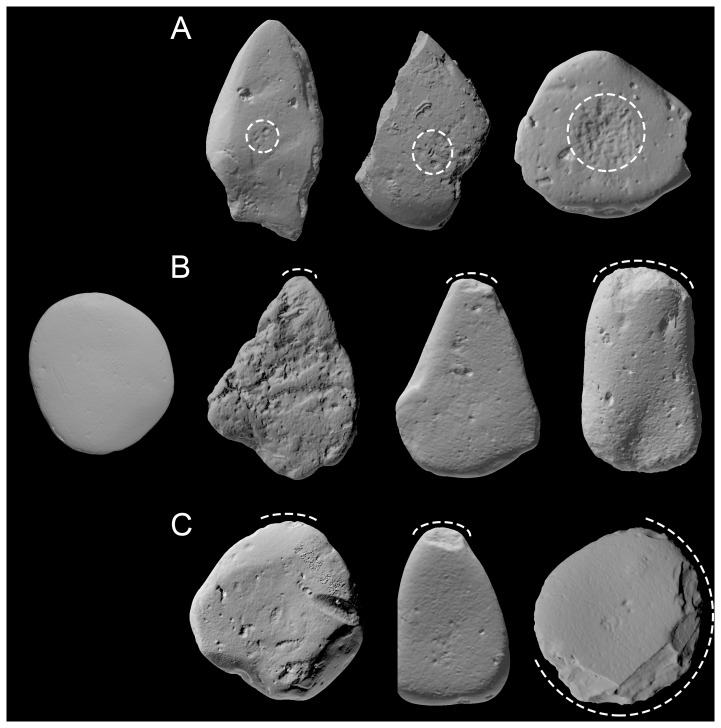
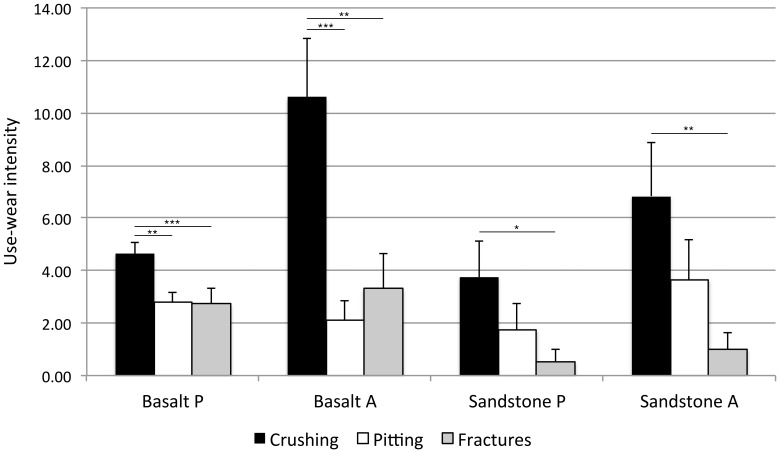
Burmese long-tailed macaques (Macaca fascicularis aurea) are one of a limited number of wild animal species to use stone tools, with their tool use focused on pounding shelled marine invertebrates foraged from intertidal habitats. These monkeys exhibit two main styles of tool use: axe hammering of oysters, and pound hammering of unattached encased foods. In this study, we examined macroscopic use-wear patterns on a sample of 60 wild macaque stone tools from Piak Nam Yai Island, Thailand, that had been collected following behavioural observation, in order to (i) quantify the wear patterns in terms of the types and distribution of use-damage on the stones, and (ii) develop a Use-Action Index (UAI) to differentiate axe hammers from pound hammers by wear patterns alone. We used the intensity of crushing damage on differing surface zones of the stones, as well as stone weight, to produce a UAI that had 92% concordance when compared to how the stones had been used by macaques, as observed independently prior to collection. Our study is the first to demonstrate that quantitative archaeological use-wear techniques can accurately reconstruct the behavioural histories of non-human primate stone tools.
缅甸长尾猕猴(食蟹猕猴金色亚种,Macaca fascicularis aurea)是少数会使用石器的野生动物物种之一,它们使用工具主要是为了敲碎从潮间带栖息地获取的带壳海洋无脊椎动物。这些猴子表现出两种主要的工具使用方式:用斧头状工具敲开牡蛎,以及用棒状工具敲碎未附着的带壳食物。在本研究中,我们检查了60件来自泰国碧雅岛的野生猕猴石器样本上的宏观使用磨损模式,这些石器是在行为观察后收集的,目的是:(i)根据石器上使用损伤的类型和分布来量化磨损模式;(ii)开发一种使用动作指数(UAI),仅通过磨损模式来区分斧头状工具和棒状工具。我们利用石器不同表面区域的破碎损伤强度以及石器重量,得出了一个UAI,与收集前独立观察到的猕猴使用石器的方式相比,其一致性达92%。我们的研究首次证明,定量考古使用磨损技术可以准确重建非人类灵长类动物石器的行为历史。