Tan Amanda, Tan Say Hoon, Vyas Dhaval, Malaivijitnond Suchinda, Gumert Michael D
Division of Psychology, School of Humanities and Social Sciences, Nanyang Technological University, Singapore, 637322, Singapore.
Graduate Degree Program in Ecology, Colorado State University, Fort Collins, Colorado, 80523, United States of America.
PLoS One. 2015 May 13;10(5):e0124733. doi: 10.1371/journal.pone.0124733. eCollection 2015.
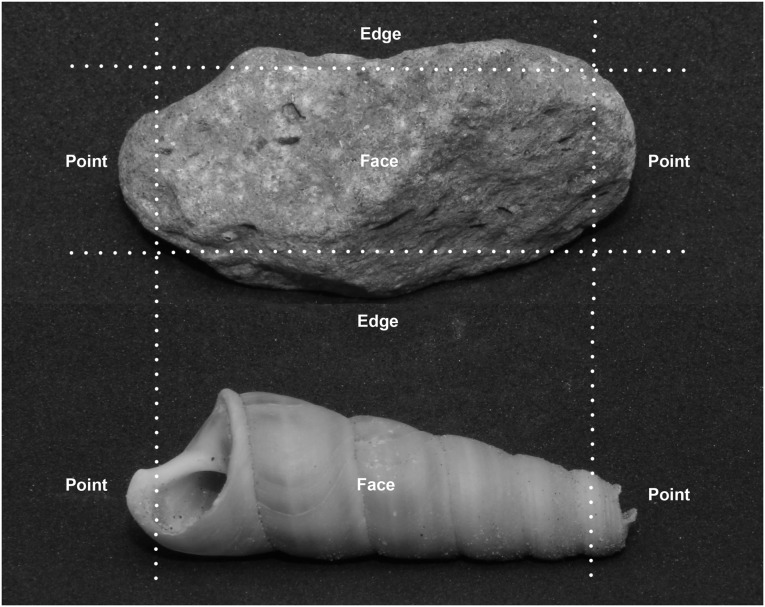
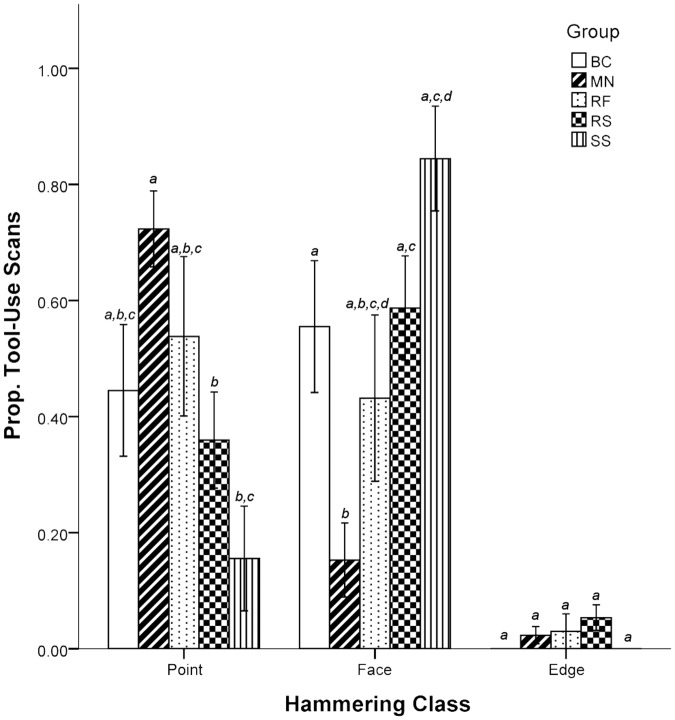
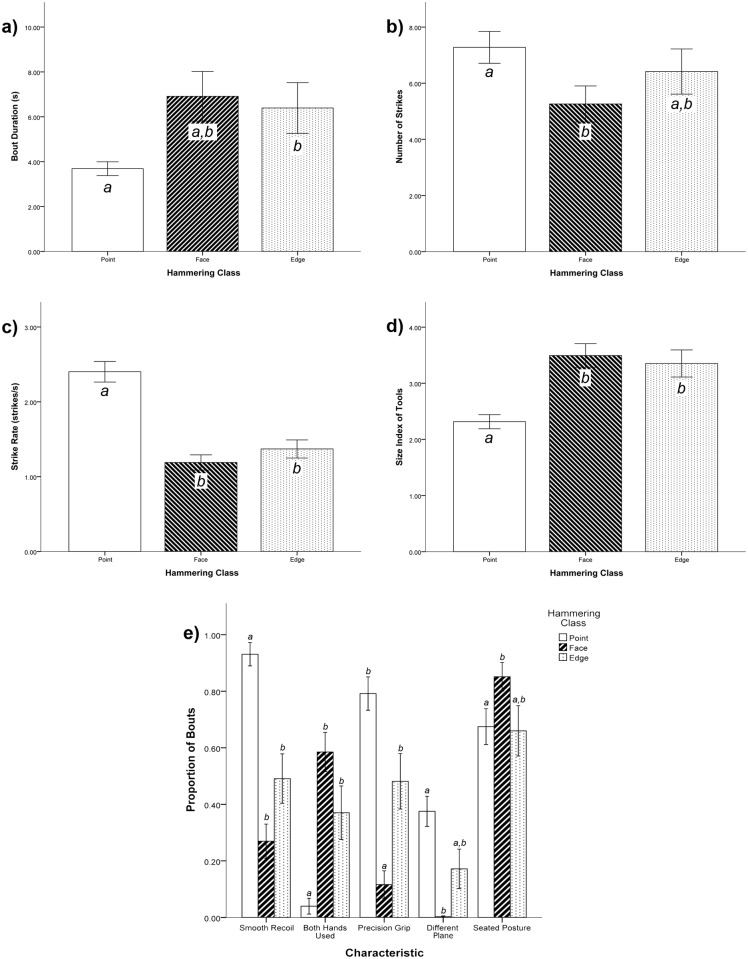
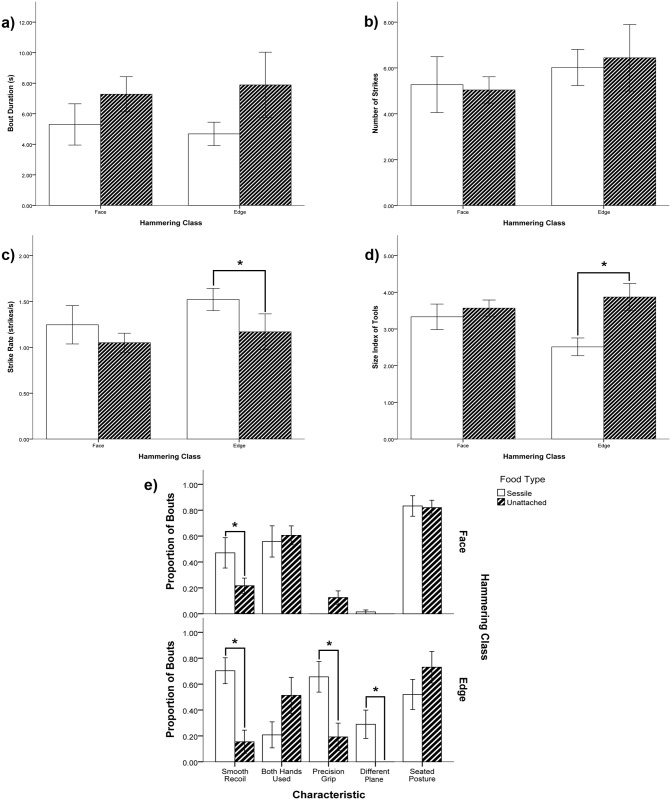
We explored variation in patterns of percussive stone-tool use on coastal foods by Burmese long-tailed macaques (Macaca fascicularis aurea) from two islands in Laem Son National Park, Ranong, Thailand. We catalogued variation into three hammering classes and 17 action patterns, after examining 638 tool-use bouts across 90 individuals. Hammering class was based on the stone surface used for striking food, being face, point, and edge hammering. Action patterns were discriminated by tool material, hand use, posture, and striking motion. Hammering class was analyzed for associations with material and behavioural elements of tool use. Action patterns were not, owing to insufficient instances of most patterns. We collected 3077 scan samples from 109 macaques on Piak Nam Yai Island's coasts, to determine the proportion of individuals using each hammering class and action pattern. Point hammering was significantly more associated with sessile foods, smaller tools, faster striking rates, smoother recoil, unimanual use, and more varied striking direction, than were face and edge hammering, while both point and edge hammering were significantly more associated with precision gripping than face hammering. Edge hammering also showed distinct differences depending on whether such hammering was applied to sessile or unattached foods, resembling point hammering for sessile foods and face hammering for unattached foods. Point hammering and sessile edge hammering compared to prior descriptions of axe hammering, while face and unattached edge hammering compared to pound hammering. Analysis of scans showed that 80% of individuals used tools, each employing one to four different action patterns. The most common patterns were unimanual point hammering (58%), symmetrical-bimanual face hammering (47%) and unimanual face hammering (37%). Unimanual edge hammering was relatively frequent (13%), compared to the other thirteen rare action patterns (<5%). We compare our study to other stone-using primates, and discuss implications for further research.
我们研究了来自泰国拉廊府莱姆森国家公园两个岛屿的缅甸长尾猕猴(食蟹猕猴金色亚种,Macaca fascicularis aurea)在沿海食物上使用敲击石器模式的差异。在检查了90只个体的638次工具使用行为后,我们将这些差异分类为三种敲击类别和17种动作模式。敲击类别基于用于敲击食物的石头表面,分为面敲击、尖敲击和边缘敲击。动作模式通过工具材料、手的使用、姿势和敲击动作来区分。我们分析了敲击类别与工具使用的材料和行为要素之间的关联。由于大多数模式的实例不足,因此未对动作模式进行分析。我们从皮亚克南艾岛海岸的109只猕猴身上收集了3077个扫描样本,以确定使用每种敲击类别和动作模式的个体比例。与面敲击和边缘敲击相比,尖敲击与固着食物、较小的工具、更快的敲击速度、更平滑的后坐力、单手使用以及更多样化的敲击方向显著相关,而尖敲击和边缘敲击与精确抓握的关联都比面敲击显著得多。边缘敲击根据其应用于固着食物还是未附着食物也表现出明显差异,类似于对固着食物的尖敲击和对未附着食物的面敲击。与先前对斧锤敲击的描述相比,尖敲击和固着边缘敲击类似,而面敲击和未附着边缘敲击与捣锤敲击类似。扫描分析表明,80%的个体使用工具,每个个体采用一到四种不同的动作模式。最常见的模式是单手尖敲击(58%)、对称双手面敲击(47%)和单手面敲击(37%)。与其他十三种罕见动作模式(<5%)相比,单手边缘敲击相对频繁(13%)。我们将我们的研究与其他使用石器的灵长类动物进行了比较,并讨论了对进一步研究的启示。