Saqcena Mahesh, Menon Deepak, Patel Deven, Mukhopadhyay Suman, Chow Victor, Foster David A
Department of Biological Sciences, Hunter College of the City University of New York, New York, New York, United States of America.
PLoS One. 2013 Aug 19;8(8):e74157. doi: 10.1371/journal.pone.0074157. eCollection 2013.
In multicellular organisms, cell division is regulated by growth factors (GFs). In the absence of GFs, cells exit the cell cycle at a site in G1 referred to as the restriction point (R) and enter a state of quiescence known as G0. Additionally, nutrient availability impacts on G1 cell cycle progression. While there is a vast literature on G1 cell cycle progression, confusion remains - especially with regard to the temporal location of R relative to nutrient-mediated checkpoints. In this report, we have investigated the relationship between R and a series of metabolic cell cycle checkpoints that regulate passage into S-phase.
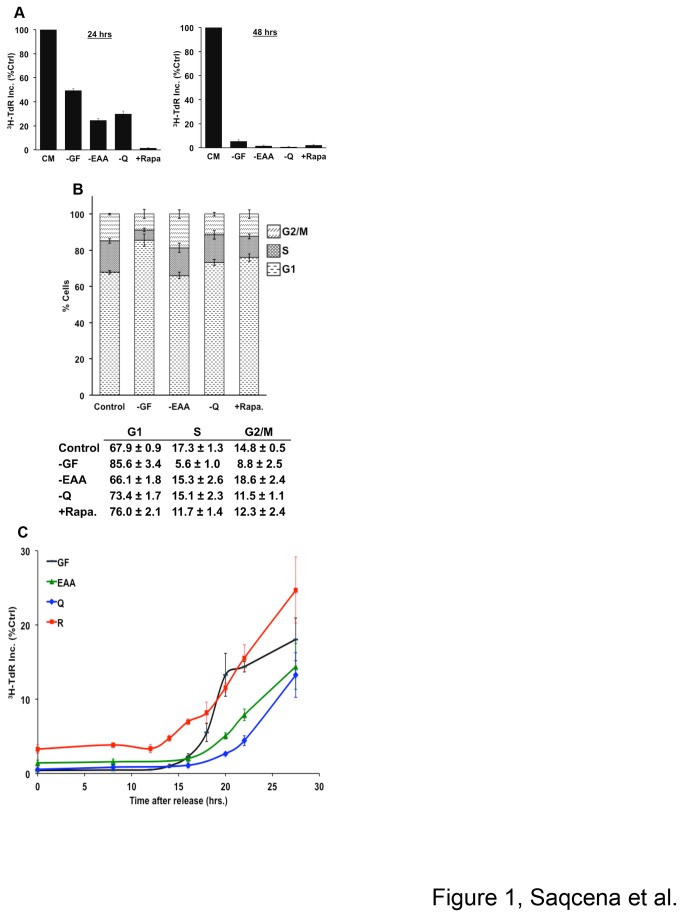
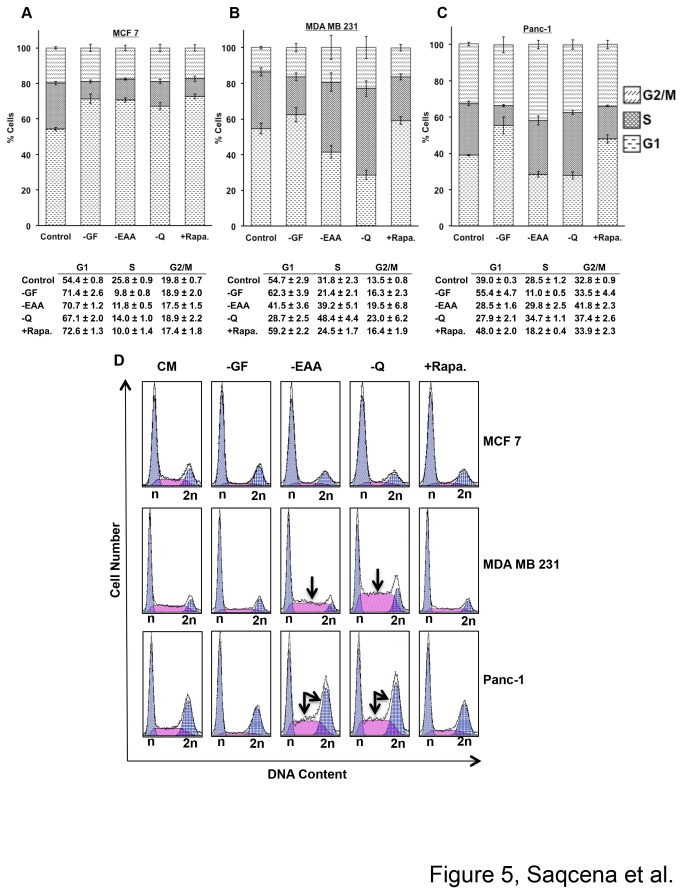
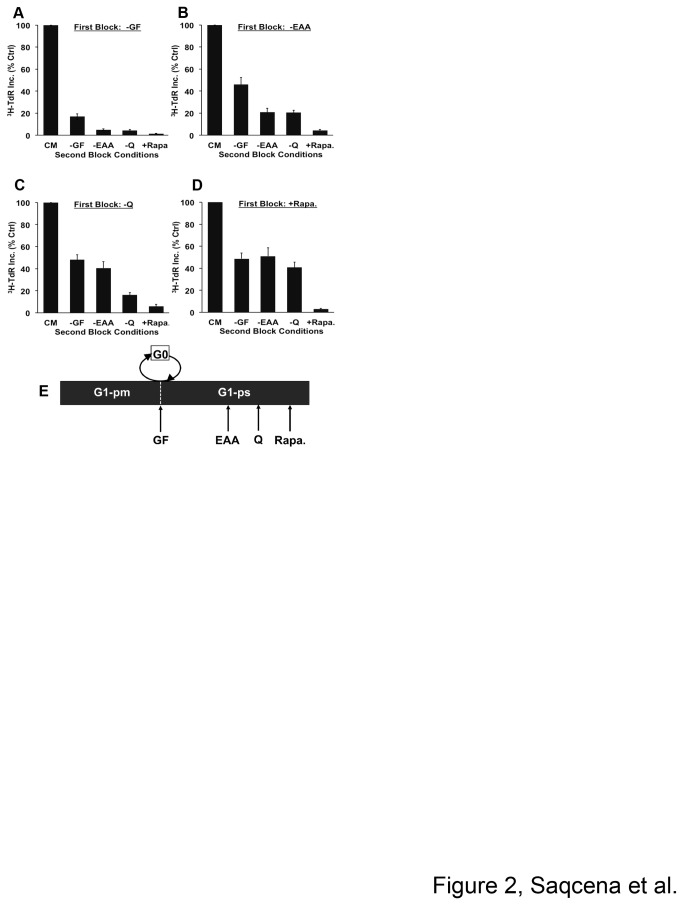
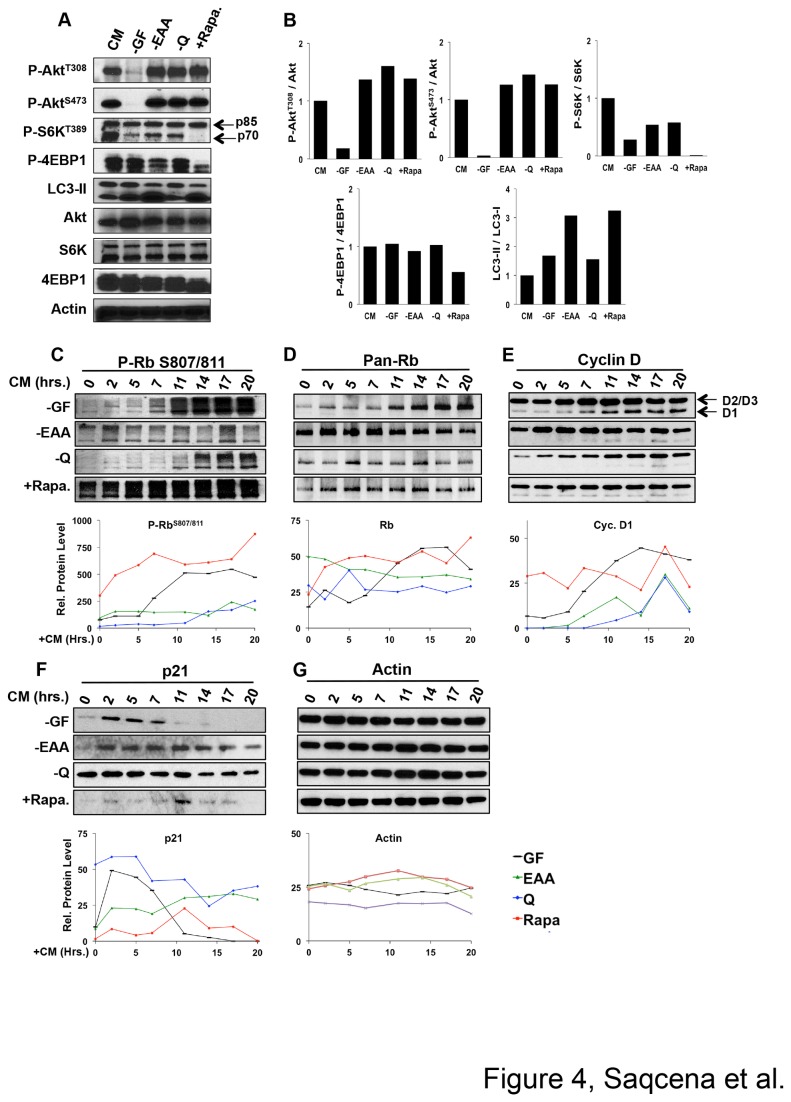
We used double-block experiments to order G1 checkpoints that monitor the presence of GFs, essential amino acids (EEAs), the conditionally essential amino acid glutamine, and inhibition of mTOR. Cell cycle progression was monitored by uptake of [(3)H]-thymidine and flow cytometry, and analysis of cell cycle regulatory proteins was by Western-blot.
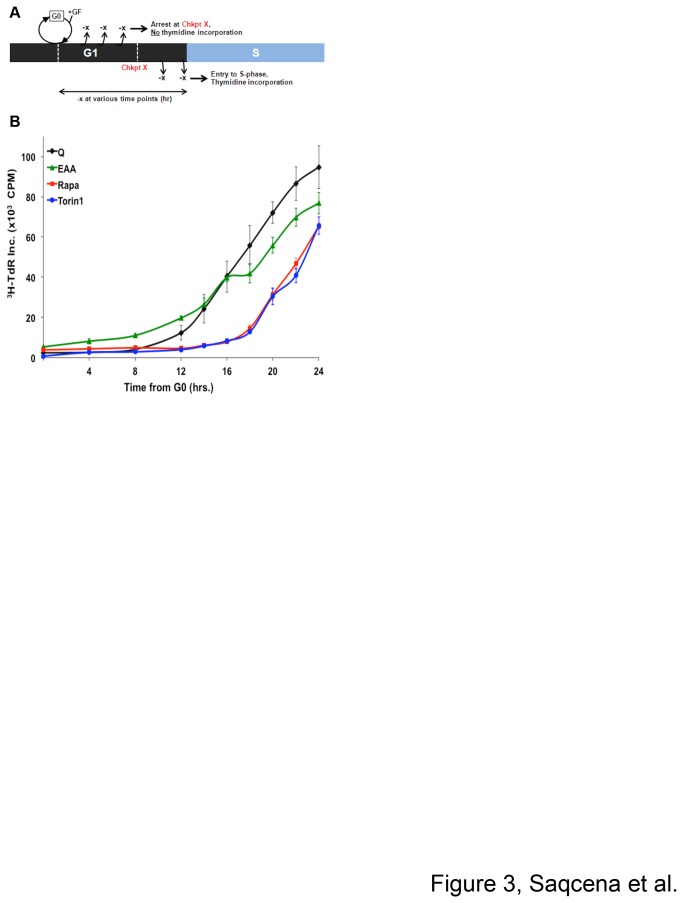
We report here that the GF-mediated R can be temporally distinguished from a series of late G1 metabolic checkpoints mediated by EAAs, glutamine, and mTOR - the mammalian/mechanistic target of rapamycin. R is clearly upstream from an EAA checkpoint, which is upstream from a glutamine checkpoint. mTOR is downstream from both the amino acid checkpoints, close to S-phase. Significantly, in addition to GF autonomy, we find human cancer cells also have dysregulated metabolic checkpoints.
The data provided here are consistent with a GF-dependent mid-G1 R where cells determine whether it is appropriate to divide, followed by a series of late-G1 metabolic checkpoints mediated by amino acids and mTOR where cells determine whether they have sufficient nutrients to accomplish the task. Since mTOR inhibition arrests cells the latest in G1, it is likely the final arbiter for nutrient sufficiency prior to committing to replicating the genome.
在多细胞生物中,细胞分裂受生长因子(GFs)调控。在缺乏生长因子的情况下,细胞在G1期的一个称为限制点(R)的位置退出细胞周期,并进入一种称为G0的静止状态。此外,营养物质的可利用性会影响G1期细胞周期进程。虽然关于G1期细胞周期进程有大量文献,但仍存在困惑——尤其是关于限制点相对于营养物质介导的检查点的时间位置。在本报告中,我们研究了限制点与一系列调节进入S期的代谢细胞周期检查点之间的关系。
我们使用双阻断实验来确定监测生长因子、必需氨基酸(EEAs)、条件必需氨基酸谷氨酰胺的存在以及mTOR抑制的G1期检查点顺序。通过[³H] - 胸腺嘧啶摄取和流式细胞术监测细胞周期进程,通过蛋白质免疫印迹分析细胞周期调节蛋白。
我们在此报告,生长因子介导的限制点在时间上可与由必需氨基酸、谷氨酰胺和mTOR(雷帕霉素的哺乳动物/机制性靶点)介导的一系列G1晚期代谢检查点区分开来。限制点明显位于必需氨基酸检查点的上游,而必需氨基酸检查点又位于谷氨酰胺检查点的上游。mTOR位于两个氨基酸检查点的下游,接近S期。重要的是,除了生长因子自主性外,我们发现人类癌细胞的代谢检查点也失调。
此处提供的数据与依赖生长因子的G1中期限制点一致,在该点细胞决定是否适合分裂,随后是由氨基酸和mTOR介导的一系列G1晚期代谢检查点,在这些检查点细胞决定是否有足够的营养来完成任务。由于mTOR抑制在G1期最晚阻止细胞,它可能是在决定复制基因组之前营养充足的最终仲裁者。