Department of Molecular Biology and Genetics, Biotechnology Bldg., Cornell University, Ithaca, NY 14853, United States.
Dev Biol. 2013 Nov 1;383(1):121-31. doi: 10.1016/j.ydbio.2013.08.013. Epub 2013 Aug 23.
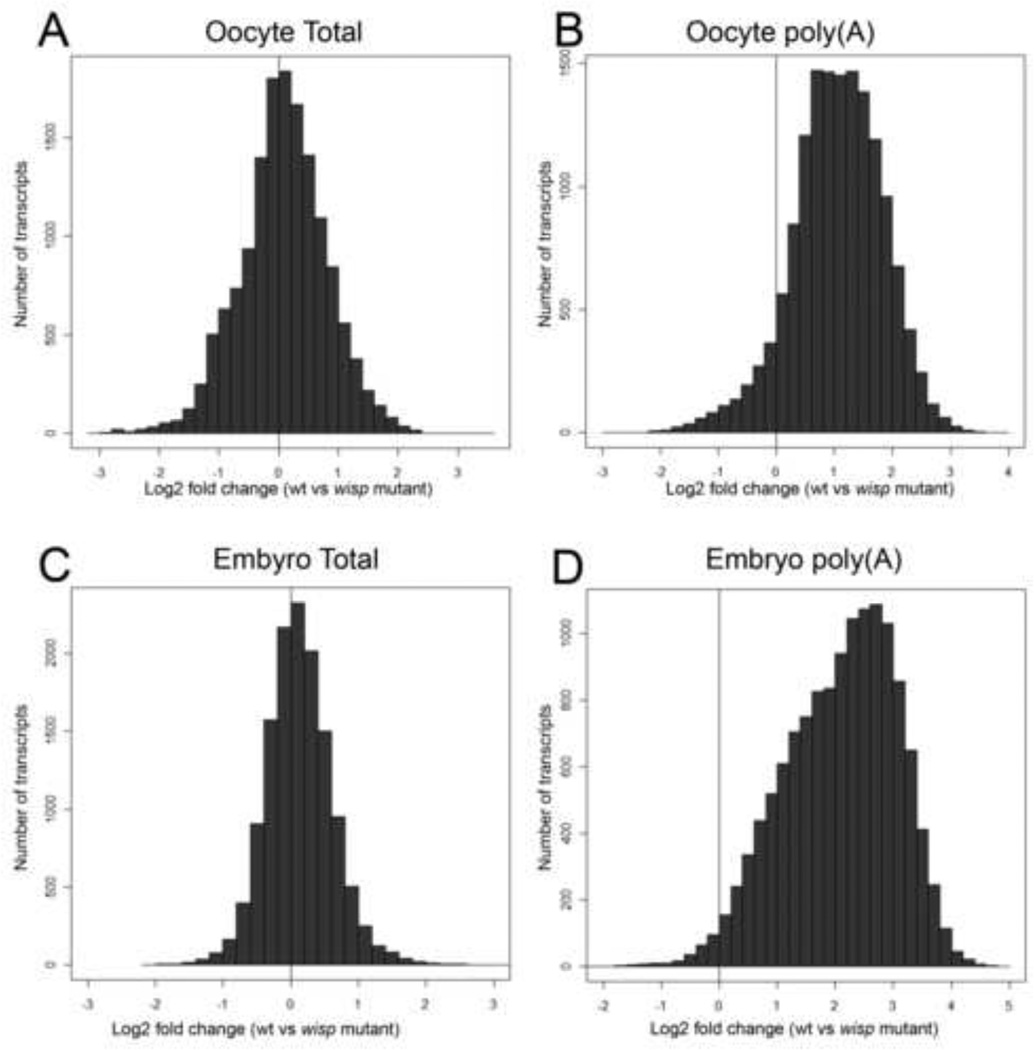
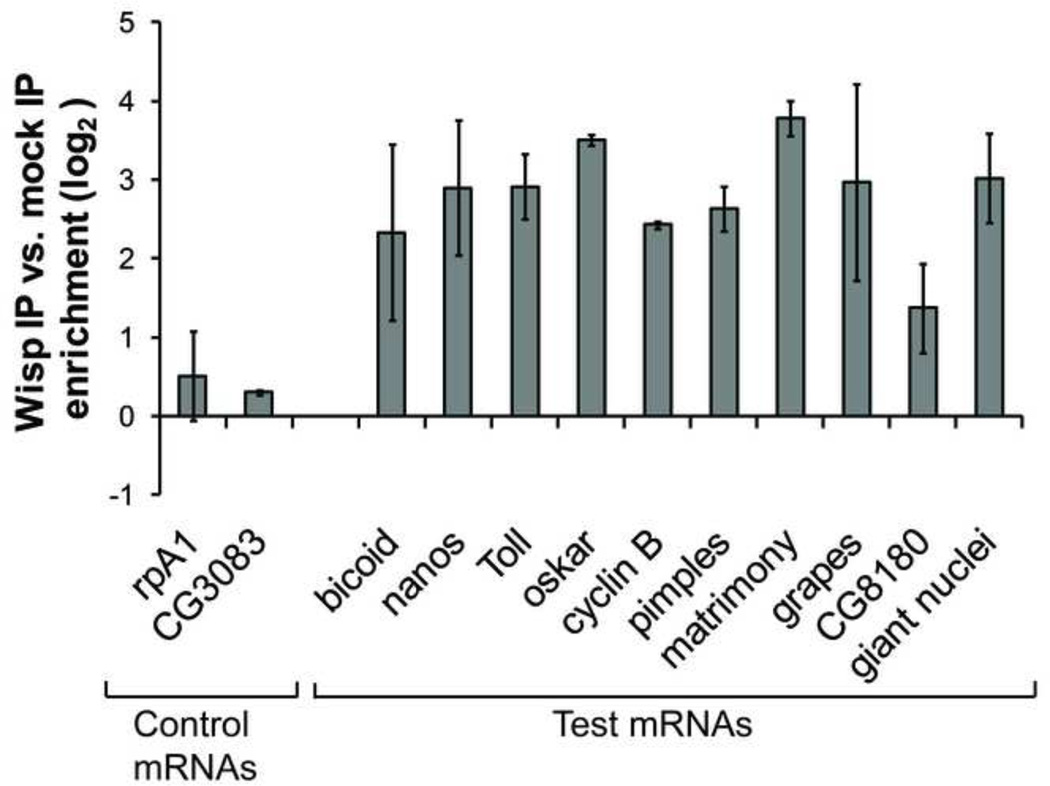
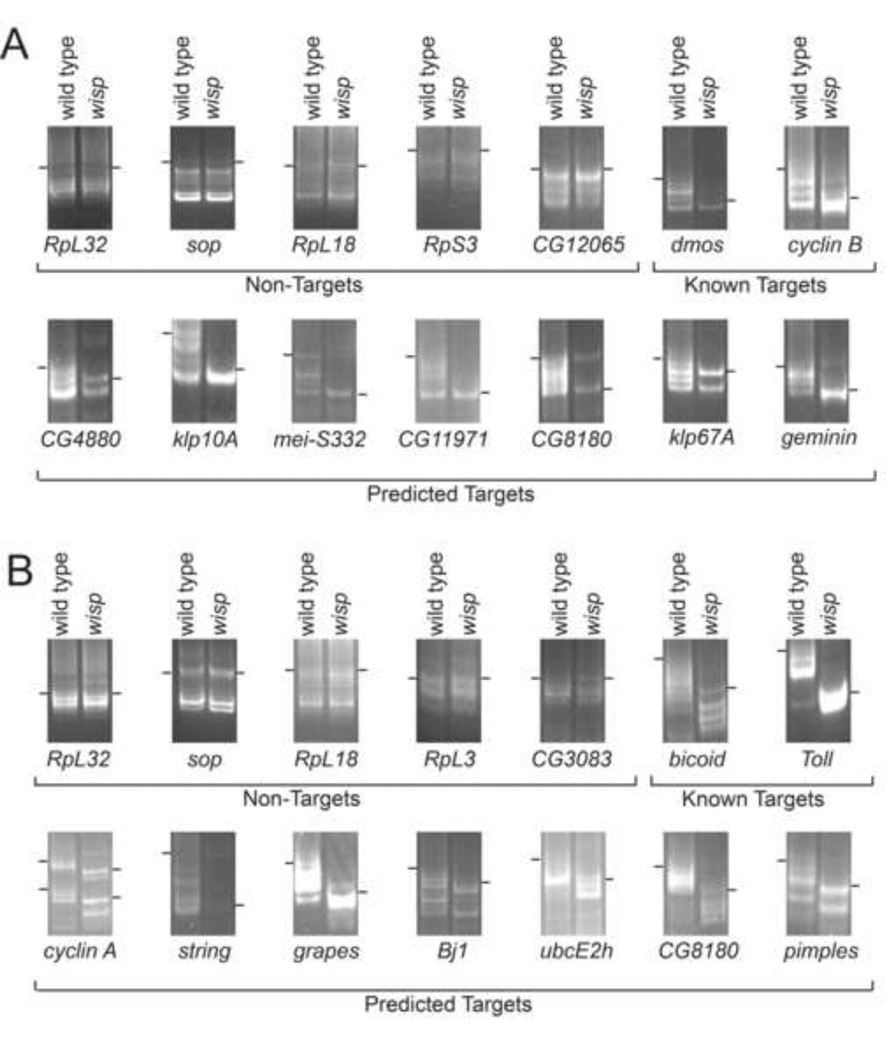
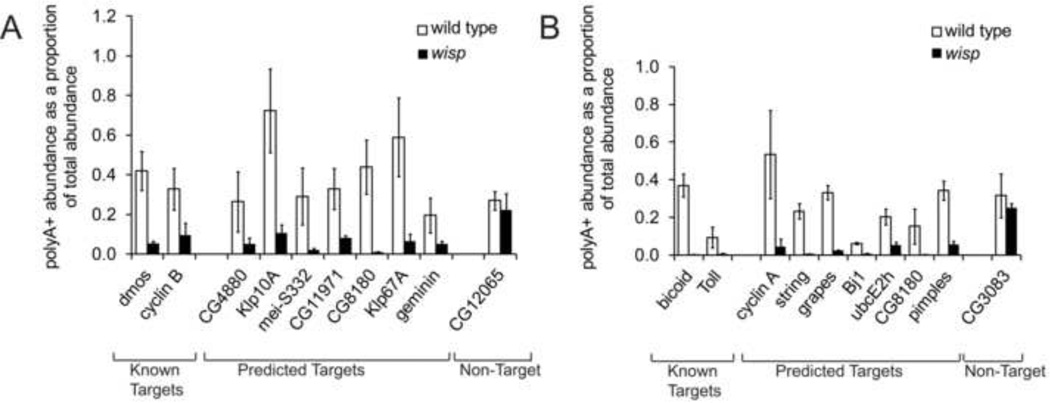
The GLD-2 class of poly(A) polymerases regulate the timing of translation of stored transcripts by elongating the poly(A) tails of target mRNAs in the cytoplasm. WISPY is a GLD-2 enzyme that acts in the Drosophila female germline and is required for the completion of the egg-to-embryo transition. Though a handful of WISPY target mRNAs have been identified during both oogenesis and early embryogenesis, it was unknown whether WISP simply regulated a small pool of patterning or cell cycle genes, or whether, instead, cytoplasmic polyadenylation was widespread during this developmental transition. To identify the full range of WISPY targets, we carried out microarray analysis to look for maternal mRNAs whose poly(A) tails fail to elongate in the absence of WISP function. We examined the polyadenylated portion of the maternal transcriptome in both stage 14 (mature) oocytes and in early embryos that had completed egg activation. Our analysis shows that the poly(A) tails of thousands of maternal mRNAs fail to elongate in wisp-deficient oocytes and embryos. Furthermore, we have identified specific classes of genes that are highly regulated in this manner at each stage. Our study shows that cytoplasmic polyadenylation is a major regulatory mechanism during oocyte maturation and egg activation.
GLD-2 类多聚(A)聚合酶通过在细胞质中延长靶 mRNA 的多聚(A)尾巴来调节储存转录物翻译的时间。WISPY 是一种在果蝇生殖系中起作用的 GLD-2 酶,是完成从卵子到胚胎过渡所必需的。尽管在卵子发生和早期胚胎发生过程中已经鉴定出少数几个 WISPY 靶 mRNA,但尚不清楚 WISP 是否仅调节一小部分模式或细胞周期基因,或者相反,在这个发育过渡期间细胞质多聚腺苷酸化是否广泛存在。为了鉴定 WISPY 的全部靶标,我们进行了微阵列分析,以寻找在没有 WISP 功能的情况下其多聚(A)尾巴未能延长的母本 mRNA。我们在成熟的第 14 期卵母细胞和已完成卵子激活的早期胚胎中检查了母本转录组的多聚腺苷酸化部分。我们的分析表明,数千个母本 mRNA 的多聚(A)尾巴在 wisp 缺陷型卵母细胞和胚胎中未能延长。此外,我们已经确定了在每个阶段以这种方式高度调节的特定基因类别。我们的研究表明,细胞质多聚腺苷酸化是卵子成熟和卵子激活过程中的主要调节机制。