Wang Zining, Zhang Dong, Wang Xiyin, Tan Xu, Guo Hui, Paterson Andrew H
Plant Genome Mapping Laboratory, University of Georgia, Athens, Georgia 30605.
G3 (Bethesda). 2013 Oct 3;3(10):1759-67. doi: 10.1534/g3.113.006890.
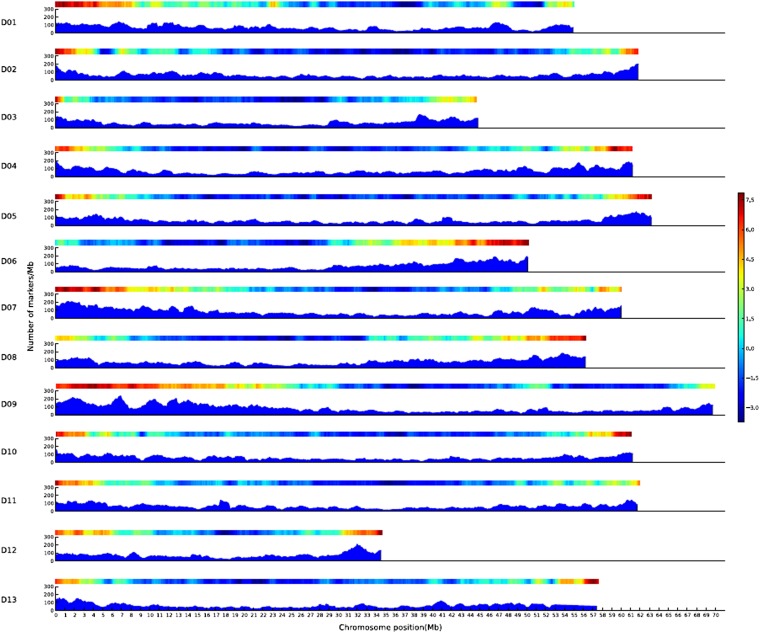
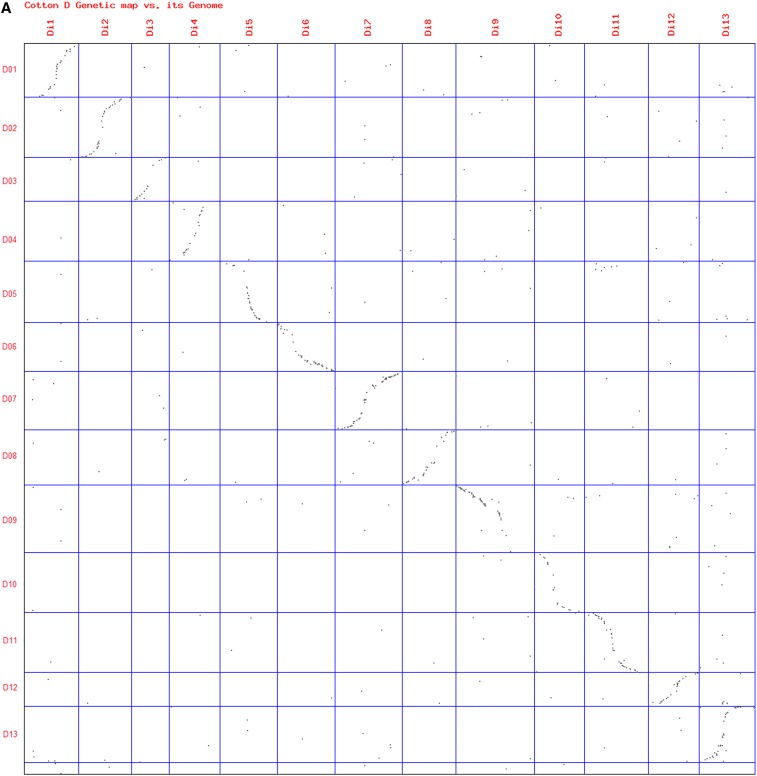
We constructed a very-high-density, whole-genome marker map (WGMM) for cotton by using 18,597 DNA markers corresponding to 48,958 loci that were aligned to both a consensus genetic map and a reference genome sequence. The WGMM has a density of one locus per 15.6 kb, or an average of 1.3 loci per gene. The WGMM was anchored by the use of colinear markers to a detailed genetic map, providing recombinational information. Mapped markers occurred at relatively greater physical densities in distal chromosomal regions and lower physical densities in the central regions, with all 1 Mb bins having at least nine markers. Hotspots for quantitative trait loci and resistance gene analog clusters were aligned to the map and DNA markers identified for targeting of these regions of high practical importance. Based on the cotton D genome reference sequence, the locations of chromosome structural rearrangements plotted on the map facilitate its translation to other Gossypium genome types. The WGMM is a versatile genetic map for marker assisted breeding, fine mapping and cloning of genes and quantitative trait loci, developing new genetic markers and maps, genome-wide association mapping, and genome evolution studies.
我们利用18597个DNA标记构建了棉花的超高密度全基因组标记图谱(WGMM),这些标记对应48958个位点,与一个整合遗传图谱和一个参考基因组序列进行了比对。该WGMM的密度为每15.6 kb一个位点,或平均每个基因1.3个位点。通过使用共线标记将WGMM锚定到一个详细的遗传图谱上,提供重组信息。定位的标记在染色体远端区域的物理密度相对较高,而在中央区域的物理密度较低,所有1 Mb的区间至少有9个标记。数量性状位点和抗性基因类似物簇的热点与该图谱进行了比对,并鉴定出DNA标记以靶向这些具有高度实际重要性的区域。基于棉花D基因组参考序列,绘制在图谱上的染色体结构重排位置有助于将其转化为其他棉属基因组类型。该WGMM是用于标记辅助育种、基因和数量性状位点的精细定位与克隆、开发新的遗传标记和图谱、全基因组关联作图以及基因组进化研究的通用遗传图谱。