The Roslin Institute and Royal (Dick) School of Veterinary Studies, University of Edinburgh, Easter Bush, Midlothian, Edinburgh EH25 9RG, United Kingdom.
BMC Genomics. 2013 Aug 28;14:581. doi: 10.1186/1471-2164-14-581.
The draft genome of the domestic pig (Sus scrofa) has recently been published permitting refined analysis of the transcriptome. Pig breeds have been reported to differ in their resistance to infectious disease. In this study we examine whether there are corresponding differences in gene expression in innate immune cells
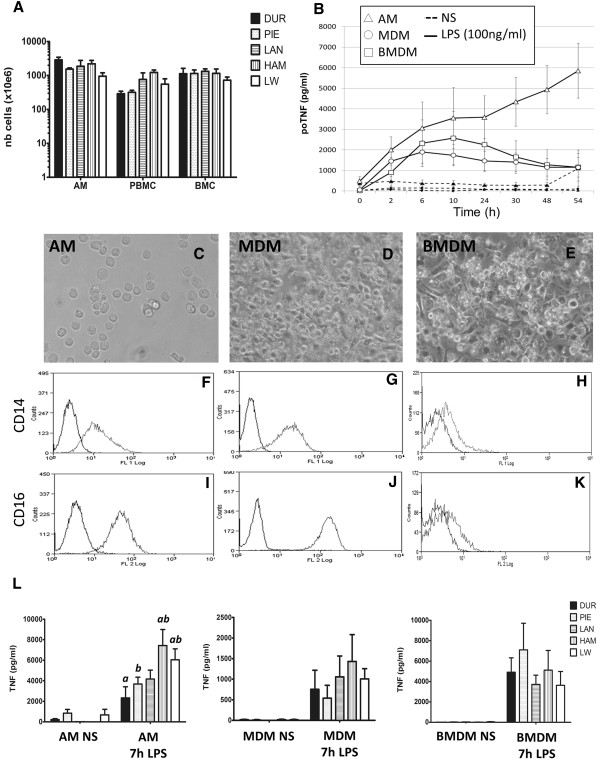
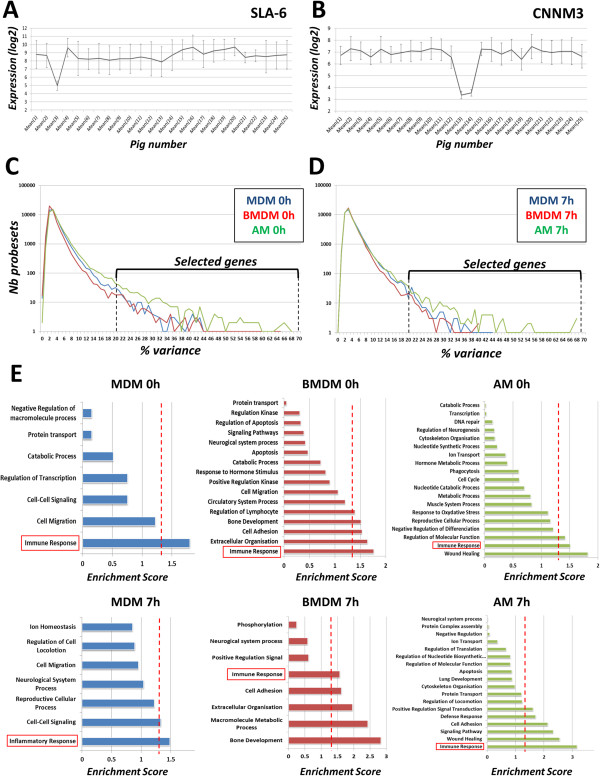
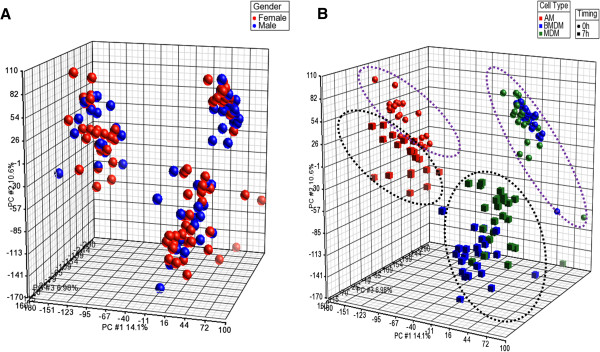
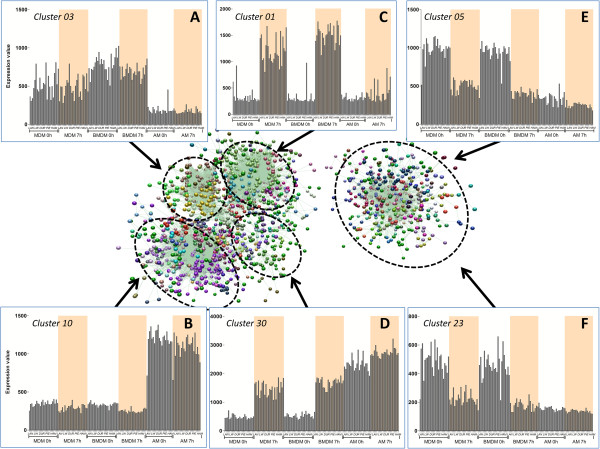
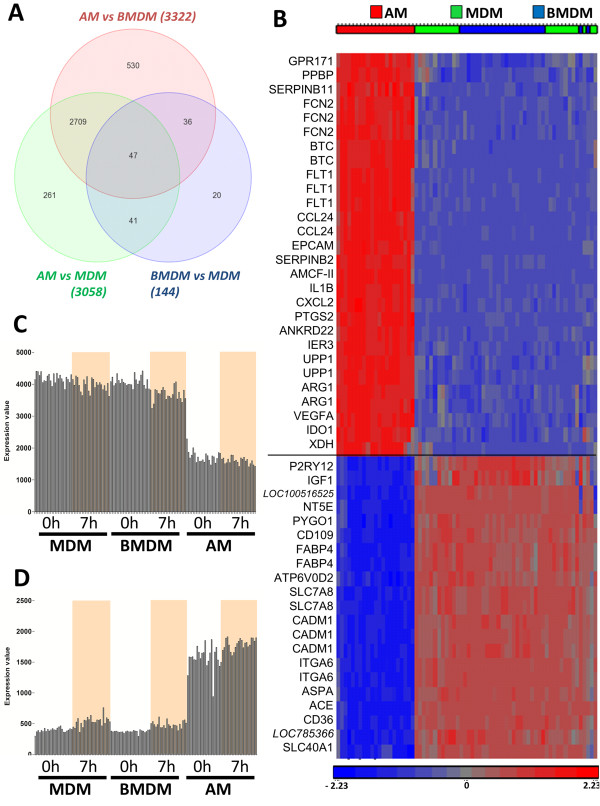
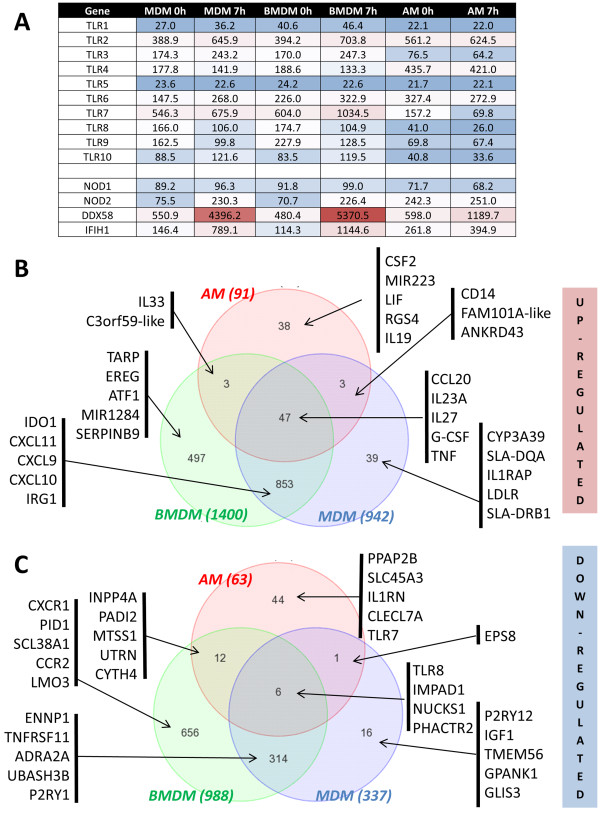
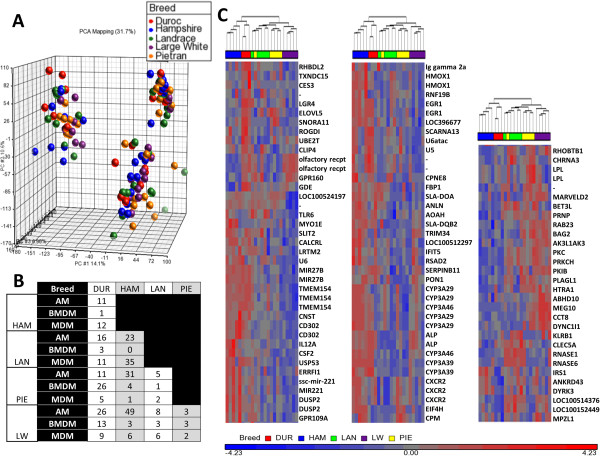
We demonstrate that macrophages can be harvested from three different compartments of the pig (lungs, blood and bone-marrow), cryopreserved and subsequently recovered and differentiated in CSF-1. We have performed surface marker analysis and gene expression profiling on macrophages from these compartments, comparing twenty-five animals from five different breeds and their response to lipopolysaccharide. The results provide a clear distinction between alveolar macrophages (AM) and monocyte-derived (MDM) and bone-marrow-derived macrophages (BMDM). In particular, the lung macrophages express the growth factor, FLT1 and its ligand, VEGFA at high levels, suggesting a distinct pathway of growth regulation. Relatively few genes showed breed-specific differential expression, notably CXCR2 and CD302 in alveolar macrophages. In contrast, there was substantial inter-individual variation between pigs within breeds, mostly affecting genes annotated as being involved in immune responses.
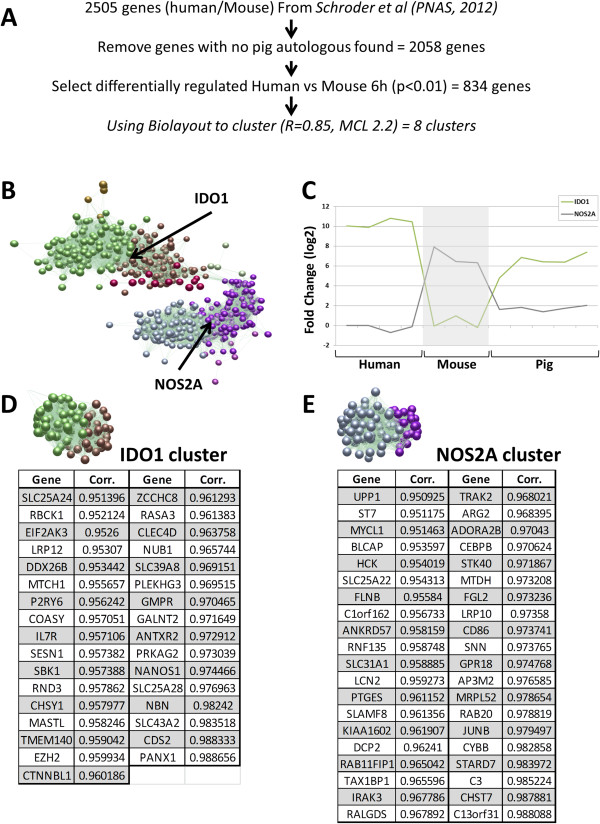
Pig macrophages more closely resemble human, than mouse, in their set of macrophage-expressed and LPS-inducible genes. Future research will address whether inter-individual variation in macrophage gene expression is heritable, and might form the basis for selective breeding for disease resistance.
家猪(Sus scrofa)的基因组草案最近已经公布,这使得对转录组进行更精细的分析成为可能。据报道,不同猪品种对传染病的抵抗力存在差异。在这项研究中,我们研究了先天免疫细胞中的基因表达是否存在相应的差异。
我们证明可以从猪的三个不同部位(肺、血液和骨髓)中分离出巨噬细胞,进行冷冻保存,然后在 CSF-1 中恢复和分化。我们对来自这三个部位的巨噬细胞进行了表面标记分析和基因表达谱分析,比较了来自五个不同品种的 25 只动物及其对脂多糖的反应。结果清楚地区分了肺泡巨噬细胞(AM)、单核细胞衍生的(MDM)和骨髓衍生的巨噬细胞(BMDM)。特别是,肺巨噬细胞高水平表达生长因子 FLT1 及其配体 VEGFA,提示存在独特的生长调控途径。相对较少的基因表现出品种特异性差异表达,特别是肺泡巨噬细胞中的 CXCR2 和 CD302。相比之下,在同一品种内的猪之间存在大量个体间变异,主要影响注释为参与免疫反应的基因。
猪的巨噬细胞在其表达的巨噬细胞基因和 LPS 诱导的基因方面与人类更相似,而与小鼠不同。未来的研究将探讨巨噬细胞基因表达的个体间变异是否具有遗传性,并可能成为针对疾病抗性的选择性育种的基础。