Baldacchino Frédéric, Muenworn Vithee, Desquesnes Marc, Desoli Florian, Charoenviriyaphap Theeraphap, Duvallet Gérard
Centre d'Écologie Fonctionnelle et Évolutive (UMR 5175), Université Montpellier 3, Route de Mende, 34199 Montpellier Cedex 5, France.
Parasite. 2013;20:26. doi: 10.1051/parasite/2013026. Epub 2013 Aug 29.
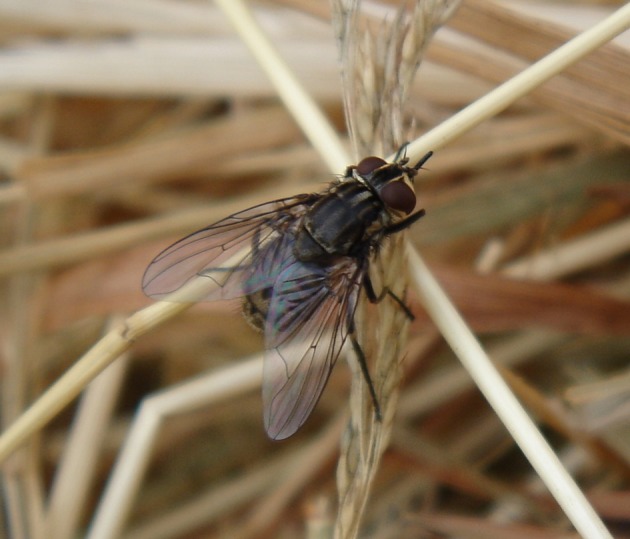
Stomoxys flies are mechanical vectors of pathogens present in the blood and skin of their animal hosts, especially livestock, but occasionally humans. In livestock, their direct effects are disturbance, skin lesions, reduction of food intake, stress, blood loss, and a global immunosuppressive effect. They also induce the gathering of animals for mutual protection; meanwhile they favor development of pathogens in the hosts and their transmission. Their indirect effect is the mechanical transmission of pathogens. In case of interrupted feeding, Stomoxys can re-start their blood meal on another host. When injecting saliva prior to blood-sucking, they can inoculate some infected blood remaining on their mouthparts. Beside this immediate transmission, it was observed that Stomoxys may keep some blood in their crop, which offers a friendly environment for pathogens that could be regurgitated during the next blood meal; thus a delayed transmission by Stomoxys seems possible. Such a mechanism has a considerable epidemiological impact since it allows inter-herd transmission of pathogens. Equine infectious anemia, African swine fever, West Nile, and Rift Valley viruses are known to be transmitted by Stomoxys, while others are suspected. Rickettsia (Anaplasma, Coxiella), other bacteria and parasites (Trypanosoma spp., Besnoitia spp.) are also transmitted by Stomoxys. Finally, Stomoxys was also found to act as an intermediate host of the helminth Habronema microstoma and may be involved in the transmission of some Onchocerca and Dirofilaria species. Being cosmopolite, Stomoxys calcitrans might have a worldwide and greater impact than previously thought on animal and human pathogen transmission.
厩螫蝇是病原体的机械传播媒介,这些病原体存在于其动物宿主(尤其是家畜,但偶尔也包括人类)的血液和皮肤中。在家畜中,它们的直接影响包括骚扰、皮肤损伤、食物摄入量减少、应激、失血以及全身性免疫抑制作用。它们还会促使动物聚集以相互保护;与此同时,它们有利于病原体在宿主体内的滋生及其传播。它们的间接影响是病原体的机械传播。在取食中断的情况下,厩螫蝇可以在另一个宿主上重新开始吸血。在吸血前注入唾液时,它们可以接种残留在口器上的一些感染血液。除了这种即时传播外,还观察到厩螫蝇可能会在嗉囊中留存一些血液,这为病原体提供了一个适宜的环境,病原体可能会在下次吸血时被反刍出来;因此,厩螫蝇的延迟传播似乎是可能的。这种机制具有相当大的流行病学影响,因为它允许病原体在畜群间传播。已知马传染性贫血、非洲猪瘟、西尼罗河病毒和裂谷热病毒可由厩螫蝇传播,而其他一些病毒也受到怀疑。立克次氏体(无形体属、柯克斯氏体属)、其他细菌和寄生虫(锥虫属、贝斯诺球虫属)也可由厩螫蝇传播。最后,还发现厩螫蝇是微小口胃线虫的中间宿主,并且可能参与某些盘尾丝虫属和恶丝虫属物种的传播。厩螫蝇分布广泛,可能在全球范围内对动物和人类病原体传播产生比以前认为的更大影响。