1University of Western Ontario, London, Ontario, Canada.
J Health Soc Behav. 2013;54(3):353-68. doi: 10.1177/0022146513489312. Epub 2013 Aug 29.
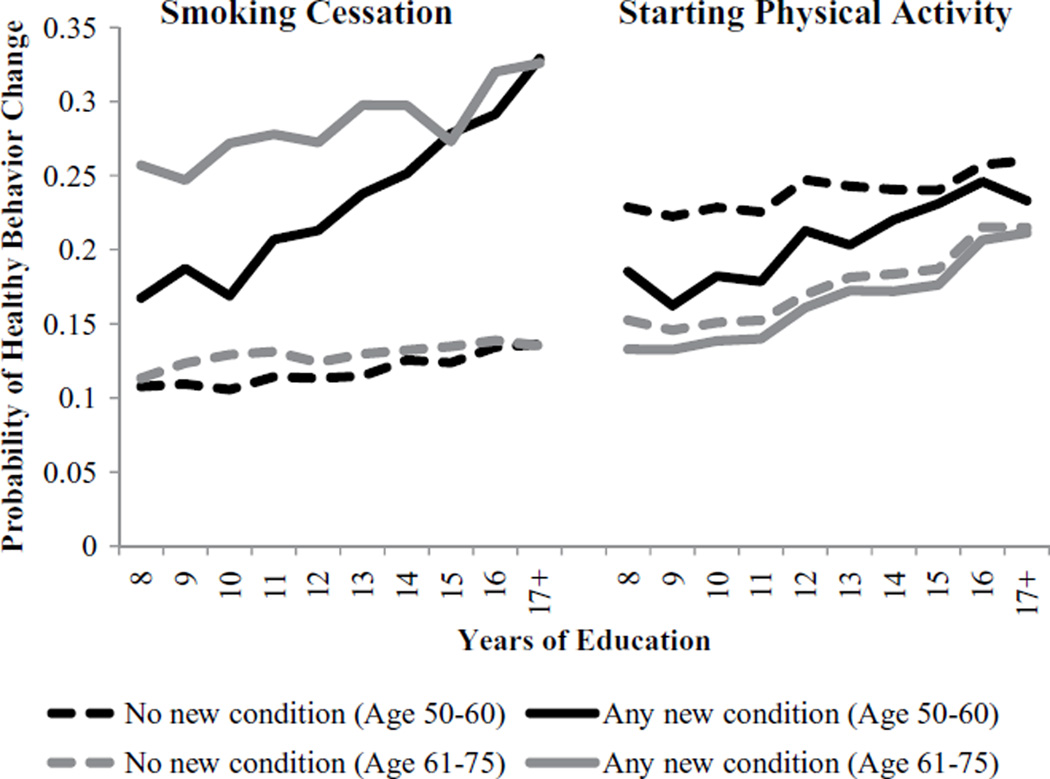
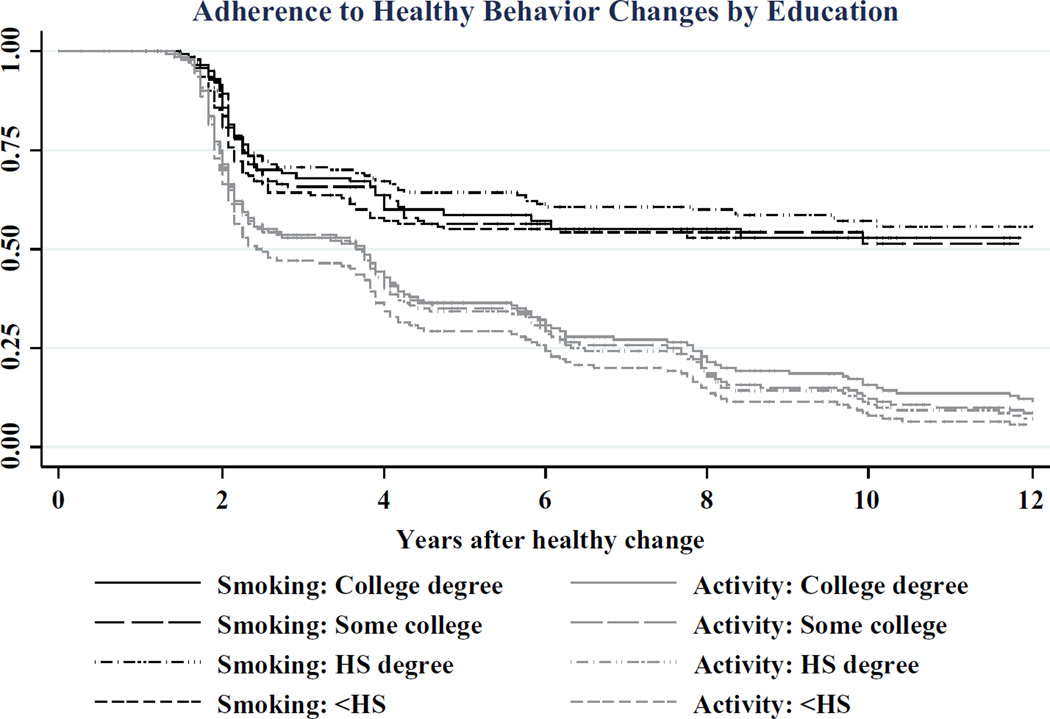
Although the better-educated are more likely to practice healthy behaviors when measured at one point in time, there is no clear evidence regarding whether more educated people are more likely to initiate healthy behavior changes in the face of new chronic conditions and whether they are better able to adhere to these healthy changes, once made. I use data from the Health and Retirement Study (HRS) (1992-2010) to examine smoking cessation and starting physical activity by educational attainment over an 18-year period among 16,606 respondents ages 50 to 75. The more-educated are the least likely to smoke and most likely to be physically active in middle age. They are also most likely to make healthy changes overall and better adhere to them. Education also shapes behavior change after a new diagnosis, which likely contributes to socioeconomic status differences in chronic disease management and health outcomes.
尽管在某一时间点进行测量时,受教育程度较高的人更有可能采取健康行为,但目前尚不清楚受教育程度较高的人在面对新的慢性疾病时是否更有可能开始健康行为改变,以及他们一旦做出这些改变是否更能坚持下去。我使用了来自健康与退休研究(HRS)(1992-2010 年)的数据,在 16606 名年龄在 50 至 75 岁的受访者中,考察了在 18 年期间,根据教育程度,戒烟和开始体育锻炼的情况。受教育程度较高的人吸烟的可能性最小,中年时体力活动的可能性最大。他们也最有可能做出整体上的健康改变,并更好地坚持下去。教育也会影响新诊断后的行为改变,这可能是导致慢性病管理和健康结果在社会经济地位方面存在差异的原因之一。