Bezirtzoglou Eugenia Elefterios Venizelos
Laboratory of Microbiology, Biotechnology and Hygiene, Department of Food Science, Faculty of Agricultural Development, Democritus University of Thrace, Orestiada, Greece.
Microb Ecol Health Dis. 2012 Sep 7;23. doi: 10.3402/mehd.v23i0.18370. eCollection 2012.
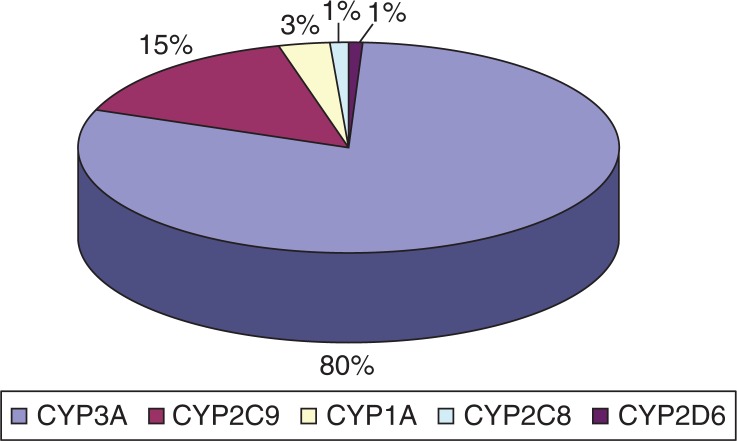
Cytochromes P450 (CYPs) enzymes metabolize a large variety of xenobiotic substances. In this vein, a plethora of studies were conducted to investigate their role, as cytochromes are located in both liver and intestinal tissues. The P450 profile of the human intestine has not been fully characterized. Human intestine serves primarily as an absorptive organ for nutrients, although it has also the ability to metabolize drugs. CYPs are responsible for the majority of phase I drug metabolism reactions. CYP3A represents the major intestinal CYP (80%) followed by CYP2C9. CYP1A is expressed at high level in the duodenum, together with less abundant levels of CYP2C8-10 and CYP2D6. Cytochromes present a genetic polymorphism intra- or interindividual and intra- or interethnic. Changes in the pharmacokinetic profile of the drug are associated with increased toxicity due to reduced metabolism, altered efficacy of the drug, increased production of toxic metabolites, and adverse drug interaction. The high metabolic capacity of the intestinal flora is due to its enormous pool of enzymes, which catalyzes reactions in phase I and phase II drug metabolism. Compromised intestinal barrier conditions, when rupture of the intestinal integrity occurs, could increase passive paracellular absorption. It is clear that high microbial intestinal charge following intestinal disturbances, ageing, environment, or food-associated ailments leads to the microbial metabolism of a drug before absorption. The effect of certain bacteria having a benefic action on the intestinal ecosystem has been largely discussed during the past few years by many authors. The aim of the probiotic approach is to repair the deficiencies in the gut flora and establish a protective effect. There is a tentative multifactorial association of the CYP (P450) cytochrome role in the different diseases states, environmental toxic effects or chemical exposures and nutritional status.
细胞色素P450(CYPs)酶可代谢多种外源性物质。因此,人们开展了大量研究来探究它们的作用,因为细胞色素存在于肝脏和肠道组织中。人类肠道的P450谱尚未完全明确。人类肠道主要作为营养物质的吸收器官,不过它也具有代谢药物的能力。CYPs负责大部分的I相药物代谢反应。CYP3A是肠道中主要的CYP(占80%),其次是CYP2C9。CYP1A在十二指肠中高表达,同时CYP2C8 - 10和CYP2D6的表达水平较低。细胞色素在个体内或个体间以及种族内或种族间存在基因多态性。药物药代动力学特征的改变与代谢减少导致的毒性增加、药物疗效改变、有毒代谢产物生成增加以及药物相互作用不良反应有关。肠道菌群的高代谢能力归因于其庞大的酶库,这些酶催化I相和II相药物代谢反应。当肠道完整性破裂时,肠道屏障功能受损会增加被动的细胞旁吸收。显然,肠道紊乱、衰老、环境或食物相关疾病导致的高微生物肠道负荷会使药物在吸收前就发生微生物代谢。在过去几年中,许多作者对某些对肠道生态系统有有益作用的细菌的影响进行了大量讨论。益生菌方法的目的是修复肠道菌群的缺陷并建立保护作用。CYP(P450)细胞色素在不同疾病状态、环境毒性作用或化学暴露以及营养状况中发挥作用,存在一种初步的多因素关联。