Faculty of Dentistry, Research Group on Oral Ecology, Laval University, Quebec City, Quebec, Canada.
PLoS One. 2013 Aug 19;8(8):e71660. doi: 10.1371/journal.pone.0071660. eCollection 2013.
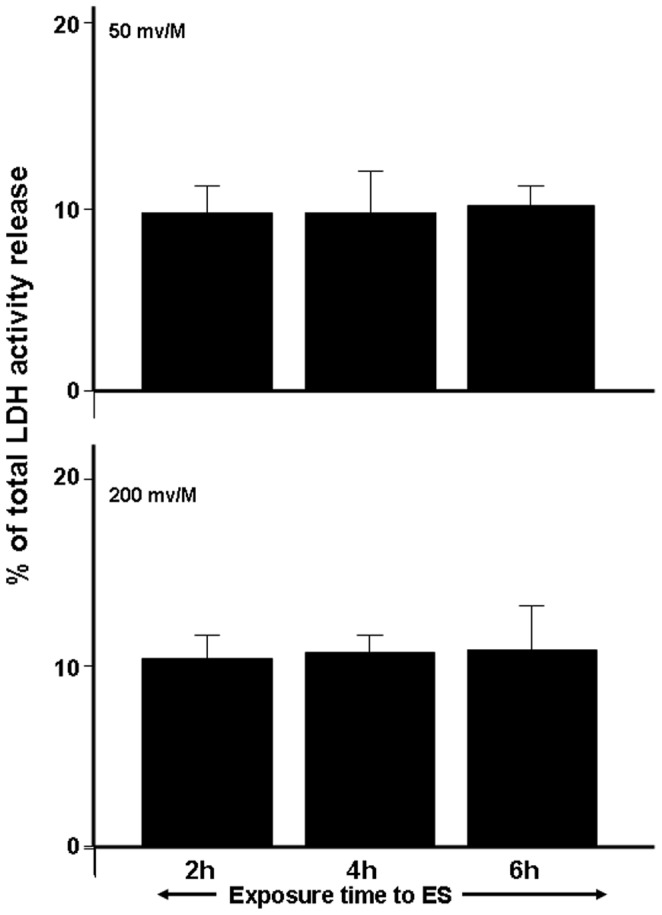
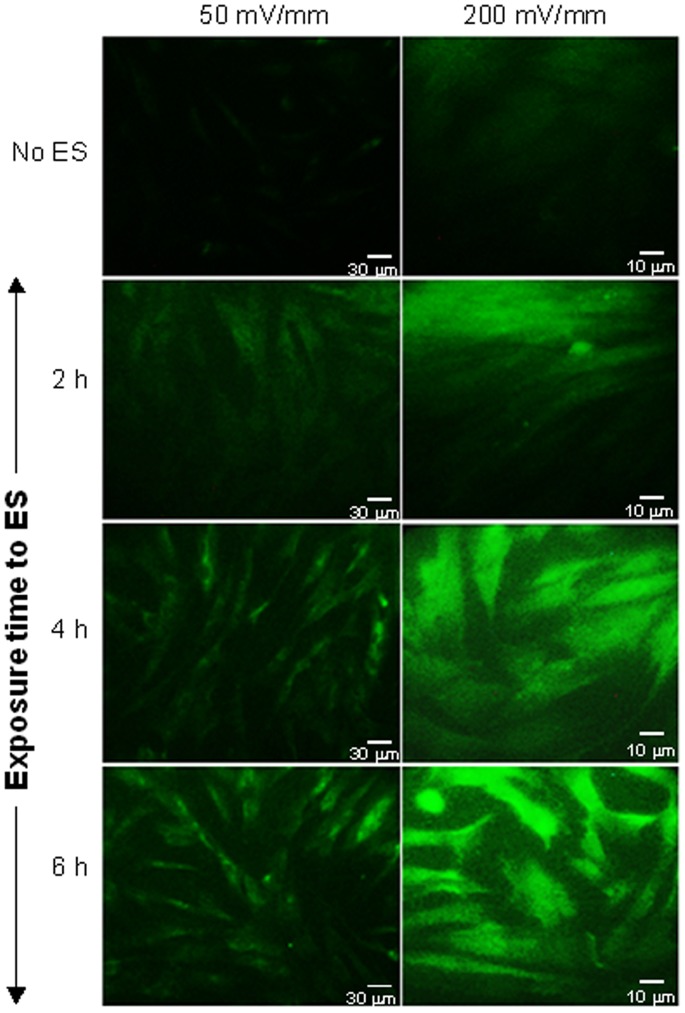
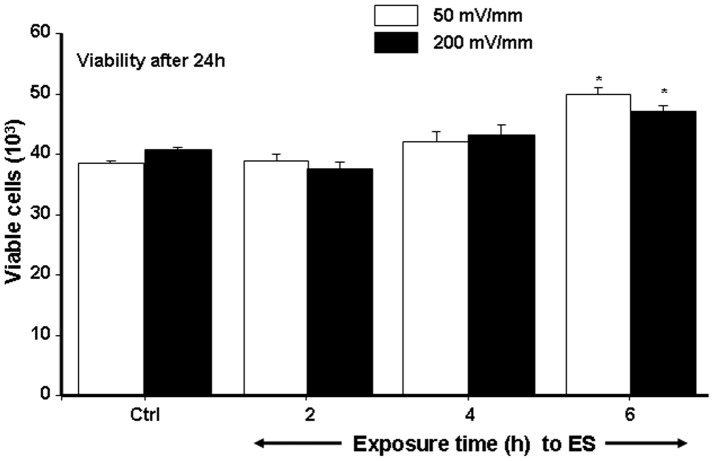
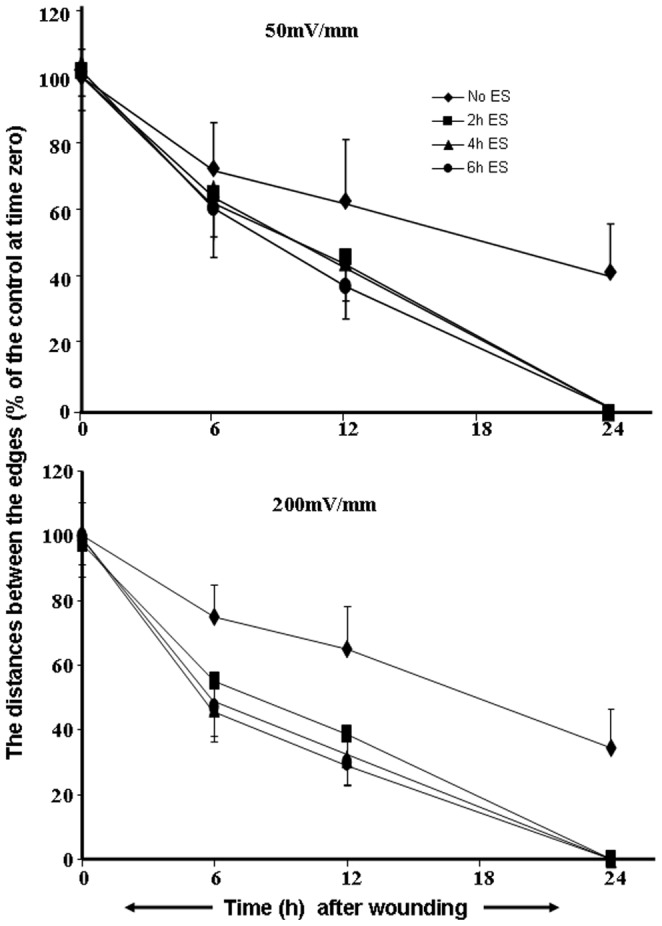
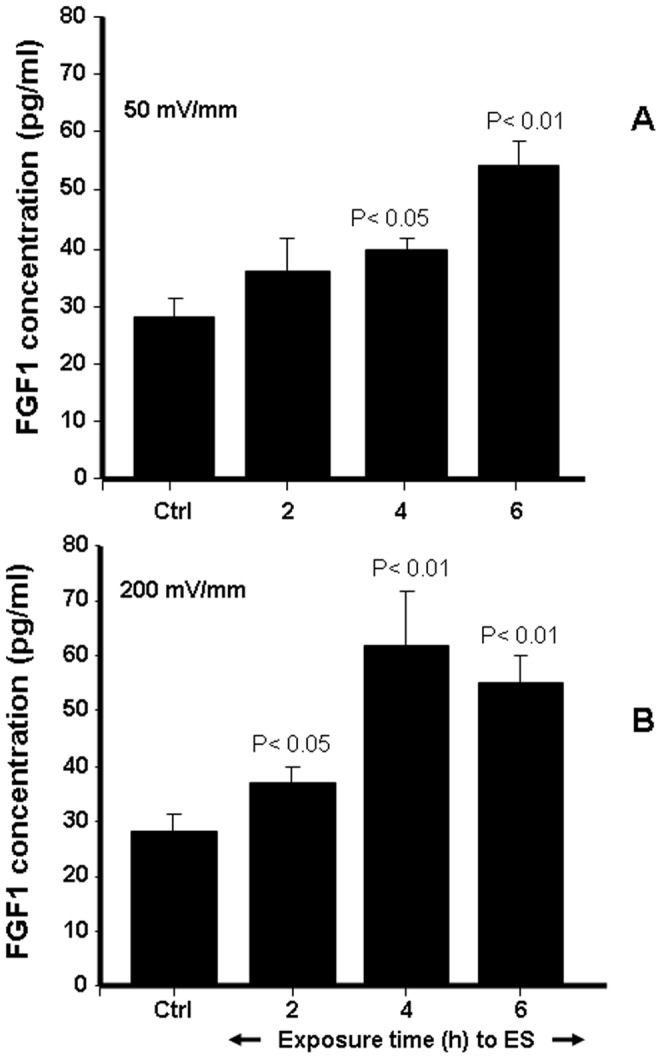
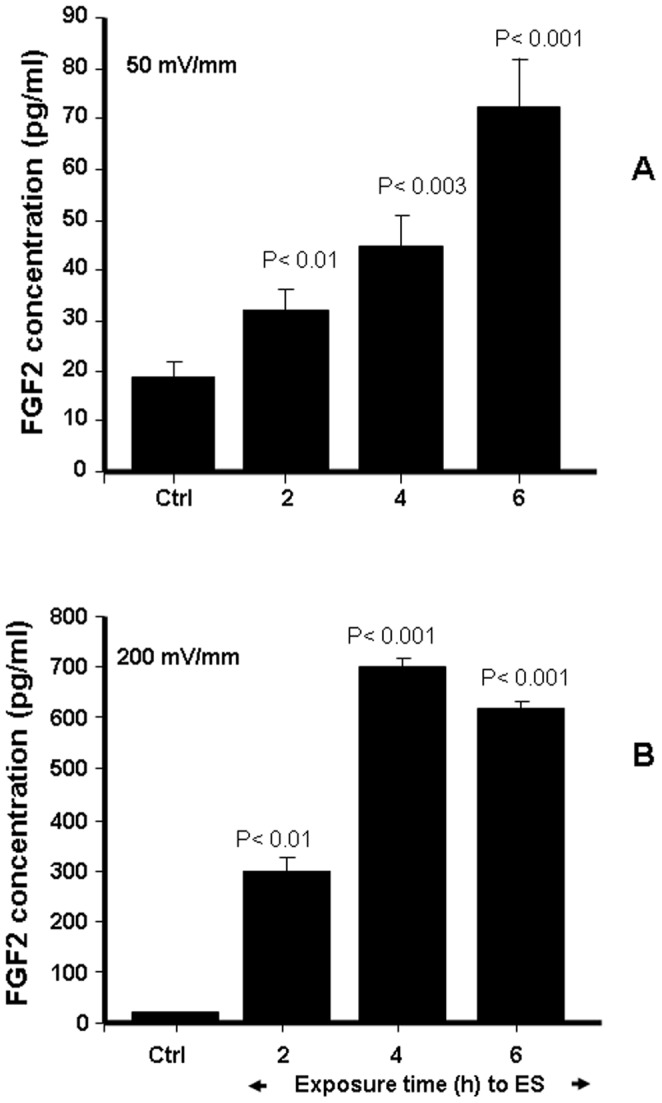
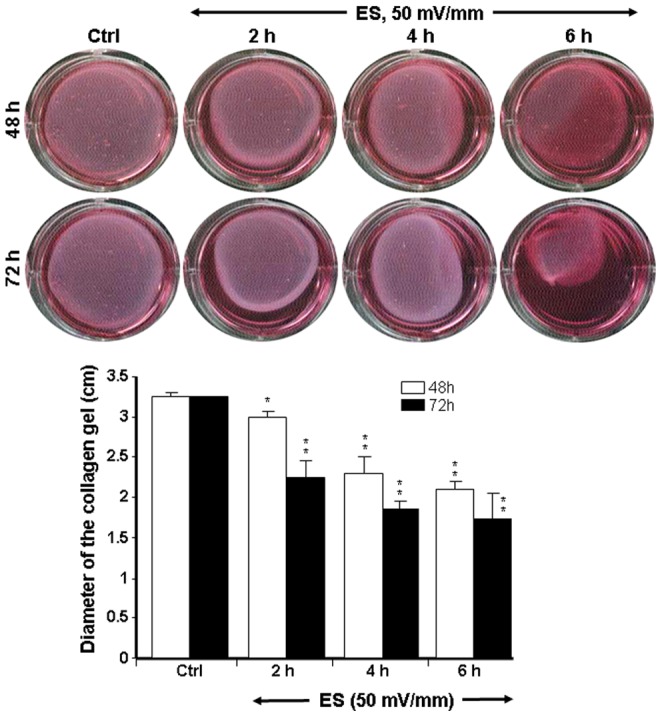
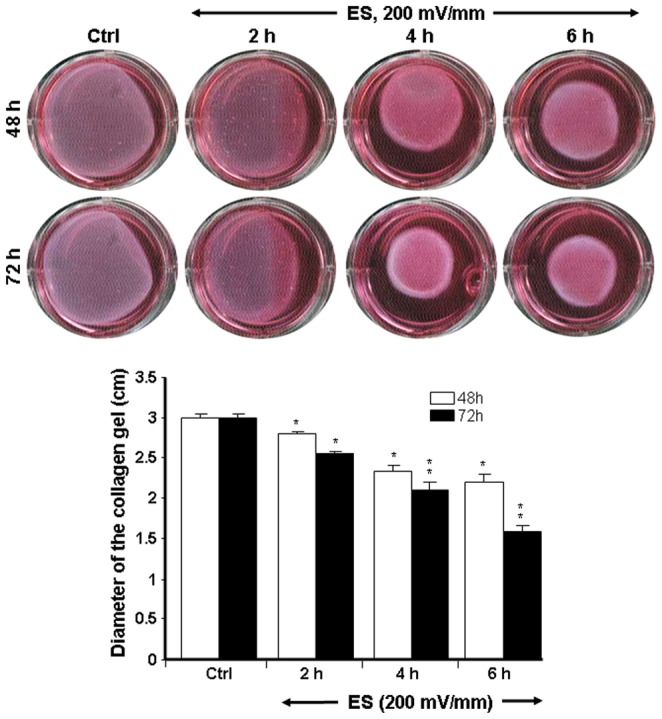
Electrical stimulation (ES) has long been used as an alternative clinical treatment and an effective approach to modulate cellular behaviours. In this work we investigated the effects of ES on human skin fibroblast activity, myofibroblast transdifferentiation and the consequence on wound healing. Normal human fibroblasts were seeded on heparin-bioactivated PPy/PLLA conductive membranes, cultured for 24 h, and then exposed to ES of 50 or 200 mV/mm for 2, 4, or 6 h. Following ES, the cells were either subjected to various analyses or re-seeded to investigate their healing capacity. Our findings show that ES had no cytotoxic effect on the fibroblasts, as demonstrated by the similar LDH activity levels in the ES-exposed and non-exposed cultures, and by the comparable cell viability under both conditions. Furthermore, the number of viable fibroblasts was higher following exposure to 6 h of ES than in the non-exposed culture. This enhanced cell growth was likely due to the ES up-regulated secretion of FGF-1 and FGF-2. In an in vitro scratch-wound assay where cell monolayer was used as a healing model, the electrically stimulated dermal fibroblasts migrated faster following exposure to ES and recorded a high contractile behaviour toward the collagen gel matrix. This enhanced contraction was supported by the high level of α-smooth muscle actin expressed by the fibroblasts following exposure to ES, indicating the characteristics of myofibroblasts. Remarkably, the modulation of fibroblast growth continued long after ES. In conclusion, this work demonstrates for the first time that exposure to ES promoted skin fibroblast growth and migration, increased growth factor secretion, and promoted fibroblast to myofibroblast transdifferentiation, thus promoting wound healing.
电刺激(ES)长期以来一直被用作替代临床治疗方法和调节细胞行为的有效手段。在这项工作中,我们研究了 ES 对人皮肤成纤维细胞活性、成肌纤维细胞转分化以及对伤口愈合的影响。将正常的人成纤维细胞接种在肝素生物活化的 PPy/PLLA 导电膜上,培养 24 小时,然后用 50 或 200 mV/mm 的 ES 分别刺激 2、4 或 6 小时。ES 后,对细胞进行各种分析或重新接种以研究其愈合能力。我们的研究结果表明,ES 对成纤维细胞没有细胞毒性作用,这可以从 ES 暴露和未暴露培养物中相似的 LDH 活性水平以及两种条件下相似的细胞活力水平得到证明。此外,与未暴露的培养物相比,暴露于 6 小时 ES 后的活细胞数量更高。这种增强的细胞生长可能是由于 ES 上调了 FGF-1 和 FGF-2 的分泌。在体外划痕实验中,使用细胞单层作为愈合模型,与未暴露 ES 的细胞相比,经 ES 刺激的真皮成纤维细胞迁移速度更快,并记录到对胶原凝胶基质的高收缩行为。这种增强的收缩得到了 ES 暴露后成纤维细胞中高水平表达的α-平滑肌肌动蛋白的支持,表明了成肌纤维细胞的特征。值得注意的是,成纤维细胞生长的调节在 ES 后持续了很长时间。总之,这项工作首次证明,暴露于 ES 可促进皮肤成纤维细胞的生长和迁移,增加生长因子的分泌,并促进成纤维细胞向成肌纤维细胞的转分化,从而促进伤口愈合。