Nuffield Department of Clinical Neurosciences (Nuffield Laboratory of Ophthalmology), University of Oxford, Levels 5-6 West Wing, John Radcliffe Hospital, Headley Way, Oxford OX3 9DU, UK; pRED Pharma Research and Development F. Hoffmann-La Roche, 4070 Basel, Switzerland.
Department of Pharmacology, University of Oxford, Mansfield Road, Oxford OX1 3QT, UK.
Cell. 2013 Aug 29;154(5):1100-1111. doi: 10.1016/j.cell.2013.08.004.
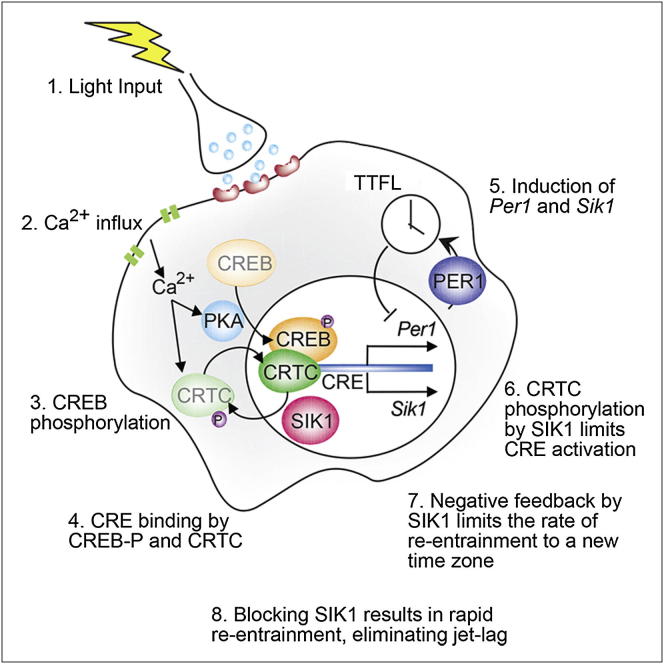
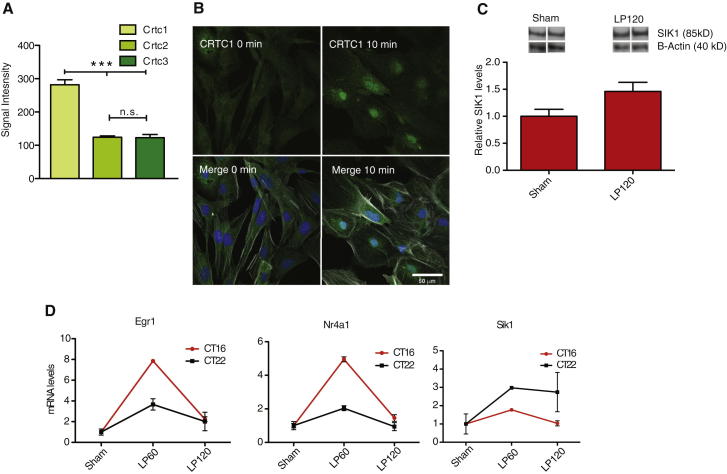
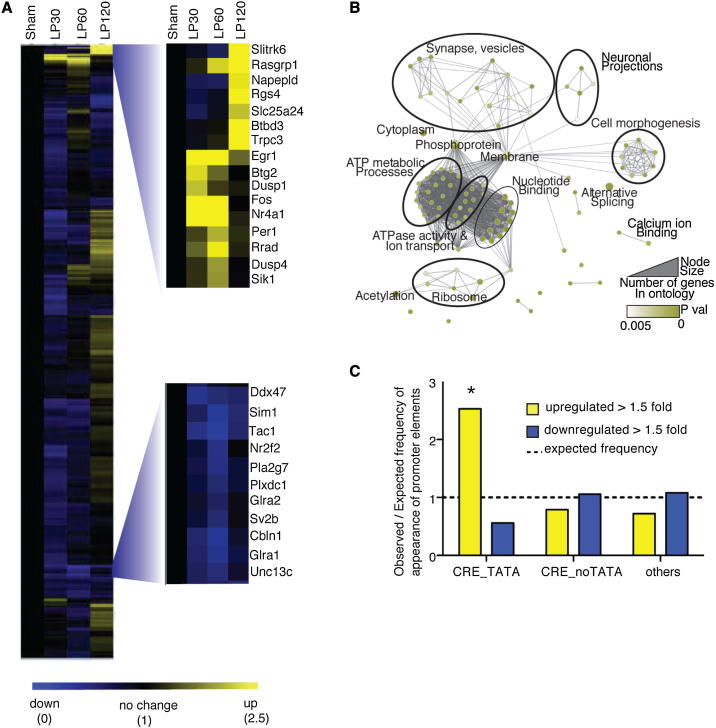
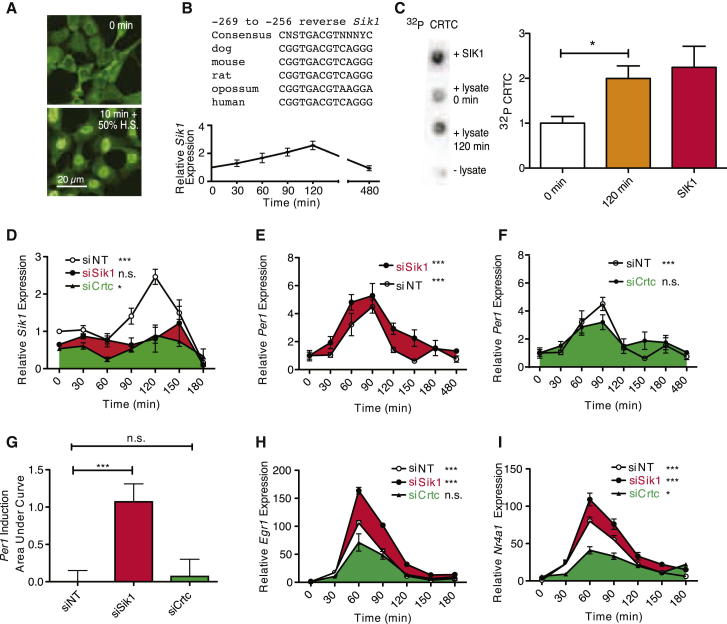
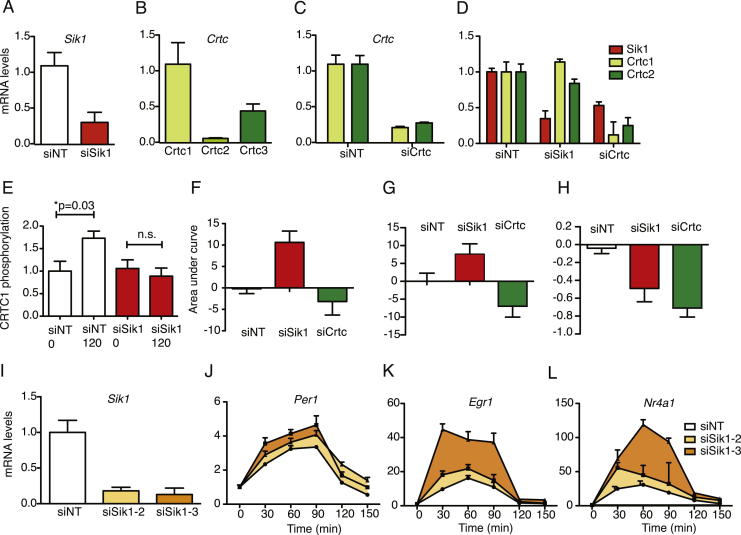
Retinal photoreceptors entrain the circadian system to the solar day. This photic resetting involves cAMP response element binding protein (CREB)-mediated upregulation of Per genes within individual cells of the suprachiasmatic nuclei (SCN). Our detailed understanding of this pathway is poor, and it remains unclear why entrainment to a new time zone takes several days. By analyzing the light-regulated transcriptome of the SCN, we have identified a key role for salt inducible kinase 1 (SIK1) and CREB-regulated transcription coactivator 1 (CRTC1) in clock re-setting. An entrainment stimulus causes CRTC1 to coactivate CREB, inducing the expression of Per1 and Sik1. SIK1 then inhibits further shifts of the clock by phosphorylation and deactivation of CRTC1. Knockdown of Sik1 within the SCN results in increased behavioral phase shifts and rapid re-entrainment following experimental jet lag. Thus SIK1 provides negative feedback, acting to suppress the effects of light on the clock. This pathway provides a potential target for the regulation of circadian rhythms.
视网膜光感受器使生物钟与太阳日同步。这种光重置涉及 cAMP 反应元件结合蛋白(CREB)介导的视交叉上核(SCN)单个细胞中 Per 基因的上调。我们对该途径的详细了解还很有限,而且仍然不清楚为什么要适应新的时区需要几天时间。通过分析 SCN 的光调控转录组,我们已经确定了盐诱导激酶 1(SIK1)和 CREB 调节转录共激活因子 1(CRTC1)在时钟重新设置中的关键作用。一个适应刺激导致 CRTC1 与 CREB 共同激活,诱导 Per1 和 Sik1 的表达。然后,SIK1 通过磷酸化和失活 CRTC1 抑制时钟的进一步移位。在 SCN 中敲低 Sik1 会导致行为相位提前和实验性时差后快速重新适应。因此,SIK1 提供负反馈,抑制光对时钟的影响。该途径为调节生物钟节律提供了一个潜在的靶点。