Department of Exercise Science, Syracuse University, 820 Comstock Ave., Room 201 WB, Syracuse, NY 13244, USA.
Exp Gerontol. 2013 Nov;48(11):1294-302. doi: 10.1016/j.exger.2013.08.011. Epub 2013 Aug 29.
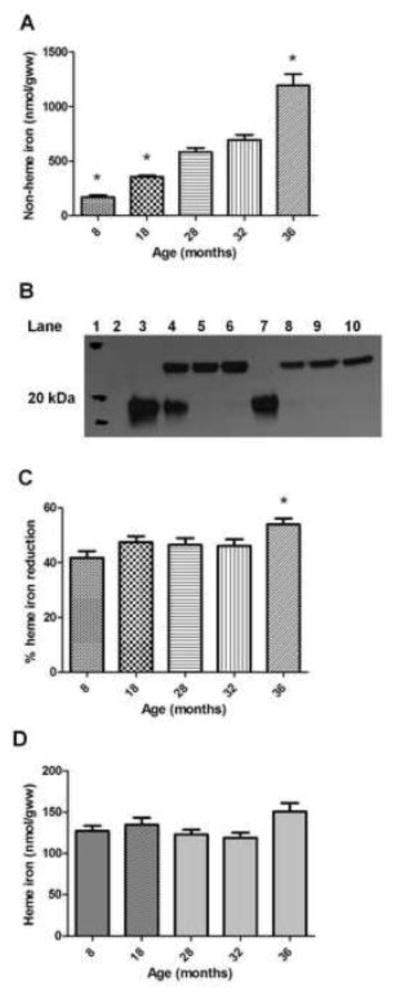
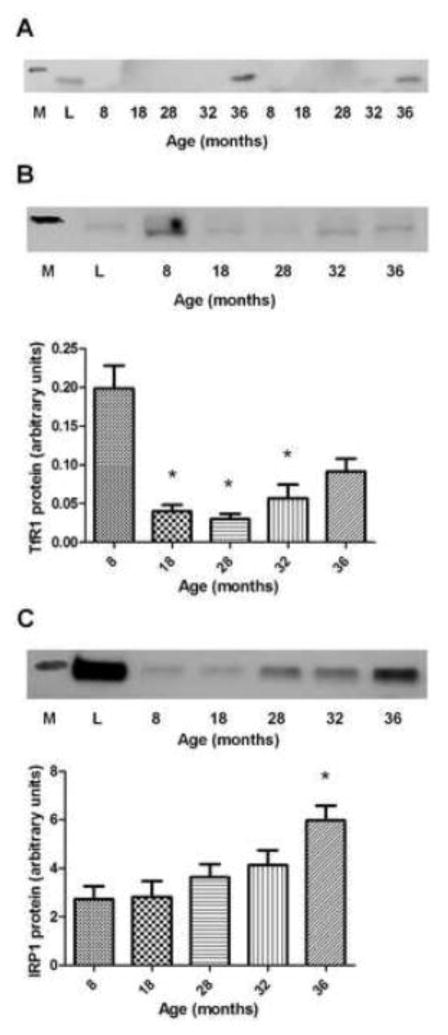
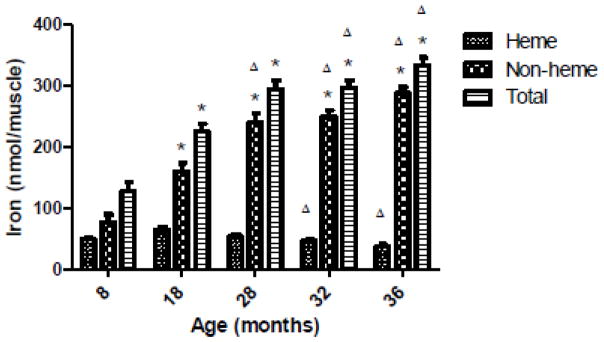
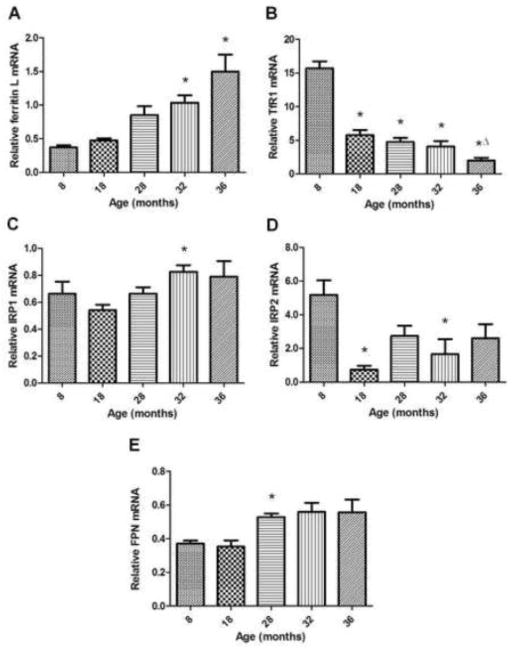
The rise in non-heme iron (NHI) concentration observed in skeletal muscle of aging rodents is thought to contribute to the development of sarcopenia. The source of the NHI has not been identified, nor have the physiological ramifications of elevated iron status in aged muscle been directly examined. Therefore, we assessed plantaris NHI and heme iron (HI) levels in addition to expression of proteins involved in iron uptake (transferrin receptor-1; TfR1), storage (ferritin), export (ferroportin; FPN), and regulation (iron regulatory protein-1 (IRP1) and -2 (IRP2)) of male F344xBN F1 rats (n=10/group) of various ages (8, 18, 28, 32, and 36 months) to further understand iron regulation in aging muscle. In a separate experiment, iron chelator (pyridoxal isonicotinoyl hydrazone; PIH) or vehicle was administered to male F344xBN F1 rats (n=8/group) beginning at 30 months of age to assess the impact on plantaris muscle mass and function at ~36 months of age. Principle findings revealed the increased NHI concentration in old age was consistent with concentrating effects of muscle atrophy and reduction in HI levels, with no change in the total iron content of the muscle. The greatest increase in muscle iron content occurred during the period of animal growth and was associated with downregulation of TfR1 and IRP2 expression. Ferritin upregulation did not occur until senescence and the protein remained undetectable during the period of muscle iron content elevation. Lastly, administration of PIH did not significantly (p>0.05) impact NHI or measures of muscle atrophy or contractile function. In summary, this study confirms that the elevated NHI concentration in old age is largely due to the loss in muscle mass. The increased muscle iron content during aging does not appear to associate with cytosolic ferritin storage, but the functional consequences of elevated iron status in old age remains to be determined.
骨骼肌中铁(NHI)浓度的升高被认为是导致肌肉减少症发生的原因之一。然而,尚未确定 NHI 的来源,也未直接研究老年肌肉中铁状态升高的生理后果。因此,我们评估了雄性 F344xBN F1 大鼠腓肠肌的 NHI 和血红素铁(HI)水平,以及铁摄取(转铁蛋白受体-1;TfR1)、储存(铁蛋白)、输出(亚铁转运蛋白;FPN)和调节(铁调节蛋白-1(IRP1)和-2(IRP2))相关蛋白的表达,这些大鼠来自不同年龄组(8、18、28、32 和 36 个月),以进一步了解衰老肌肉中铁的调节。在另一个实验中,从 30 个月龄开始,向雄性 F344xBN F1 大鼠(n=8/组)给予铁螯合剂(吡啶甲酰异羟肟酸;PIH)或载体,以评估其对腓肠肌质量和功能的影响,观察时间约为 36 个月。主要发现表明,老年时 NHI 浓度的增加与肌肉萎缩的浓缩效应以及 HI 水平的降低一致,肌肉的总铁含量没有变化。肌肉铁含量的最大增加发生在动物生长期间,与 TfR1 和 IRP2 表达下调有关。铁蛋白的上调直到衰老才发生,并且在肌肉铁含量升高期间蛋白仍无法检测到。最后,PIH 的给药并未显著(p>0.05)影响 NHI 或肌肉萎缩或收缩功能的测量。总之,本研究证实,老年时 NHI 浓度的升高主要归因于肌肉质量的丧失。衰老过程中肌肉铁含量的增加似乎与细胞质铁蛋白储存无关,但老年时铁状态升高的功能后果仍有待确定。