Allen Claire L, Harris Jeffrey R, Hannon Peggy A, Parrish Amanda T, Hammerback Kristen, Craft John, Gray Bruce
University of Washington Health Promotion Research Center, 1107 NE 45th St., Suite 200, Seattle, WA, 98105, USA,
J Cancer Educ. 2014 Mar;29(1):30-7. doi: 10.1007/s13187-013-0535-4.
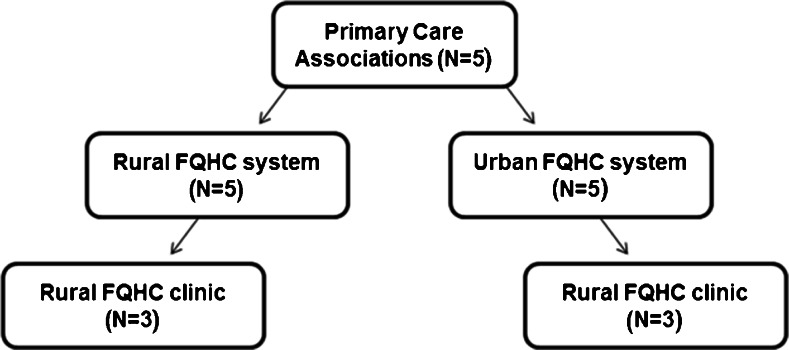
As the Affordable Care Act unfolds, federally qualified health centers (FQHCs) will likely experience an influx of newly insured, low-income patients at disparate risk for cancer. Cancer-focused organizations are seeking to collaborate with FQHCs and the Primary Care Associations (PCAs) that serve them, to prevent cancer and reduce disparities. To guide this collaboration, we conducted 21 interviews with representatives from PCAs and FQHCs across four western states. We asked about: FQHC priorities, barriers and facilitators to cancer prevention, the PCA-FQHC relationship, and collaboration opportunities for external organizations. FQHC priorities include medical home transformation, electronic health records, and clinical care; prevention efforts must integrate with these. Barriers to cancer prevention include competing priorities, inadequate patient insurance, and lack of reimbursement, while facilitators are the presence of patient navigators and cancer-related performance measures. Collaboration opportunities for external organizations include dissemination of culturally appropriate educational materials and support for patient navigators.
随着《平价医疗法案》的逐步实施,联邦合格健康中心(FQHCs)可能会迎来大量新参保的低收入癌症高危患者。专注于癌症防治的组织正寻求与FQHCs以及为其提供服务的初级保健协会(PCAs)合作,以预防癌症并减少差异。为指导这种合作,我们对来自西部四个州的PCAs和FQHCs的代表进行了21次访谈。我们询问了以下方面:FQHCs的工作重点、癌症预防的障碍和促进因素、PCA与FQHCs的关系以及外部组织的合作机会。FQHCs的工作重点包括医疗之家转型、电子健康记录和临床护理;预防工作必须与这些相结合。癌症预防的障碍包括相互竞争的工作重点、患者保险不足以及缺乏报销,而促进因素则是患者导航员的存在和与癌症相关的绩效指标。外部组织的合作机会包括传播文化上合适的教育材料以及对患者导航员的支持。