Nanotechnology Research Center, Ahvaz Jundishapur University of Medical Sciences, Ahvaz, Iran ; School of Pharmacy, Ahvaz Jundishapur University of Medical Sciences, Ahvaz, Iran.
Iran J Basic Med Sci. 2013 Jul;16(7):865-72.
OBJECTIVE(S): The objective of this study was to design a topical microemulsion of Vit B12 and to study the correlation between internal structure and physicochemical properties of the microemulsions. Microemulsions are thermodynamically stable mixtures of water, oil, surfactants and usually cosurfactants with several advantages for topical and transdermal drug delivery. The formulation of microemulsions for pharmaceutical use requires a clear understanding of the properties and microstructures of the microemulsions.
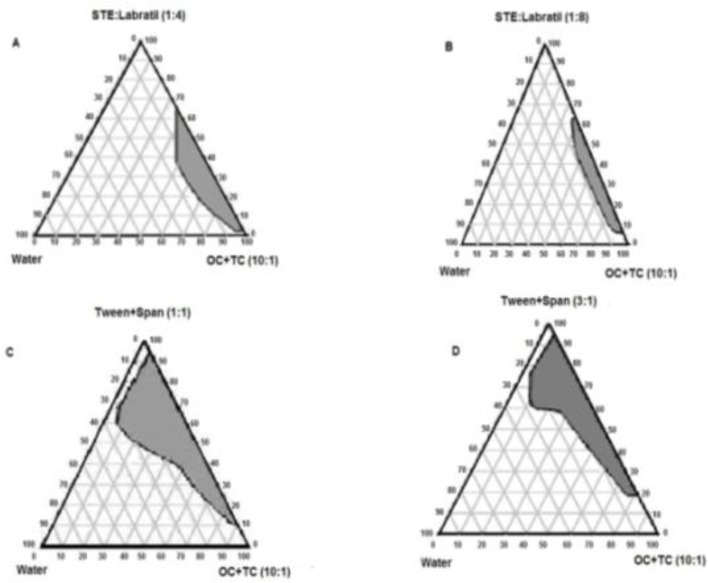
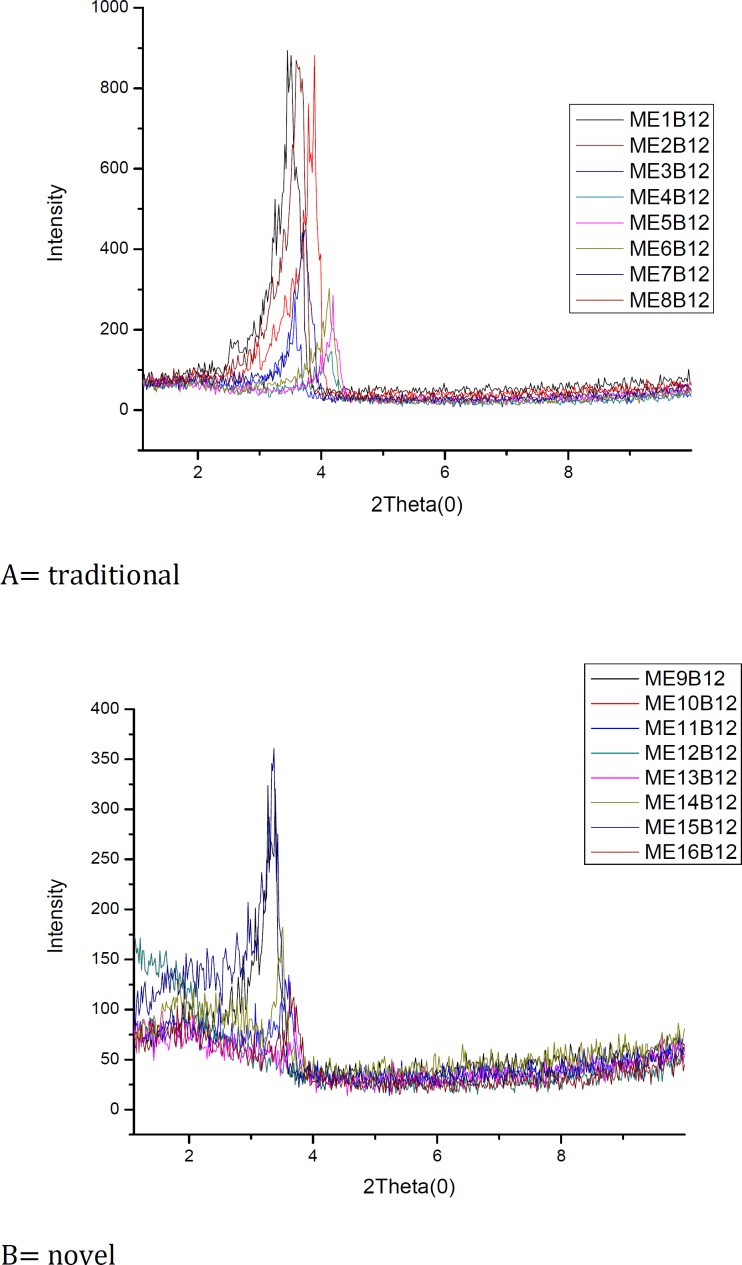
In this study, phase behavior and microstructure of traditional and novel microemulsions of Vit B12 have been investigated by Small-angle X-ray (SAXS), differential scanning calorimetery (DSC) and measuring density, particle size, conductivity and surface tension.
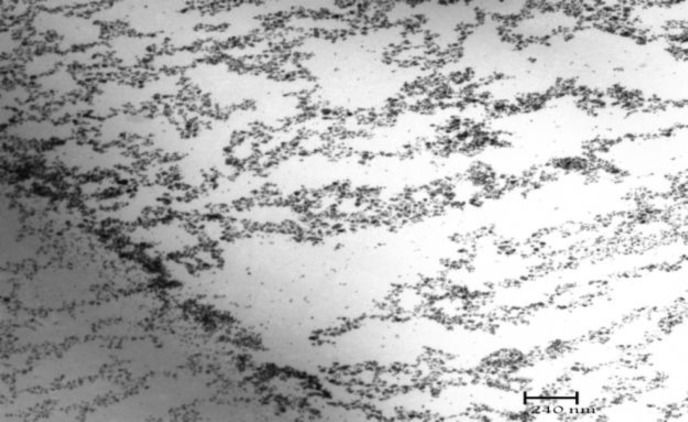
WO and bicontinuous microemulsion with different microstructures were found in novel and traditional formulations. In this study, amount of water, surfactant concentration, oil/ surfactant ratio and physicochemical properties of cosurfactants influenced the microstructures. In both formulations, water behavior was affected by the concentration of the surfactant. Water Solubilization capacity and enthalpy of exothermic peak of interfacial and free water of traditional formulations were more than novel ones. This means that the affinity of water to interfacial film is dependent on the surfactant properties.
This study showed that both microemulsions provided good solubility of Vit B12 with a wide range of internal structure. Low water solubilization capacity is a common property of microemulsions that can affect drug release and permeability through the skin. Based on Vit B12 properties, specially, intermediate oil and water solubility, better drug partitioning into the skin may be obtained by traditional formulations with wide range of structure and high amount of free and bounded water.
本研究旨在设计一种维生素 B12 的局部微乳,并研究微乳的内部结构与理化性质之间的相关性。微乳是水、油、表面活性剂和通常的助表面活性剂的热力学稳定混合物,对局部和经皮药物传递具有多种优势。对于药物用途的微乳制剂,需要清楚地了解微乳的性质和微观结构。
在本研究中,通过小角 X 射线(SAXS)、差示扫描量热法(DSC)以及测量密度、粒径、电导率和表面张力,研究了维生素 B12 的传统和新型微乳的相行为和微观结构。
在新型和传统制剂中发现了具有不同微观结构的 WO 和双连续微乳。在本研究中,水的量、表面活性剂浓度、油/表面活性剂比以及助表面活性剂的物理化学性质影响了微观结构。在这两种制剂中,水的行为都受表面活性剂浓度的影响。传统制剂的水增溶能力和界面及游离水的放热峰焓大于新型制剂。这意味着水与界面膜的亲和力取决于表面活性剂的性质。
本研究表明,这两种微乳都为维生素 B12 提供了良好的溶解度,具有广泛的内部结构。低水增溶能力是微乳的共同特性,可能会影响药物通过皮肤的释放和渗透性。基于维生素 B12 的性质,特别是中等油和水溶解度,通过具有广泛结构和大量游离水和结合水的传统制剂,可能会获得更好的药物向皮肤的分配。