Department of Neurosciences, University of California San Diego La Jolla, CA, USA.
Front Neuroinform. 2013 Aug 30;7:18. doi: 10.3389/fninf.2013.00018. eCollection 2013.
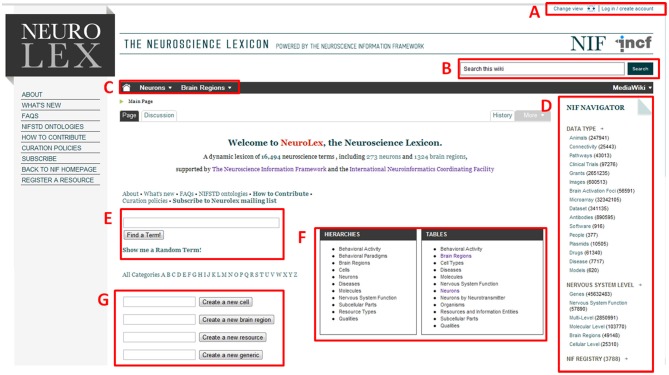
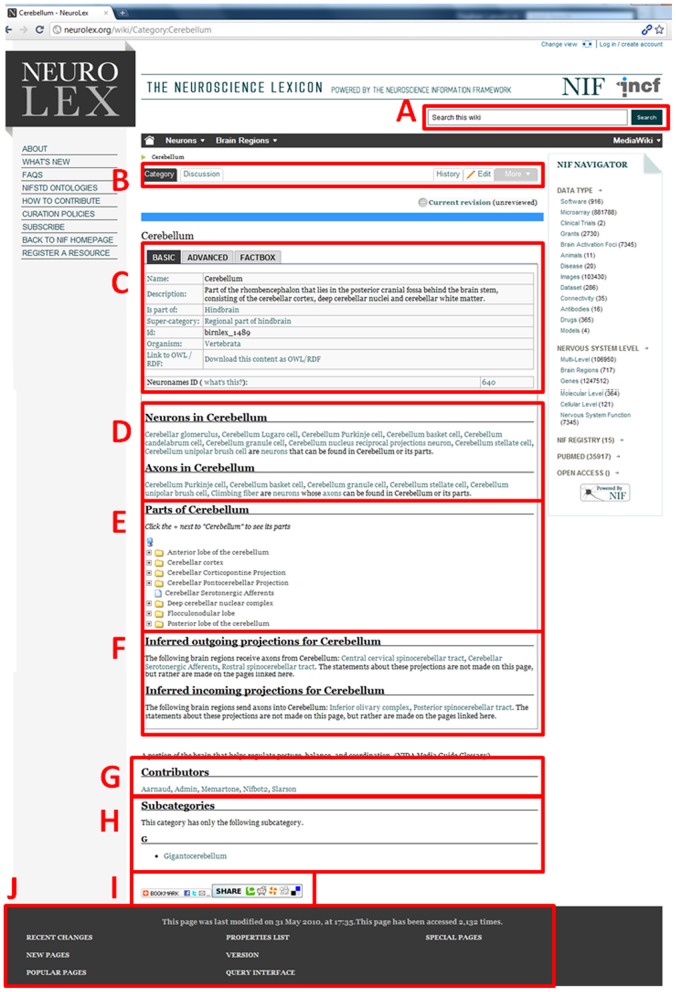
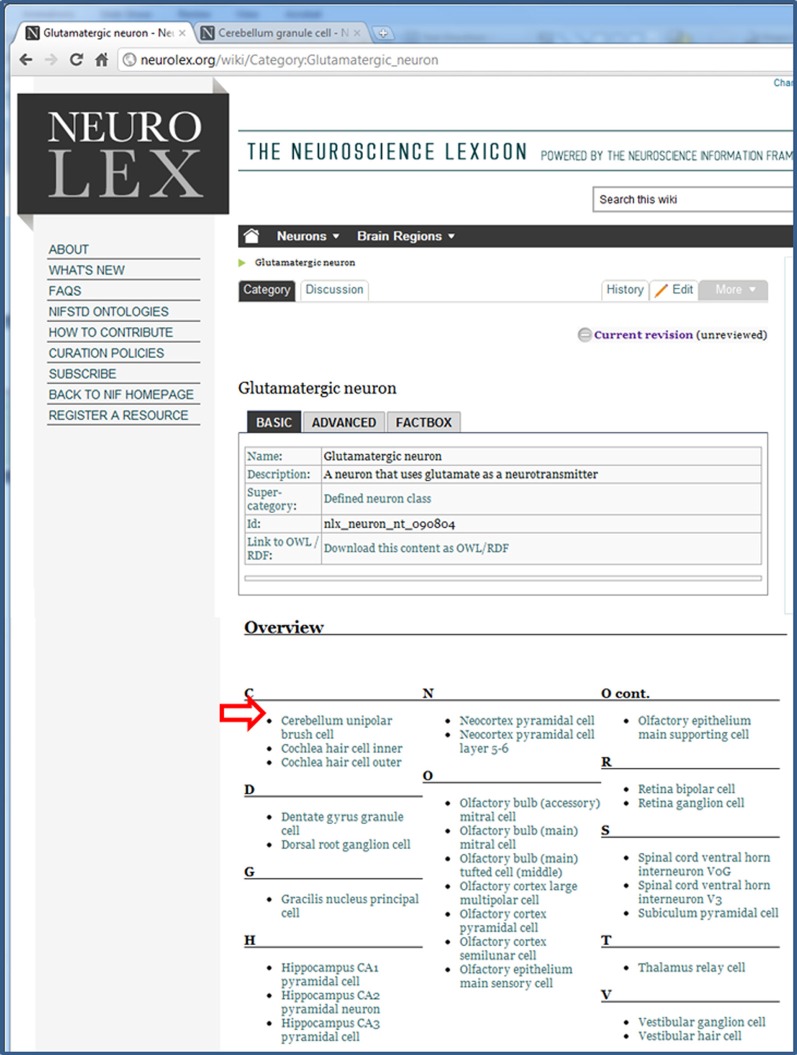
The ability to transmit, organize, and query information digitally has brought with it the challenge of how to best use this power to facilitate scientific inquiry. Today, few information systems are able to provide detailed answers to complex questions about neuroscience that account for multiple spatial scales, and which cross the boundaries of diverse parts of the nervous system such as molecules, cellular parts, cells, circuits, systems and tissues. As a result, investigators still primarily seek answers to their questions in an increasingly densely populated collection of articles in the literature, each of which must be digested individually. If it were easier to search a knowledge base that was structured to answer neuroscience questions, such a system would enable questions to be answered in seconds that would otherwise require hours of literature review. In this article, we describe NeuroLex.org, a wiki-based website and knowledge management system. Its goal is to bring neurobiological knowledge into a framework that allows neuroscientists to review the concepts of neuroscience, with an emphasis on multiscale descriptions of the parts of nervous systems, aggregate their understanding with that of other scientists, link them to data sources and descriptions of important concepts in neuroscience, and expose parts that are still controversial or missing. To date, the site is tracking ~25,000 unique neuroanatomical parts and concepts in neurobiology spanning experimental techniques, behavioral paradigms, anatomical nomenclature, genes, proteins and molecules. Here we show how the structuring of information about these anatomical parts in the nervous system can be reused to answer multiple neuroscience questions, such as displaying all known GABAergic neurons aggregated in NeuroLex or displaying all brain regions that are known within NeuroLex to send axons into the cerebellar cortex.
数字信息的传输、组织和查询能力带来了一个挑战,即如何最好地利用这种能力来促进科学研究。如今,很少有信息系统能够针对涉及多个空间尺度的复杂神经科学问题提供详细的答案,这些问题跨越了分子、细胞成分、细胞、回路、系统和组织等神经系统不同部分的界限。因此,研究人员仍然主要在文献中日益密集的文章集合中寻找问题的答案,而这些文章都需要逐个进行消化。如果能够更轻松地搜索到针对神经科学问题进行结构化回答的知识库,那么这样的系统就能够在几秒钟内回答问题,而否则则需要数小时的文献综述。在本文中,我们描述了 NeuroLex.org,这是一个基于维基的网站和知识管理系统。它的目标是将神经生物学知识纳入一个框架,使神经科学家能够回顾神经科学的概念,重点是对神经系统各部分的多尺度描述,将他们的理解与其他科学家的理解相结合,将其与神经科学中的数据源和重要概念的描述联系起来,并揭示出仍有争议或缺失的部分。迄今为止,该网站跟踪了大约 25000 个独特的神经生物学部分和概念,涵盖了实验技术、行为范式、解剖学命名法、基因、蛋白质和分子。在这里,我们展示了如何重复使用有关这些神经系统解剖部分的信息结构来回答多个神经科学问题,例如在 NeuroLex 中显示所有已知的 GABA 能神经元,或者在 NeuroLex 中显示所有已知的将轴突发送到小脑皮质的脑区。