Clinic of Anesthesiology, Intensive Care Medicine and Pain Therapy, Goethe-University Hospital Frankfurt, Frankfurt am Main, Germany.
PLoS One. 2013 Aug 29;8(8):e73298. doi: 10.1371/journal.pone.0073298. eCollection 2013.
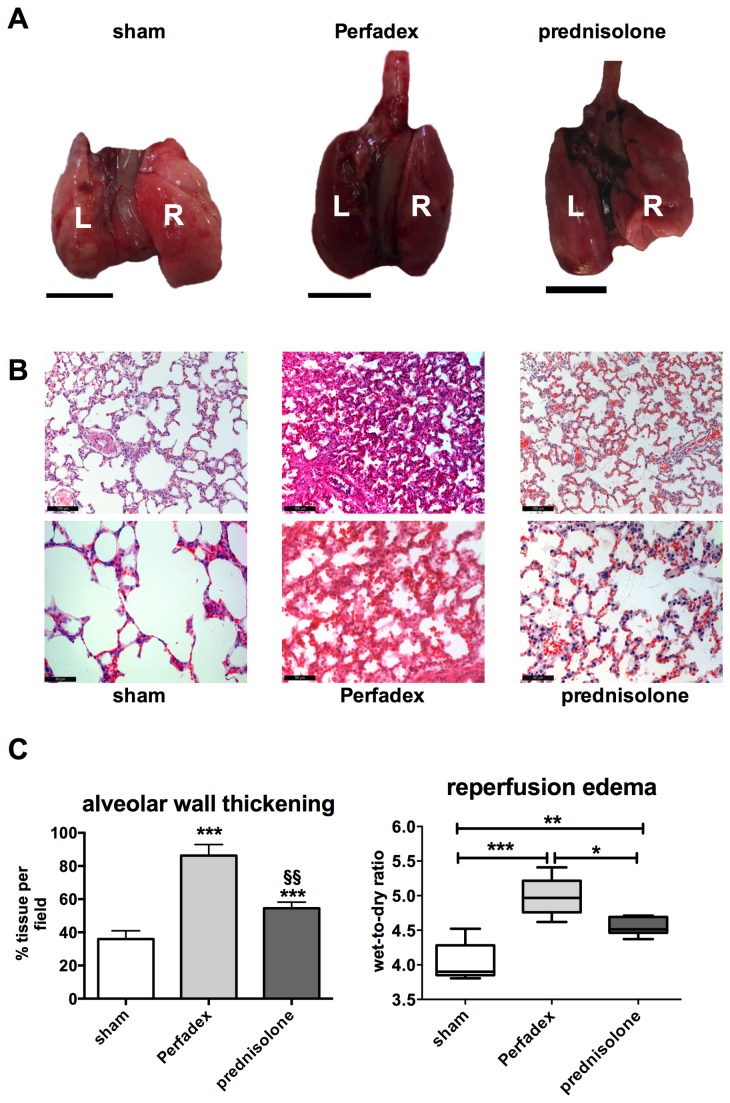
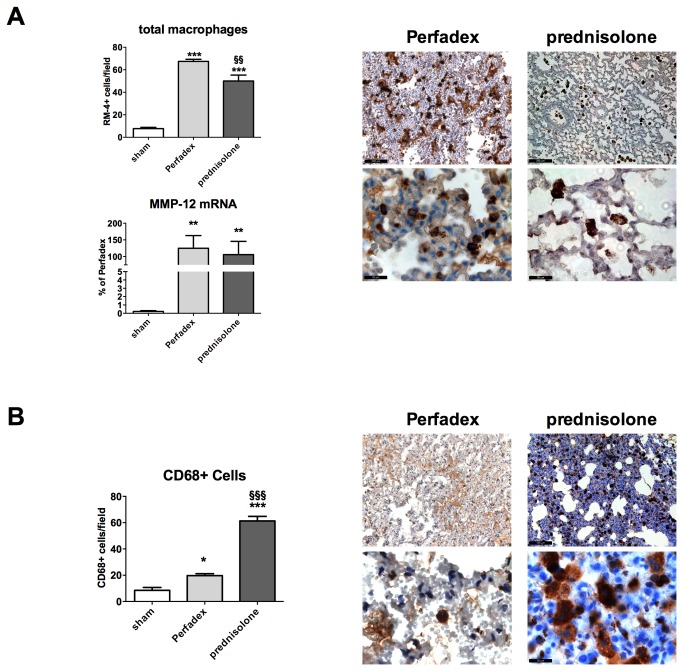
The lung is, more than other solid organs, susceptible for ischemia reperfusion injury after orthotopic transplantation. Corticosteroids are known to potently suppress pro-inflammatory processes when given in the post-operative setting or during rejection episodes. Whereas their use has been approved for these clinical indications, there is no study investigating its potential as a preservation additive in preventing vascular damage already in the phase of ischemia. To investigate these effects we performed orthotopic lung transplantations (LTX) in the rat. Prednisolone was either added to the perfusion solution for lung preservation or omitted and rats were followed for 48 hours after LTX. Prednisolone preconditioning significantly increased survival and diminished reperfusion edema. Hypoxia induced vasoactive cytokines such as VEGF were reduced. Markers of leukocyte invasiveness like matrix metalloprotease (MMP)-2, or common pro-inflammatory molecules like the CXCR4 receptor or the chemokine (C-C motif) ligand (CCL)-2 were downregulated by prednisolone. Neutrophil recruitment to the grafts was only increased in Perfadex treated lungs. Together with this, prednisolone treated animals displayed significantly reduced lung protein levels of neutrophil chemoattractants like CINC-1, CINC-2α/β and LIX and upregulated tissue inhibitor of matrix metalloproteinase (TIMP)-1. Interestingly, lung macrophage invasion was increased in both, Perfadex and prednisolone treated grafts, as measured by MMP-12 or RM4. Markers of anti-inflammatory macrophage transdifferentiation like MRC-1, IL-13, IL-4 and CD163, significantly correlated with prednisolone treatment. These observations lead to the conclusion that prednisolone as an additive to the perfusion solution protects from hypoxia triggered danger signals already in the phase of ischemia and thus reduces graft edema in the phase of reperfusion. Additionally, prednisolone preconditioning might also lead to macrophage polarization as a beneficial long-term effect.
肺比其他实体器官更容易在原位移植后发生缺血再灌注损伤。皮质类固醇在术后或排斥反应期间给予时,已知能有效抑制促炎过程。虽然它们已被批准用于这些临床适应症,但没有研究调查其在预防缺血阶段血管损伤方面作为保存添加剂的潜力。为了研究这些效果,我们在大鼠中进行了原位肺移植(LTX)。在肺保存的灌注液中加入泼尼松龙或不加入泼尼松龙,并在 LTX 后 48 小时内对大鼠进行随访。泼尼松龙预处理显著提高了存活率,并减少了再灌注水肿。缺氧诱导的血管活性细胞因子,如 VEGF,减少。白细胞浸润标志物,如基质金属蛋白酶(MMP)-2,或常见的促炎分子,如 CXCR4 受体或趋化因子(C-C 基序)配体(CCL)-2,被泼尼松龙下调。只有在 Perfadex 处理的肺中,中性粒细胞才会向移植物募集增加。与此相关的是,泼尼松龙处理的动物显示出明显减少的中性粒细胞趋化因子如 CINC-1、CINC-2α/β 和 LIX 的肺蛋白水平,并上调组织金属蛋白酶抑制剂(TIMP)-1。有趣的是,在 Perfadex 和泼尼松龙处理的移植物中,肺巨噬细胞浸润均增加,如 MMP-12 或 RM4 所测。抗炎性巨噬细胞转化标志物,如 MRC-1、IL-13、IL-4 和 CD163,与泼尼松龙治疗显著相关。这些观察结果得出结论,泼尼松龙作为灌注液中的添加剂,在缺血阶段已经可以保护免受缺氧触发的危险信号,从而减少再灌注阶段的移植物水肿。此外,泼尼松龙预处理还可能导致巨噬细胞极化,这是一种有益的长期效应。