Institute for Medical Informatics, Statistics and Documentation, Medical University of Graz, Auenbruggerplatz 2, A-8036 Graz, Austria.
BMC Med Inform Decis Mak. 2013 Sep 8;13:103. doi: 10.1186/1472-6947-13-103.
The process of creating and designing Virtual Patients for teaching students of medicine is an expensive and time-consuming task. In order to explore potential methods of mitigating these costs, our group began exploring the possibility of creating Virtual Patients based on electronic health records. This review assesses the usage of electronic health records in the creation of interactive Virtual Patients for teaching clinical decision-making.
The PubMed database was accessed programmatically to find papers relating to Virtual Patients. The returned citations were classified and the relevant full text articles were reviewed to find Virtual Patient systems that used electronic health records to create learning modalities.
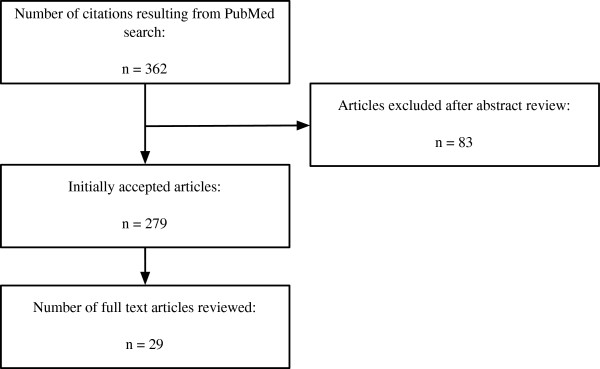
A total of n = 362 citations were found on PubMed and subsequently classified, of which n = 28 full-text articles were reviewed. Few articles used unformatted electronic health records other than patient CT or MRI scans. The use of patient data, extracted from electronic health records or otherwise, is widespread. The use of unformatted electronic health records in their raw form is less frequent. Patient data use is broad and spans several areas, such as teaching, training, 3D visualisation, and assessment.
Virtual Patients that are based on real patient data are widespread, yet the use of unformatted electronic health records, abundant in hospital information systems, is reported less often. The majority of teaching systems use reformatted patient data gathered from electronic health records, and do not use these electronic health records directly. Furthermore, many systems were found that used patient data in the form of CT or MRI scans. Much potential research exists regarding the use of unformatted electronic health records for the creation of Virtual Patients.
为医学专业学生创建和设计虚拟患者的过程既昂贵又耗时。为了探索降低这些成本的潜在方法,我们小组开始探索基于电子健康记录创建虚拟患者的可能性。本综述评估了电子健康记录在创建用于临床决策教学的交互式虚拟患者中的使用情况。
通过编程访问 PubMed 数据库以查找与虚拟患者相关的论文。对返回的引文进行分类,并对相关全文文章进行审查,以找到使用电子健康记录创建学习模式的虚拟患者系统。
在 PubMed 上共发现 n=362 篇引文,并随后进行了分类,其中 n=28 篇全文文章进行了审查。很少有文章使用未经格式化的电子健康记录,除了患者的 CT 或 MRI 扫描。广泛使用从电子健康记录中提取或其他方式获取的患者数据。使用未经格式化的电子健康记录的原始形式的情况较少。患者数据的使用范围广泛,涵盖了教学、培训、3D 可视化和评估等多个领域。
基于真实患者数据的虚拟患者很常见,但使用丰富的医院信息系统中的未经格式化的电子健康记录的情况报告较少。大多数教学系统使用从电子健康记录中收集的格式化患者数据,而不是直接使用这些电子健康记录。此外,还发现许多系统使用 CT 或 MRI 扫描形式的患者数据。对于使用未经格式化的电子健康记录创建虚拟患者,存在很大的潜在研究空间。