Bollmann Annette, Sedlacek Christopher J, Norton Jeanette, Laanbroek Hendrikus J, Suwa Yuichi, Stein Lisa Y, Klotz Martin G, Arp Daniel, Sayavedra-Soto Luis, Lu Megan, Bruce David, Detter Chris, Tapia Roxanne, Han James, Woyke Tanja, Lucas Susan M, Pitluck Sam, Pennacchio Len, Nolan Matt, Land Miriam L, Huntemann Marcel, Deshpande Shweta, Han Cliff, Chen Amy, Kyrpides Nikos, Mavromatis Konstantinos, Markowitz Victor, Szeto Ernest, Ivanova Natalia, Mikhailova Natalia, Pagani Ioanna, Pati Amrita, Peters Lin, Ovchinnikova Galina, Goodwin Lynne A
Miami University, Oxford, Ohio, USA.
Stand Genomic Sci. 2013 Feb 25;7(3):469-82. doi: 10.4056/sigs.3517166. eCollection 2013.
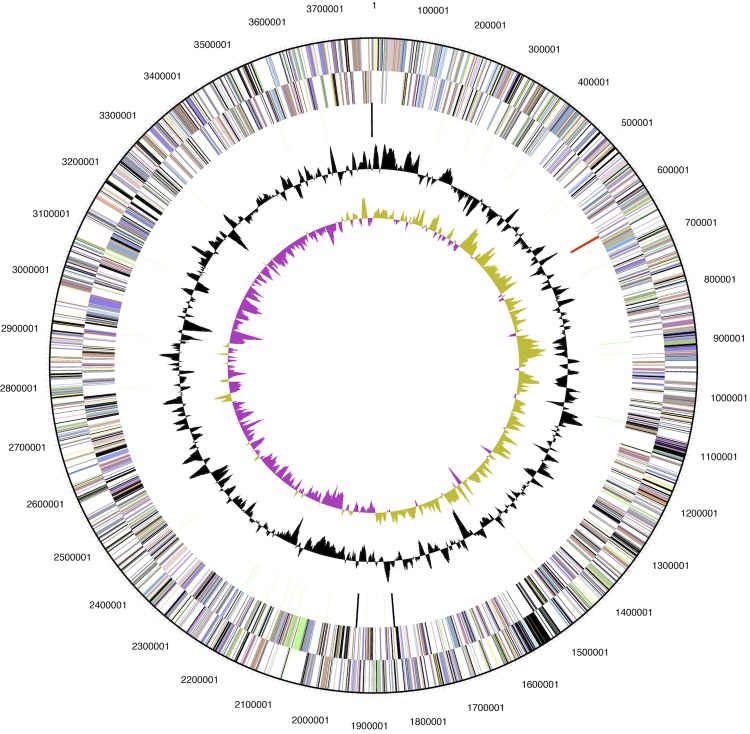
Nitrosomonas sp. Is79 is a chemolithoautotrophic ammonia-oxidizing bacterium that belongs to the family Nitrosomonadaceae within the phylum Proteobacteria. Ammonia oxidation is the first step of nitrification, an important process in the global nitrogen cycle ultimately resulting in the production of nitrate. Nitrosomonas sp. Is79 is an ammonia oxidizer of high interest because it is adapted to low ammonium and can be found in freshwater environments around the world. The 3,783,444-bp chromosome with a total of 3,553 protein coding genes and 44 RNA genes was sequenced by the DOE-Joint Genome Institute Program CSP 2006.
嗜硝化单胞菌属菌株Is79是一种化能无机自养型氨氧化细菌,属于变形菌门硝化单胞菌科。氨氧化是硝化作用的第一步,硝化作用是全球氮循环中的一个重要过程,最终导致硝酸盐的产生。嗜硝化单胞菌属菌株Is79是一种备受关注的氨氧化菌,因为它适应低铵环境,且在世界各地的淡水环境中都能发现。美国能源部联合基因组研究所的2006年社区科学计划(CSP 2006)对其3,783,444碱基对的染色体进行了测序,该染色体共有3,553个蛋白质编码基因和44个RNA基因。