Laboratório de Microbiologia de Alimentos, Departamento de Ciência e Tecnologia Agroindustrial, Faculdade de Agronomia Eliseu Maciel, Universidade Federal de Pelotas , Pelotas, RS , Brasil.
Braz J Microbiol. 2009 Jul;40(3):574-82. doi: 10.1590/S1517-838220090003000021. Epub 2009 Sep 1.
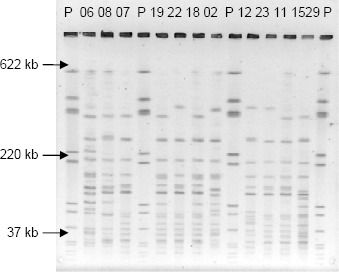
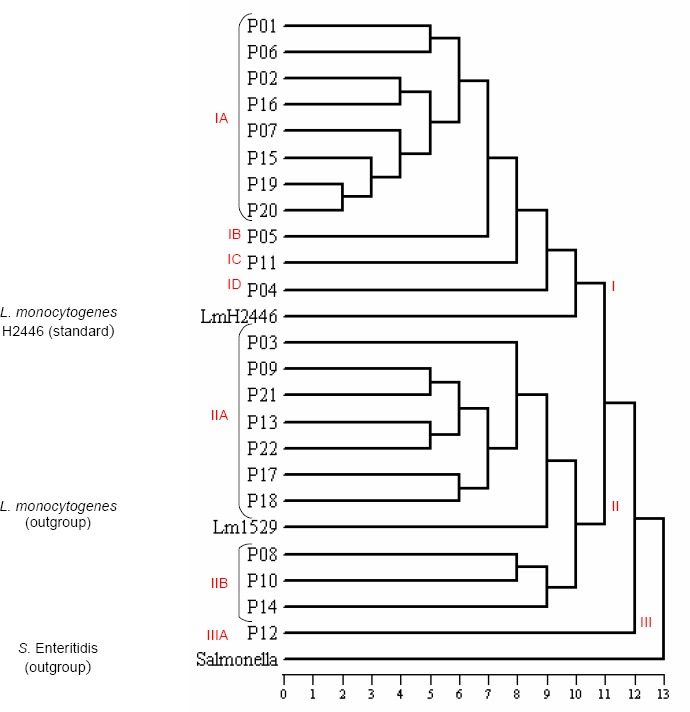
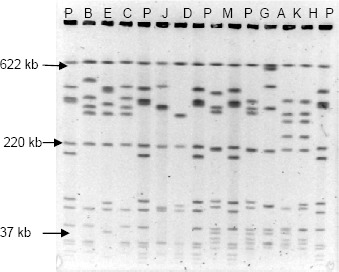
Listeria monocytogenes is a bacterium capable to adhere to the surfaces of equipment and utensils and subsequently form biofilms. It can to persist in the food processing environmental for extended periods of time being able to contaminate the final product. The aim of this study was to trace the contamination route of L. monocytogenes on a fresh mixed sausage processing line, from raw material to the final product. The isolates obtained were characterized by serotyping and molecular typing by pulsed-field gel electrophoresis (PFGE) using the restriction enzymes ApaI and AscI. L. monocytogenes was detected in 25% of the samples. The samples of raw material were not contaminated, however, the microorganism was detected in 21% of the environmental samples (food contact and non-food contact), 20.8% of the equipments, 20% of the food worker's hands, 40% of the mass ready to packaging and in all the final products samples, demonstrating that the contamination of final product occurred during the processing and the importance of cross contamination. PFGE yielded 22 pulsotypes wich formed 7 clusters, and serotyping yielded 3 serotypes and 1 serogroup, however, the presence of serotypes 4b and 1/2b in the final product is of great concern for public health. The tracing of contamination showed that some strains are adapted and persisted in the processing environment in this industry.
李斯特菌是一种能够附着在设备和器具表面的细菌,随后会形成生物膜。它可以在食品加工环境中长时间存活,从而污染最终产品。本研究的目的是追踪李斯特菌在新鲜混合香肠加工线上从原材料到最终产品的污染途径。通过使用限制酶 ApaI 和 AscI 的脉冲场凝胶电泳(PFGE)对分离株进行血清型和分子分型鉴定。在 25%的样品中检测到了李斯特菌。原材料样品未受到污染,但在 21%的环境样品(食品接触和非食品接触)、20.8%的设备、20%的食品工人手上、40%的待包装的肉馅以及所有最终产品样品中均检测到了该微生物,表明最终产品的污染发生在加工过程中,存在交叉污染的重要性。PFGE 产生了 22 个脉冲型,形成了 7 个簇,血清型鉴定产生了 3 个血清型和 1 个血清群,但最终产品中存在 4b 和 1/2b 血清型令人严重关切公共卫生。污染追踪表明,在该行业的加工环境中,一些菌株具有适应性并得以存活。