Biomedical Engineering Department, International University of Vietnam National Universities in Ho Chi Minh City Ho Chi Minh City, Vietnam.
Front Hum Neurosci. 2013 Sep 2;7:516. doi: 10.3389/fnhum.2013.00516. eCollection 2013.
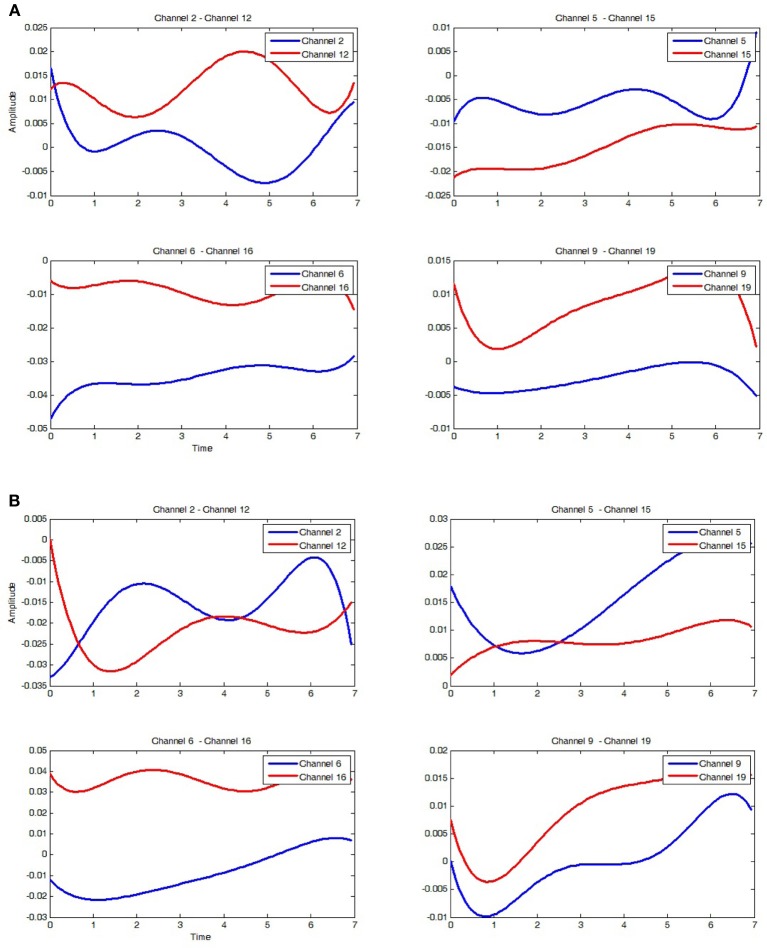
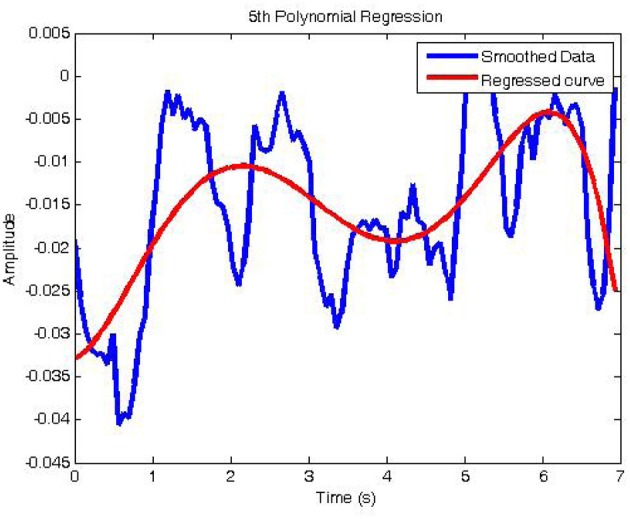
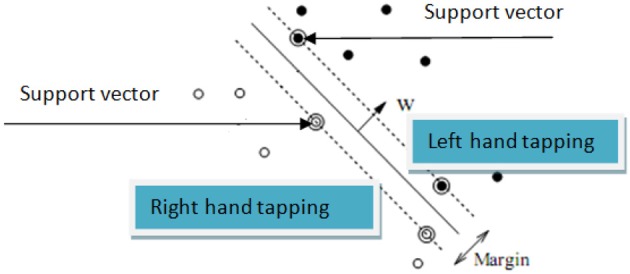
In recent decades, a lot of achievements have been obtained in imaging and cognitive neuroscience of human brain. Brain's activities can be shown by a number of different kinds of non-invasive technologies, such as: Near-Infrared Spectroscopy (NIRS), Magnetic Resonance Imaging (MRI), and ElectroEncephaloGraphy (EEG; Wolpaw et al., 2002; Weiskopf et al., 2004; Blankertz et al., 2006). NIRS has become the convenient technology for experimental brain purposes. The change of oxygenation changes (oxy-Hb) along task period depending on location of channel on the cortex has been studied: sustained activation in the motor cortex, transient activation during the initial segments in the somatosensory cortex, and accumulating activation in the frontal lobe (Gentili et al., 2010). Oxy-Hb concentration at the aforementioned sites in the brain can also be used as a predictive factor allows prediction of subject's investigation behavior with a considerable degree of precision (Shimokawa et al., 2009). In this paper, a study of recognition algorithm will be described for recognition whether one taps the left hand (LH) or the right hand (RH). Data with noises and artifacts collected from a multi-channel system will be pre-processed using a Savitzky-Golay filter for getting more smoothly data. Characteristics of the filtered signals during LH and RH tapping process will be extracted using a polynomial regression (PR) algorithm. Coefficients of the polynomial, which correspond to Oxygen-Hemoglobin (Oxy-Hb) concentration, will be applied for the recognition models of hand tapping. Support Vector Machines (SVM) will be applied to validate the obtained coefficient data for hand tapping recognition. In addition, for the objective of comparison, Artificial Neural Networks (ANNs) was also applied to recognize hand tapping side with the same principle. Experimental results have been done many trials on three subjects to illustrate the effectiveness of the proposed method.
近几十年来,人类大脑的成像和认知神经科学取得了许多成就。有许多不同类型的非侵入性技术可以显示大脑的活动,例如:近红外光谱(NIRS)、磁共振成像(MRI)和脑电图(EEG;Wolpaw 等人,2002 年;Weiskopf 等人,2004 年;Blankertz 等人,2006 年)。NIRS 已成为实验性脑研究的便捷技术。已经研究了沿任务周期根据皮层上通道位置的氧合变化(oxy-Hb)的变化:运动皮层中的持续激活,体感皮层初始段期间的瞬态激活,以及额叶中的累积激活(Gentili 等人,2010 年)。大脑中上述部位的 oxy-Hb 浓度也可以用作预测因子,允许以相当高的精度预测受试者的研究行为(Shimokawa 等人,2009 年)。在本文中,将描述识别算法的研究,以识别敲击左手(LH)还是右手(RH)。使用 Savitzky-Golay 滤波器对来自多通道系统的带有噪声和伪影的数据进行预处理,以获得更平滑的数据。使用多项式回归(PR)算法提取 LH 和 RH 敲击过程中滤波信号的特征。多项式的系数对应于氧合血红蛋白(Oxy-Hb)浓度,将用于手敲击的识别模型。将支持向量机(SVM)应用于验证用于手敲击识别的获得的系数数据。此外,为了比较的目的,还应用了人工神经网络(ANNs),并使用相同的原理识别手敲击侧。实验结果已经在三个受试者上进行了多次试验,以说明所提出方法的有效性。