Department of Nutritional Sciences, University of Texas at Austin, Austin TX 78723, USA.
Nutr Res. 2013 Sep;33(9):733-42. doi: 10.1016/j.nutres.2013.07.007. Epub 2013 Aug 13.
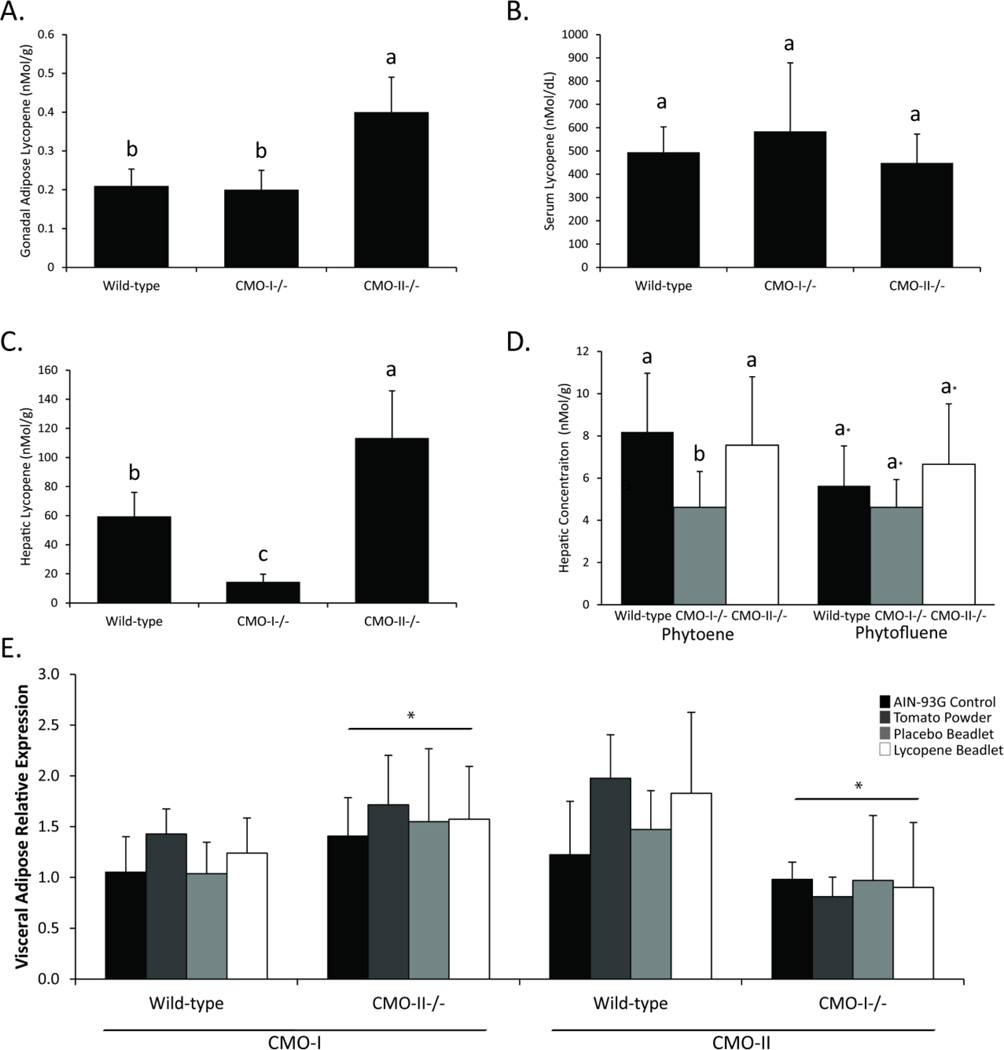
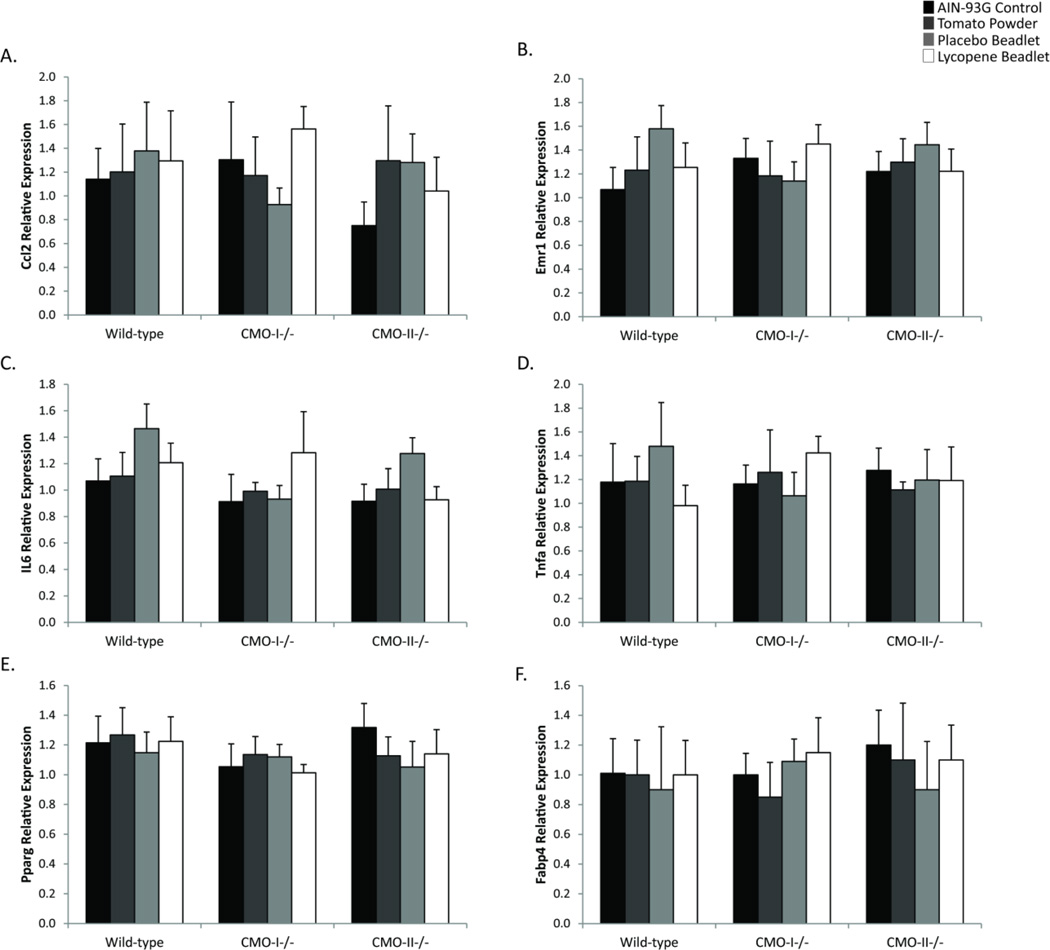
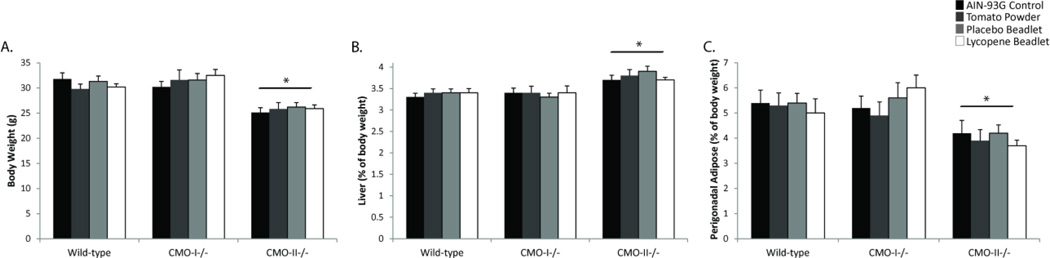
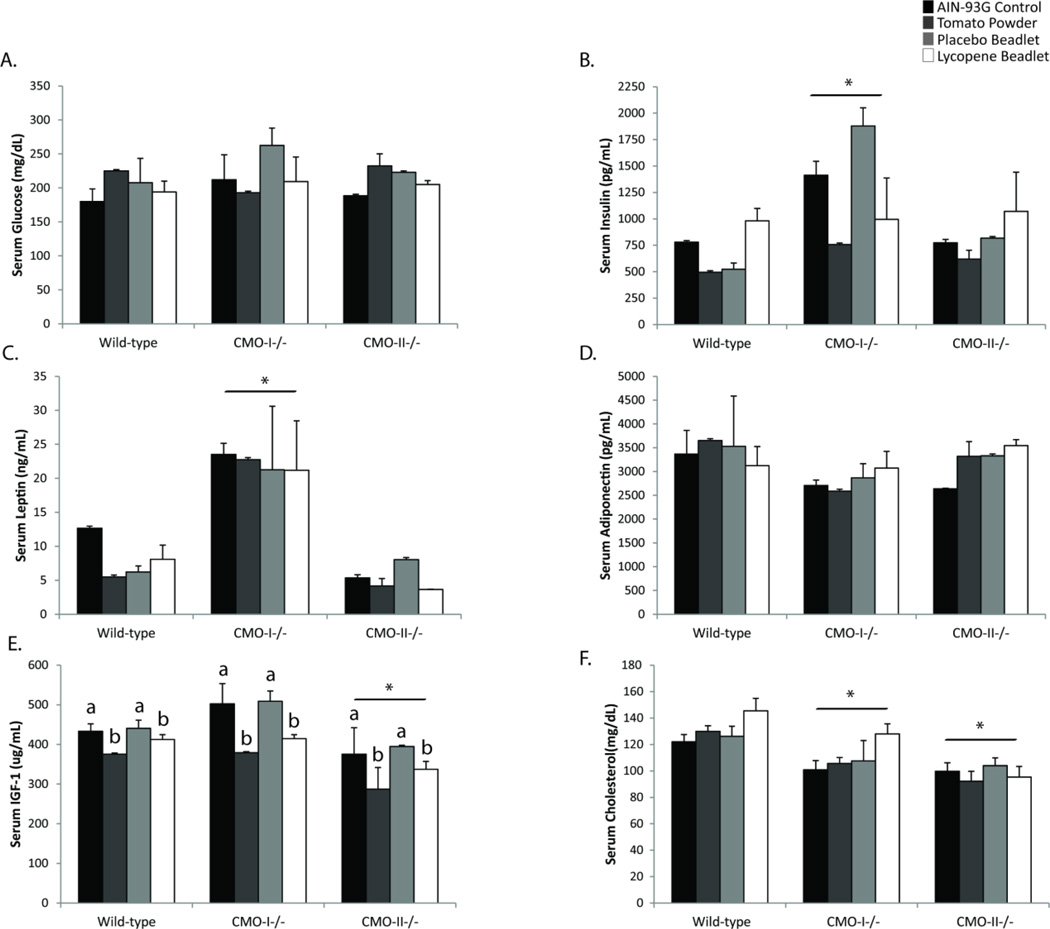
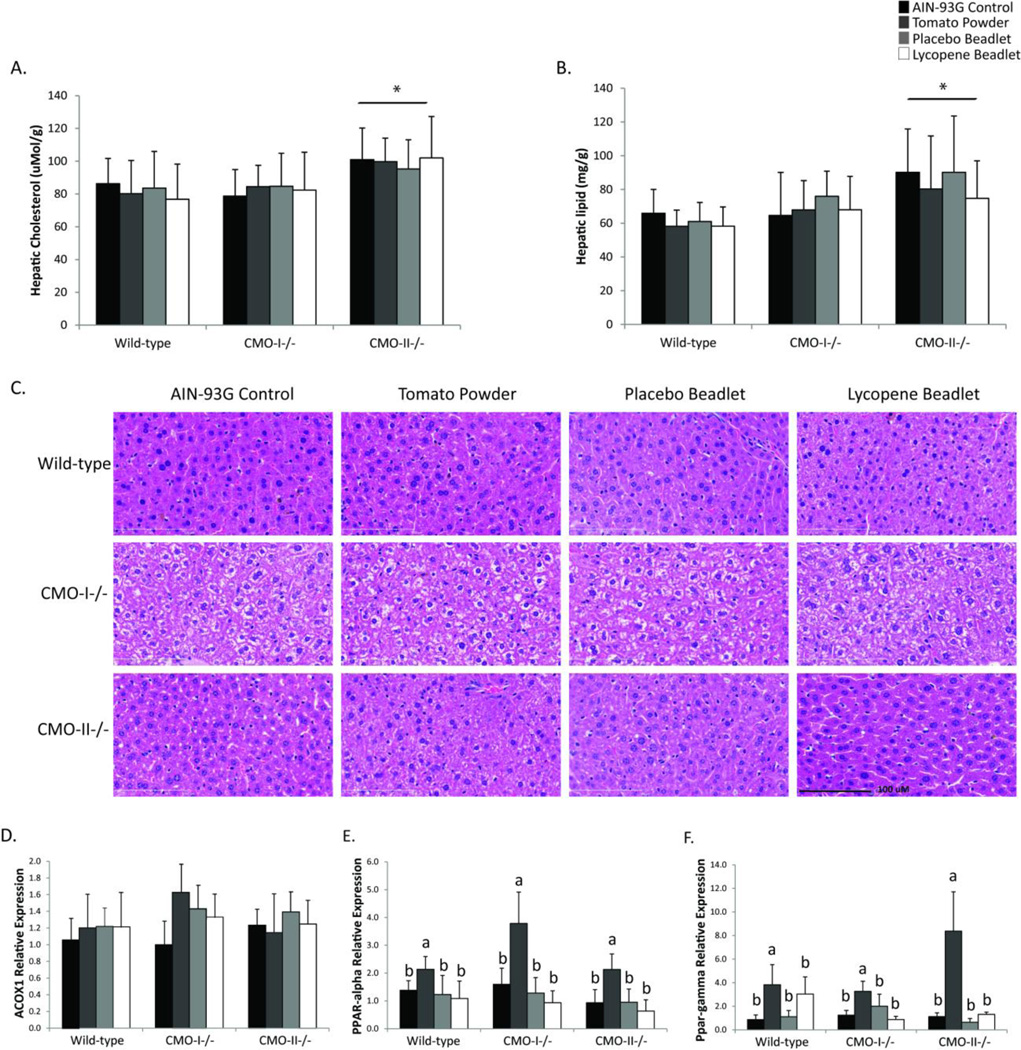
Carotene-15,15'-monooxygenase (CMO-I) cleaves β-carotene to form vitamin A, whereas carotene-9',10'-monooxygenase (CMO-II) preferentially cleaves non-provitamin A carotenoids. Recent reports indicate that β-carotene metabolites regulate dietary lipid uptake, whereas lycopene regulates peroxisome proliferator-activated receptor expression. To determine the physiologic consequences of carotenoids and their interactions with CMO-I and CMO-II, we characterized mammalian carotenoid metabolism, metabolic perturbations, and lipid metabolism in female CMO-I(-/-) and CMO-II(-/-) mice fed lycopene or tomato-containing diets for 30 days. We hypothesized that there would be significant interactions between diet and genotype on carotenoid accumulation and lipid parameters. CMO-I(-/-) mice had higher levels of leptin, insulin, and hepatic lipidosis but lower levels of serum cholesterol. CMO-II(-/-) mice had increased tissue lycopene and phytofluene accumulation, reduced insulin-like growth factor 1 levels and cholesterol levels, but elevated liver lipids and cholesterol compared with wild-type mice. The diets did not modulate these genotypic perturbations, but lycopene and tomato powder significantly decreased serum insulin-like growth factor 1. Tomato powder also increased hepatic peroxisome proliferator-activated receptor expression, independent of genotype. These data point to the pleiotropic actions of CMO-I and CMO-II supporting a strong role of these proteins in regulating tissue carotenoid accumulation and the lipid metabolic phenotype as well as tomato carotenoid-independent regulation of lipid metabolism.
类胡萝卜素 15,15'-单加氧酶(CMO-I)将β-胡萝卜素裂解为维生素 A,而类胡萝卜素 9',10'-单加氧酶(CMO-II)则优先裂解非维生素 A 类胡萝卜素。最近的报告表明,β-胡萝卜素代谢物调节膳食脂质吸收,而番茄红素调节过氧化物酶体增殖物激活受体表达。为了确定类胡萝卜素及其与 CMO-I 和 CMO-II 的相互作用的生理后果,我们研究了雌性 CMO-I(-/-)和 CMO-II(-/-)小鼠的哺乳动物类胡萝卜素代谢、代谢紊乱和脂质代谢,这些小鼠在喂食番茄红素或含番茄的饮食 30 天后。我们假设饮食和基因型之间会存在类胡萝卜素积累和脂质参数的显著相互作用。CMO-I(-/-)小鼠的瘦素、胰岛素和肝脂肪变性水平较高,但血清胆固醇水平较低。CMO-II(-/-)小鼠的组织番茄红素和叶红素积累增加,胰岛素样生长因子 1 水平和胆固醇水平降低,但与野生型小鼠相比,肝脏脂质和胆固醇水平升高。这些饮食并没有调节这些基因型的紊乱,但番茄红素和番茄粉显著降低了血清胰岛素样生长因子 1。番茄粉还增加了肝过氧化物酶体增殖物激活受体的表达,而与基因型无关。这些数据表明 CMO-I 和 CMO-II 的多效性作用支持这些蛋白在调节组织类胡萝卜素积累和脂质代谢表型方面的重要作用,以及番茄红素对脂质代谢的非依赖性调节。