Department of Kinesiology and Community Health, University of Illinois at Urbana - Champaign, Urbana, Illinois, United States of America.
PLoS One. 2013 Sep 11;8(9):e72666. doi: 10.1371/journal.pone.0072666. eCollection 2013.
There is a growing trend of inactivity among children, which may not only result in poorer physical health, but also poorer cognitive health. Previous research has shown that lower fitness has been related to decreased cognitive function for tasks requiring perception, memory, and cognitive control as well as lower academic achievement.
To investigate the relationship between aerobic fitness, learning, and memory on a task that involved remembering names and locations on a fictitious map. Different learning strategies and recall procedures were employed to better understand fitness effects on learning novel material.
Forty-eight 9-10 year old children (n = 24 high fit; HF and n = 24 low fit; LF) performed a task requiring them to learn the names of specific regions on a map, under two learning conditions in which they only studied (SO) versus a condition in which they were tested during study (TS). The retention day occurred one day after initial learning and involved two different recall conditions: free recall and cued recall.
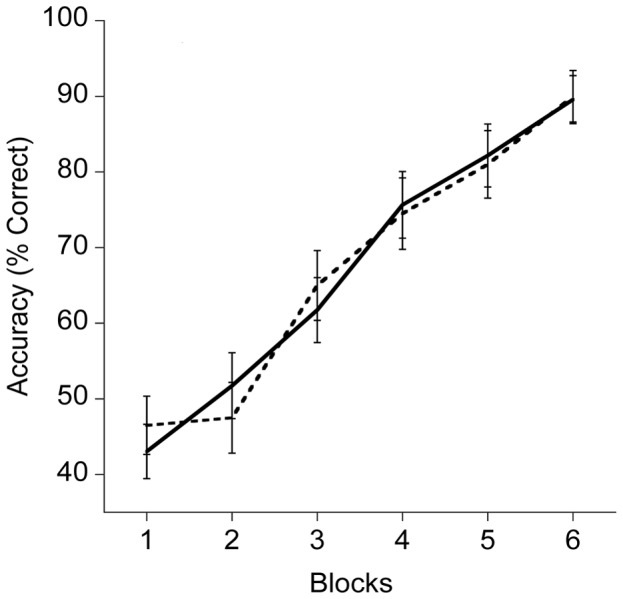
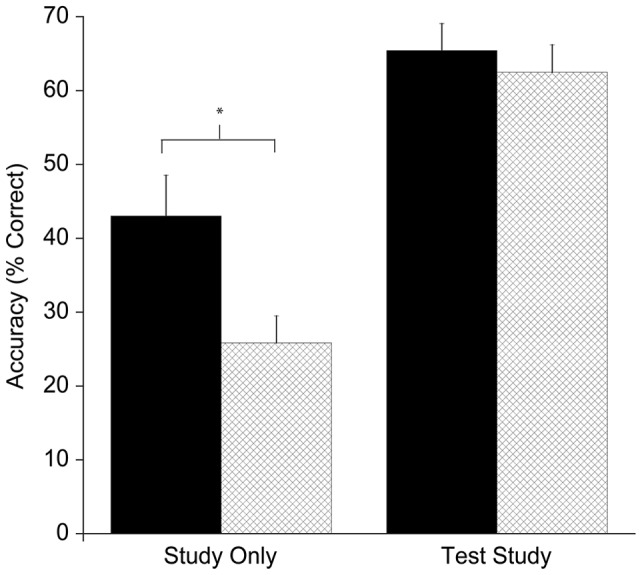
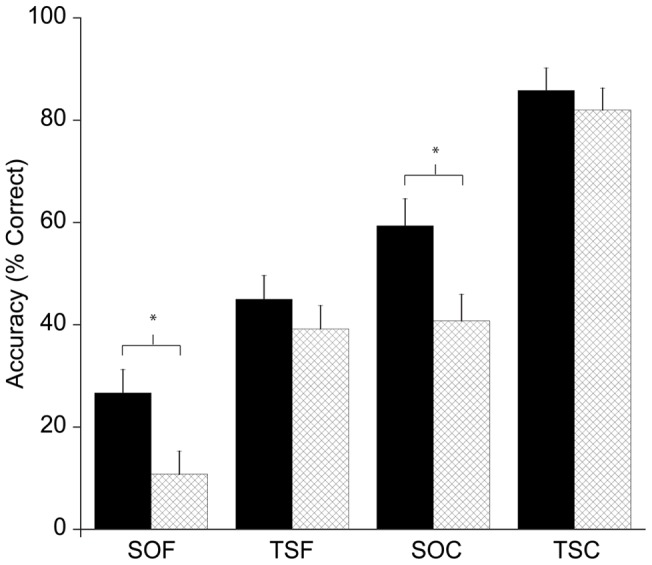
There were no differences in performance at initial learning between higher fit and lower fit participants. However, during the retention session higher fit children outperformed lower fit children, particularly when the initial learning strategy involved relatively poor recall performance (i.e., study only versus test-study strategy).
We interpret these novel data to suggest that fitness can boost learning and memory of children and that these fitness-associated performance benefits are largest in conditions in which initial learning is the most challenging. Such data have important implications for both educational practice and policy.
儿童中久坐不动的趋势日益明显,这不仅会导致身体健康状况恶化,还会导致认知健康状况恶化。先前的研究表明,运动健身水平较低与认知功能下降有关,认知功能下降会影响到需要感知、记忆和认知控制的任务,以及学业成绩下降。
研究有氧健身与学习和记忆的关系,任务是记住虚构地图上的姓名和地点。采用不同的学习策略和回忆程序,以更好地了解健身对学习新内容的影响。
48 名 9-10 岁儿童(n=24 名高健身水平;HF 和 n=24 名低健身水平;LF)完成了一项任务,要求他们学习地图上特定区域的名称,在两种学习条件下进行,一种是只学习(SO),另一种是在学习过程中进行测试(TS)。保留日发生在初始学习后的一天,涉及两种不同的回忆条件:自由回忆和提示回忆。
在初始学习中,高健身水平和低健身水平参与者的表现没有差异。然而,在保留阶段,高健身水平的儿童表现优于低健身水平的儿童,尤其是在初始学习策略涉及相对较差的回忆表现时(即,只学习与测试-学习策略相比)。
我们对这些新数据的解释表明,健身可以促进儿童的学习和记忆,并且在初始学习最具挑战性的情况下,这些与健身相关的表现优势最大。这些数据对教育实践和政策都有重要意义。